
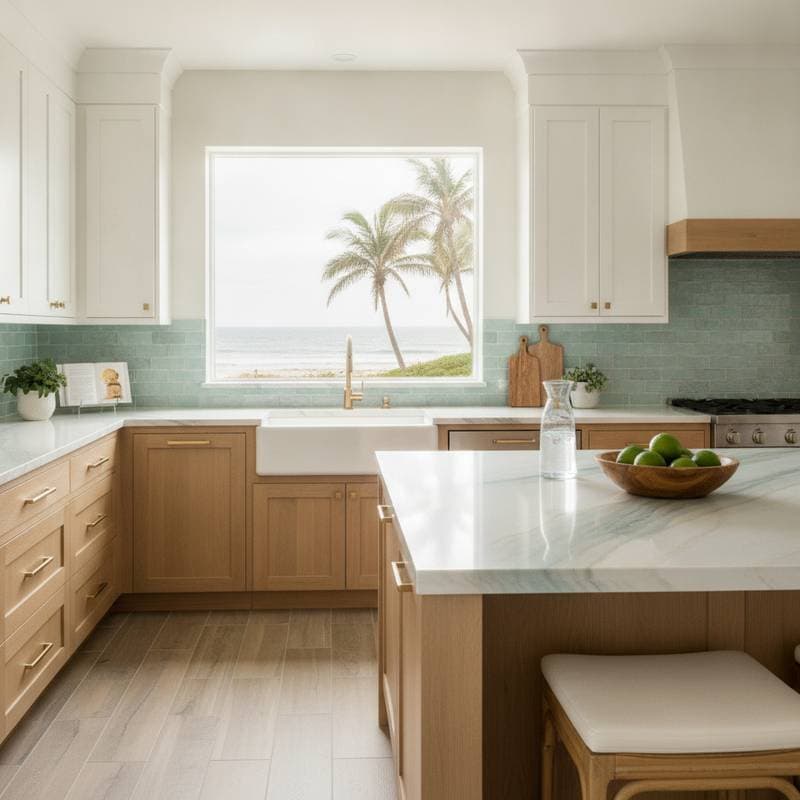
11 Reasons Quartz Surpasses Granite as the Top Pick for Beach Kitchens
Coastal living has its own rhythm. The sound of waves, the salty breeze, and the laid-back lifestyle all influence how you design your space. When it comes to beach kitchens, homeowners want beauty, durability, and materials that can handle a salt-air environment. Granite once ruled the world of countertops, but quartz has become the top pick for coastal kitchens.
If you love the idea of a light, airy, and easy-to-maintain kitchen that fits the beach lifestyle, quartz might be exactly what you are looking for. It is engineered to resist stains, moisture, and wear, while offering a range of colors and finishes that match coastal design trends.
This guide explores why quartz has surged ahead of granite in popularity, especially for beach homes. From maintenance to style, you will see why this material is ideal for that breezy, ocean-inspired look.
[Image: Bright coastal kitchen with white quartz countertops and sea glass backsplash]
Functional Strengths that Fit Coastal Living
1. Superior Resistance to Moisture and Salt Air
Beach homes face constant exposure to humidity and salty air. Granite, being a natural stone, is porous and can absorb moisture if not sealed regularly. Quartz is nonporous. That means no sealing, no water absorption, and no risk of salt staining the surface.
This resistance makes quartz an ideal choice for kitchens near the coast, where moisture is unavoidable. You can wipe down your counters after cooking or washing dishes without worrying about long-term damage.
Pro Tip: For homes near the ocean, choose quartz with a matte or satin finish to minimize glare from natural sunlight streaming through large coastal windows.
[Image: Close-up of quartz countertop showing smooth matte finish]
2. Low Maintenance, High Longevity
Granite requires periodic sealing to keep it protected from stains and bacteria. Quartz eliminates that chore entirely. Its nonporous surface naturally blocks out liquids, oils, and food spills. That means you can spend more time relaxing on the patio instead of scrubbing and maintaining your counters.
Cleaning is simple. All you need is mild soap and water. No harsh chemicals or resealing kits. Over years of use, quartz maintains its sheen and structure far better than untreated natural stone.
3. Unmatched Durability for Busy Coastal Kitchens
Quartz is engineered to withstand heavy use. It is made from crushed natural stone blended with resins that strengthen its structure. This composition makes it highly resistant to chips and cracks, which is perfect for families or vacation homes that see a lot of cooking and entertaining.
Granite is strong, but it can still develop natural fissures or weak spots. Quartz consistency makes it more reliable over time, especially in humid climates.
Pro Tip: If you love to cook seafood, citrus, or wine-based dishes, quartz will resist acid etching far better than granite.
Aesthetic Appeal and Design Flexibility
4. Wide Range of Coastal-Inspired Colors
Quartz comes in an incredible variety of colors and patterns. Whether you want the look of soft white sand, subtle veining that mimics seafoam, or a dramatic ocean-gray tone, you can find a quartz design that fits your beach home perfectly.
Designers often choose shades of white, beige, or cool blue-gray for a coastal palette. The engineered nature of quartz means these colors remain consistent across slabs, which makes matching easier when planning large kitchen islands or long counters.
[Image: Coastal kitchen with light blue-gray quartz countertops and white cabinetry]
5. Seamless Integration with Coastal Materials
Quartz pairs beautifully with other materials commonly found in beach homes. It looks stunning next to white oak floors, shiplap walls, rattan accents, or stainless steel appliances. This versatility allows homeowners to mix textures while maintaining a cohesive coastal vibe.
For a soft, beachy look, try pairing quartz with whitewashed cabinets, sea glass tile backsplashes, driftwood-inspired shelving, and brushed nickel fixtures. This combination brings light and warmth to the kitchen without overwhelming the space.
6. Consistent Look Without Natural Flaws
Granite natural veining can be unpredictable. Some slabs vary dramatically in pattern or tone, which can complicate design matching. Quartz offers a consistent appearance across all surfaces. This uniformity helps create a clean, modern aesthetic that suits the simplicity of coastal design.
You can even choose quartz patterns that mimic granite or marble, giving you the natural look without the unpredictability.
Pro Tip: For a beach kitchen with an open layout, select large quartz slabs to minimize seams. This enhances the visual flow and creates a smooth, uninterrupted look.
Practical Benefits for Coastal Homeowners
7. Better Hygiene and Food Safety
The nonporous nature of quartz also means bacteria and mold have nowhere to hide. This is a big advantage in a humid beach environment, where moisture can encourage bacterial growth in porous surfaces. Quartz keeps your kitchen safer and more sanitary with minimal effort.
A quick wipe with a damp cloth removes most spills, and the surface remains food-safe without additional treatments.
8. Environmentally Conscious Production
Many quartz brands now use recycled materials and eco-friendly manufacturing processes. Since quartz is engineered, less raw stone is wasted compared to quarrying full granite slabs. This makes quartz a more sustainable choice for homeowners who value eco-conscious living near the coast.
If you are remodeling a beach house with sustainability in mind, ask suppliers about quartz lines that use recycled glass or pre-consumer stone remnants.
9. Ideal for Indoor-Outdoor Kitchen Extensions
Beach homes often blend indoor and outdoor living spaces. Quartz is great for transitional areas like covered patios or outdoor kitchen bars. While it is not recommended for direct sun exposure all day, it performs beautifully in shaded or partially covered areas where granite might discolor or require sealing.
Pair quartz counters with stainless steel grills and marine-grade cabinetry for a seamless look that connects your indoor kitchen with your outdoor entertainment area.
[Image: Outdoor kitchen with quartz countertop under shaded pergola]
Cost, Resale, and Long-Term Value
10. Competitive Cost with Long-Term Savings
Quartz typically costs around the same or slightly more than mid-range granite. However, its long lifespan and minimal maintenance make it more cost-effective in the long run. You save money on sealing treatments, repairs, and replacements.
With granite, small chips or stains often require professional repair. Quartz surfaces rarely need that kind of upkeep. Over time, those small savings add up, making quartz a smart investment for beach homeowners.
Pro Tip: For a balanced budget, use high-end quartz on your main counters and a complementary quartz remnant for smaller areas like a coffee bar or bathroom vanity.
11. Boosts Property Value and Buyer Appeal
Quartz countertops have become a strong selling point in coastal real estate. Buyers appreciate their modern appearance, low upkeep, and durability. Homes with quartz kitchens often stand out in listings, especially in beach communities where maintenance can be a concern.
If you plan to rent or resell your property, quartz can influence how buyers perceive your home quality. It signals thoughtful design and practical luxury, two values that resonate with coastal buyers.
[Image: Modern coastal kitchen with quartz island and pendant lighting]
Extra Tips for Planning a Quartz Kitchen Remodel
When planning your beach kitchen remodel with quartz, keep these suggestions in mind:
- Choose light-reflective colors to enhance the natural brightness of coastal interiors.
- Pair with natural textures like bamboo, wicker, or jute for warmth.
- Consider edge profiles such as eased or beveled edges for a soft, modern finish.
- Work with local fabricators who understand coastal climate conditions.
- Ask for samples before committing to a full slab to see how the color looks in your natural light.
Frequently Asked Questions
Is quartz more expensive than granite?
Quartz is usually priced similarly to mid-range granite, though high-end designs can cost slightly more. Over time, quartz minimal maintenance and durability make it more economical.
Can quartz handle outdoor use in a beach climate?
Quartz performs well in shaded or covered outdoor areas but should not be exposed to direct sun for extended periods, which can cause fading.
How do I clean quartz countertops?
Use mild soap and warm water for everyday cleaning. Avoid harsh chemicals or abrasive pads. For sticky spots, a soft cloth with a bit of white vinegar works well.
Does quartz stain easily?
No. Its nonporous surface makes it highly resistant to stains from wine, citrus, or oils. Spills can be wiped away easily without leaving marks.
What color quartz looks best in a beach house?
Soft whites, sandy beiges, and light grays are popular choices. These shades complement natural light and coastal decor beautifully.
Living with Your New Coastal Kitchen
Choosing quartz for your beach kitchen gives you more than a stylish surface. It offers peace of mind, easy maintenance, and a look that never feels dated.
Quartz brings together durability, beauty, and practicality in a way that makes coastal living effortless. When the sea breeze fills your home and sunlight dances across your counters, you will know you made the right choice for your beach retreat.