
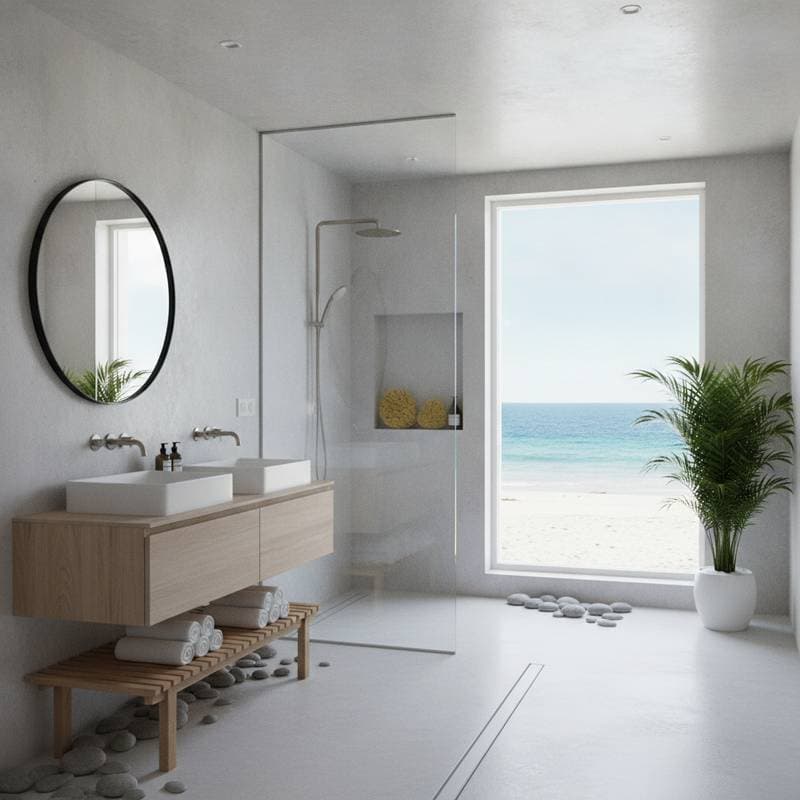
Why Wet Rooms Are Replacing Showers in Coastal Remodels
Coastal homeowners are rethinking how they design their bathrooms. Wet rooms are quickly becoming the preferred choice. A wet room is a fully waterproofed bathroom where the shower area is level with the rest of the floor. This creates a seamless, open-plan layout.
Instead of a traditional shower enclosure, the entire space functions as one continuous, drain-equipped surface. This design is sleek and modern. It suits coastal living where humidity, sand, and saltwater are part of everyday life.
If you are planning a coastal remodel, you might wonder if a wet room could be the right upgrade. The answer for many is yes. Wet rooms combine durability, style, and practicality in ways that traditional showers often cannot match.
Average Cost of a Wet Room Remodel
The average cost of a wet room ranges from $12,000 to $25,000. This depends on size, materials, and plumbing complexity. Smaller installations can start near $10,000. Luxury builds with custom tilework and high-end fixtures can exceed $30,000. On average, expect to pay about $18,000 for a mid-range coastal wet room.
Cost Breakdown
| Component | Average Cost Range | Percentage of Total |
|---|---|---|
| Waterproofing & Membrane Installation | $2,000 - $4,000 | 15% |
| Tile & Flooring | $3,000 - $7,000 | 25% |
| Plumbing & Drainage | $2,000 - $5,000 | 20% |
| Fixtures & Fittings | $2,000 - $6,000 | 20% |
| Labor | $3,000 - $6,000 | 20% |
Wet rooms require more extensive waterproofing than standard showers. This increases upfront costs but enhances long-term durability. Coastal environments involve constant moisture exposure.
Cost by Size and Scope
Small Wet Room (under 40 sq. ft.)
- Typical Cost: $10,000 - $14,000
- Best suited for guest bathrooms or compact coastal properties
- Simplified layouts with wall-mounted fixtures to conserve space
Mid-Range Wet Room (40 to 70 sq. ft.)
- Typical Cost: $15,000 - $20,000
- Ideal for master bathrooms or secondary spaces
- Offers room for dual showerheads and upgraded tile patterns
Large or Luxury Wet Room (over 70 sq. ft.)
- Typical Cost: $22,000 - $35,000+
- Includes custom stone, frameless glass panels, or heated flooring
- Often integrated with spa features such as steam or rainfall showers
Material Comparisons for Coastal Wet Rooms
Material choice influences both appearance and maintenance needs. In coastal bathrooms, moisture resistance and ease of cleaning are top priorities.
| Material | Average Cost per sq. ft. | Durability | Maintenance | Aesthetic Appeal |
|---|---|---|---|---|
| Porcelain Tile | $5 - $12 | Excellent | Low | Sleek, modern |
| Natural Stone | $10 - $25 | High | Moderate | Luxurious, natural |
| Microcement | $8 - $15 | Very High | Low | Minimalist, continuous look |
| Mosaic Tile | $10 - $20 | Moderate | Moderate | Artistic texture |
| Vinyl or Composite Panels | $4 - $9 | Moderate | Low | Cost-effective |
Porcelain tile and microcement are leading choices for coastal wet rooms. They offer waterproof properties and minimal grout lines. Natural stone provides unmatched elegance but requires sealing to protect against salt and moisture damage.
Labor Costs and Installation Timelines
Labor typically accounts for 20 to 30 percent of the total project cost. Professional installers charge between $75 and $150 per hour. This depends on experience and region. The full installation process usually takes two to three weeks. This includes demolition, waterproofing, tiling, and fixture installation.
The waterproofing membrane installation is the most critical phase. A single error here can lead to leaks, mold, and long-term structural damage. For this reason, hiring an experienced contractor with proven wet room expertise is essential.
Factors That Influence the Total Cost
Several variables can affect your total wet room cost. Understanding them helps you plan your budget more effectively.
- Bathroom size and layout complexity
- Existing plumbing configuration
- Choice of materials and finishes
- Drainage system design
- Structural modifications or leveling
- Accessibility features such as grab bars or benches
- Permitting and inspection requirements
Homes near the coast may also require extra waterproofing layers or corrosion-resistant fixtures. High humidity and salt air make these upgrades necessary. They protect your investment and extend the life of your finishes.
How to Save Money on a Wet Room Remodel
- Retain existing plumbing lines. Moving pipes can add thousands in labor and materials.
- Choose large-format tiles. Fewer grout lines mean lower installation time and cost.
- Opt for mid-range fixtures. High-quality does not always mean high-priced. Many affordable brands offer corrosion-resistant finishes.
- Skip unnecessary glass partitions. An open design achieves the same effect for less.
- Use a single slope drainage system. It is simpler to install and easier to maintain.
Smart material choices and simplified layouts can reduce overall costs without compromising performance.
DIY vs. Hiring a Professional
Some homeowners wonder if a wet room can be a do-it-yourself project. While minor tasks such as painting or tile sealing can be handled independently, full wet room construction should be left to professionals.
DIY-Friendly Tasks
- Installing towel bars or shelving
- Painting moisture-resistant walls
- Choosing and assembling accessories
Professional-Only Tasks
- Waterproof membrane installation
- Drainage slope creation
- Plumbing and electrical work
- Tile setting and sealing
Common Mistakes to Avoid
- Skipping professional waterproofing. Even small leaks can cause severe structural damage.
- Using the wrong tile adhesive. Only use adhesives rated for wet environments.
- Ignoring ventilation. Proper airflow prevents condensation and mold.
- Choosing porous materials. Avoid unsealed stone or untreated wood.
- Poor slope design. Floors must direct water efficiently to the drain.
Why Wet Rooms Fit Coastal Living
- Complete waterproofing prevents rot and water damage.
- Open layouts make it easy to rinse off sand and salt after beach days.
- Slip-resistant surfaces improve safety for children and older adults.
- Low maintenance design reduces mold growth and cleaning time.
- Modern aesthetics enhance property value and appeal to buyers who favor spa-like, minimalist spaces.
Frequently Asked Questions About Wet Rooms
Do I need a permit for a wet room remodel?
Most municipalities require permits for any bathroom remodel that involves plumbing changes. Check with your local building department before starting. A licensed contractor can handle the permit process for you.
How long does it take to install a wet room?
The typical timeline is two to three weeks. This includes demolition, waterproofing, tiling, and finishing. Larger or more complex designs can take longer, especially if structural adjustments are needed.
Are wet rooms safe in multi-story homes?
Yes, when properly waterproofed. Using a reinforced membrane system and ensuring correct drainage prevents leaks to lower levels. Always confirm your contractor uses tested waterproofing systems.
What is the maintenance routine for a wet room?
Regularly clean tile surfaces with non-abrasive products and check grout lines for wear. Keep drains clear of hair and debris. Resealing stone surfaces annually helps maintain appearance and water resistance.
Do wet rooms work with underfloor heating?
Absolutely. Underfloor heating pairs well with wet rooms. It keeps tiles warm and aids in faster drying. It also reduces moisture accumulation on surfaces.
Will a wet room increase my home value?
In coastal markets, yes. Buyers appreciate the durability, modern design, and low maintenance benefits of wet rooms. A well-executed installation can raise resale appeal and perceived property quality.
Can I convert my existing shower into a wet room?
In most cases, yes. Your subfloor and drainage must be evaluated first. Some older homes may need reinforcement or leveling to accommodate the waterproofing system.
Planning Your Coastal Wet Room Project
A wet room offers more than visual appeal. It brings resilience, simplicity, and lasting comfort to coastal homes where moisture is a constant challenge. By understanding the costs, materials, and installation process, you can plan a remodel that delivers both beauty and practicality. Choose a qualified contractor, invest in proper waterproofing, and select materials built for your climate.