
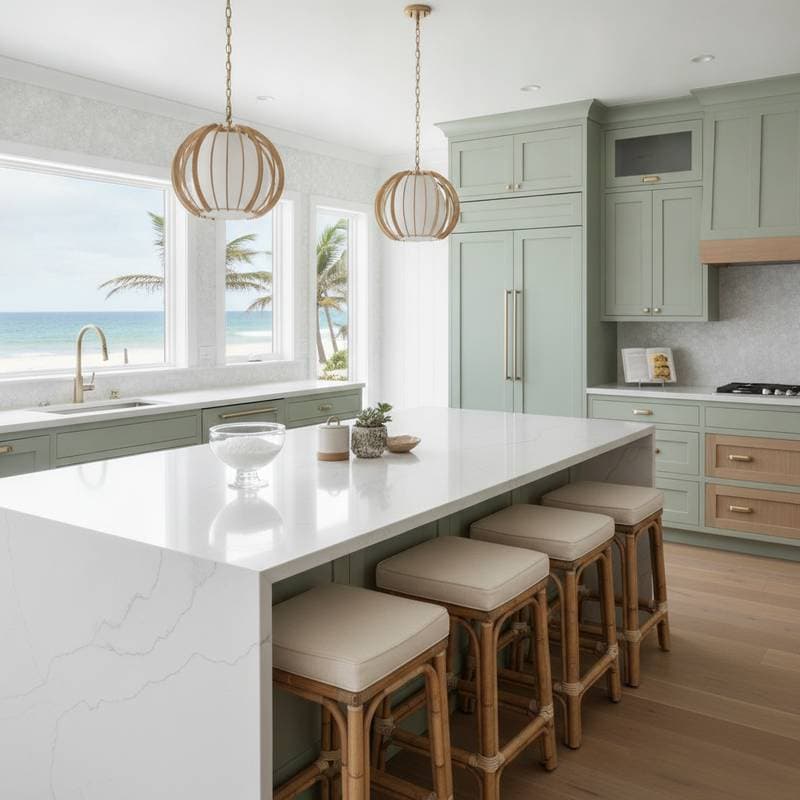
7 Reasons Quartz Outperforms Granite in Beach House Kitchens
Selecting the right countertop material ranks among the most critical choices during a beach house kitchen design or renovation. Coastal conditions introduce persistent moisture, salt air, and intense sunlight that influence material performance over time. Quartz combines engineered strength with refined appearance to address these specific challenges more effectively than natural granite.
Quartz surfaces undergo a manufacturing process that binds crushed stone with resin. This produces a uniform material that withstands humidity and routine use without the vulnerabilities common to granite. The following sections detail seven practical advantages that support quartz as the preferred option for seaside homes.
Resistance to Environmental Factors
1. Non-Porous Construction Blocks Moisture Absorption
Granite contains natural pores that allow liquids to penetrate and create permanent stains. Quartz features a non-porous composition that prevents water, bacteria, and stains from entering the surface. This property proves especially valuable in kitchens exposed to constant humidity and salt air. No periodic sealing is required to maintain protection.
Wipe any spills promptly with a solution of mild soap and water. This simple step preserves the finish and avoids residue accumulation.
2. Engineered Strength Reduces Chipping Risks
The resin bonding process creates a countertop that resists chips and cracks better than solid granite. Heavy pots, dropped utensils, and minor temperature shifts cause less damage. Busy rental properties and family kitchens benefit from this added toughness when proper trivets protect against direct heat.
Reduced Upkeep Requirements
3. Elimination of Sealing Procedures
Granite demands annual sealing to retain stain resistance. Quartz maintains its protective qualities without sealing, polishing, or specialized cleaning products. Homeowners save both recurring expense and labor while the surface retains its original appearance.
Place cutting boards beneath knives during food preparation. This practice prevents surface dulling and extends overall service life.
4. Uniform Appearance Simplifies Design Planning
Manufacturing controls produce consistent color and veining across entire slabs. Large islands and open layouts become easier to coordinate because matching sections are readily available. Natural granite varies significantly between slabs, which often complicates material selection and installation.
Design Compatibility
5. Coastal Color Options Enhance Light
Quartz offers finishes ranging from crisp whites to muted beiges and soft grays that align with beach house palettes. Reflective qualities distribute natural light effectively throughout the space. These characteristics support the bright, open aesthetic typical of coastal interiors.
6. Coordination with Common Beach House Elements
The smooth surface of quartz complements driftwood cabinetry, sea glass tile, and stainless fixtures without visual conflict. Clean lines provide contrast to weathered textures frequently used in seaside construction.
Investment Considerations
7. Comparable Pricing with Superior Consistency
Mid-range quartz carries similar initial costs to comparable granite yet delivers more predictable quality and extended performance. Several manufacturers incorporate recycled content, supporting sustainability goals. Proper care allows quartz to retain both appearance and resale value for many years.
Selecting Quartz for Coastal Durability
Quartz countertops address the practical demands of humidity, salt exposure, and daily activity while maintaining visual appeal. The combination of low maintenance, structural reliability, and design flexibility supports long-term satisfaction in beach house settings. Homeowners gain more time to enjoy the coastal environment with fewer concerns about surface care.