
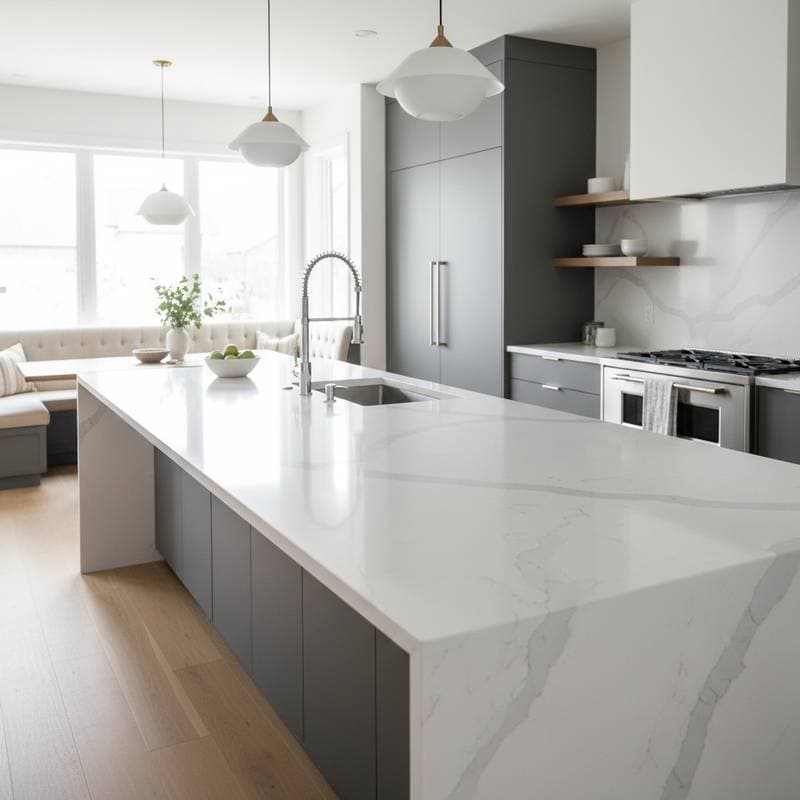
The Appeal of Quartz in Modern Kitchen Remodels
Imagine a kitchen bathed in morning light, where countertops gleam with a polished finish that rivals high-end marble yet demands little effort to maintain. Quartz achieves this balance, providing the visual sophistication of natural materials without the associated hassles. Many homeowners transition from granite to quartz, drawn by its reliable performance in daily use and timeless aesthetic.
Quartz surfaces consist of engineered stone, blending crushed quartz with resins for a uniform composition. This design ensures consistent patterns across slabs, eliminating the variations common in natural granite. As a result, quartz suits contemporary and traditional kitchens alike, offering flexibility for bold or subtle designs.
In terms of initial investment, quartz ranges from $70 to $120 per square foot for installed surfaces, compared to granite's $60 to $100 per square foot. The modest premium reflects quartz's advantages in longevity and convenience. For instance, families with active lifestyles appreciate how quartz withstands spills from cooking or crafting without absorbing liquids.
To determine the best fit for your space, consider consulting local suppliers for samples. Matching colors to cabinetry and flooring enhances cohesion, while professional quotes reveal area-specific pricing for materials and labor.
Key Benefits of Quartz Over Granite
Quartz excels in durability, resisting scratches from knives or everyday wear far better than many natural stones. Its nonporous nature prevents bacterial growth, making it ideal for food preparation areas. Unlike granite, which can etch from acidic substances like lemon juice, quartz maintains its integrity with simple cleaning.
Maintenance represents a primary advantage. Granite requires sealing every one to three years to protect against stains and moisture, a process that involves specialized products and time. Quartz eliminates this step entirely; a mild soap and water solution suffices for routine care, saving hours over the years.
Aesthetic versatility further sets quartz apart. Manufacturers produce options that replicate marble veining, granite speckles, or even concrete textures, all in predictable shades. This control allows precise matching to your vision, avoiding the surprise variations that sometimes occur with granite slabs.
Environmentally, select quartz brands incorporate recycled glass or stone aggregates, reducing waste. Low-VOC resins minimize emissions during production, appealing to those prioritizing sustainable choices in home improvements.
Detailed Cost Breakdown
Pricing for quartz depends on several variables, ensuring options for various budgets. Basic solid colors begin at $50 per square foot for the slab, while intricate designs mimicking exotic stones climb to $150 per square foot.
Consider these elements when budgeting:
- Slab Quality and Thickness: Standard 2 cm or 3 cm thicknesses influence cost; thicker options provide added strength for high-traffic areas.
- Design Complexity: Simple hues cost less than those with embedded particles or realistic veining for a natural appearance.
- Fabrication Details: Custom edges, such as bullnose or ogee profiles, add $10 to $30 per linear foot. Cutouts for sinks or cooktops incur additional fees based on size and shape.
- Installation Labor: Professionals charge $20 to $40 per square foot, covering measurement, cutting, and securing the slabs.
- Removal of Existing Surfaces: Demolition and disposal of old countertops may add $5 to $15 per square foot, depending on material and accessibility.
Granite might seem economical at first glance, but factor in recurring sealing costs, which total $100 to $300 annually over time. Quartz avoids these expenses, often proving more cost-effective within five years.
For accurate estimates, request multiple bids from certified fabricators. Specify your kitchen dimensions and desired features to receive tailored proposals.
Installation: Professional Expertise Recommended
Installing quartz demands precision due to the material's weight—slabs often exceed 20 pounds per square foot—and the need for seamless joints. Professional installers use specialized tools to template, cut, and level surfaces, ensuring stability and alignment.
Attempting a full kitchen installation as a DIY project risks structural issues or warranty voids. However, for smaller applications like a bathroom vanity, prefabricated quartz pieces offer a viable option for skilled individuals. These come pre-cut and edged, simplifying the process with basic tools like adhesive and clamps.
Hire licensed contractors experienced in stone work. They assess subfloor support, recommend appropriate underlayment, and handle permits if required. Expect the process to span one to three days, minimizing disruption to your routine.
Post-installation, allow 24 hours for adhesives to cure before use. This step preserves the surface's integrity and activates manufacturer warranties, typically spanning 10 to 25 years.
Practical Care and Design Tips
Daily maintenance involves wiping spills promptly with a soft cloth and non-abrasive cleaner. Avoid harsh chemicals that could dull the finish over time. For heat exposure, place trivets under hot pots, as direct contact might cause temporary discoloration.
Incorporate quartz into your design by selecting complementary backsplashes or hardware. Pair white quartz with matte black fixtures for a modern edge, or warm-toned slabs with wooden accents for rustic charm. Lighting plays a key role; under-cabinet LEDs highlight textures without glare.
Test samples in your kitchen's lighting to confirm color accuracy. This practice prevents surprises and ensures the final result aligns with your overall scheme.
Frequently Asked Questions
How durable are quartz countertops?
Quartz withstands heavy use, resisting scratches, chips, and impacts better than granite in most scenarios. With routine care, it retains appearance for decades.
Does quartz require sealing?
Quartz surfaces are nonporous by design, eliminating the need for sealing. Routine cleaning suffices to keep them pristine.
Can quartz handle heat from cooking?
Quartz manages moderate temperatures well, but protect it from direct heat sources like hot pans to avoid potential damage.
Is quartz a sustainable material?
Many quartz products feature recycled content and energy-efficient manufacturing, contributing to eco-conscious building practices.
How does quartz compare to laminate?
Quartz offers superior longevity and heat resistance over laminate, justifying the higher upfront cost for premium kitchens.
Enhancing Everyday Kitchen Life with Quartz
Quartz transforms kitchens into resilient hubs for meals, homework, and gatherings. Its enduring surface supports vibrant routines without fading or wear. By choosing quartz, you invest in a space that evolves with your needs, delivering both form and function for years ahead.