
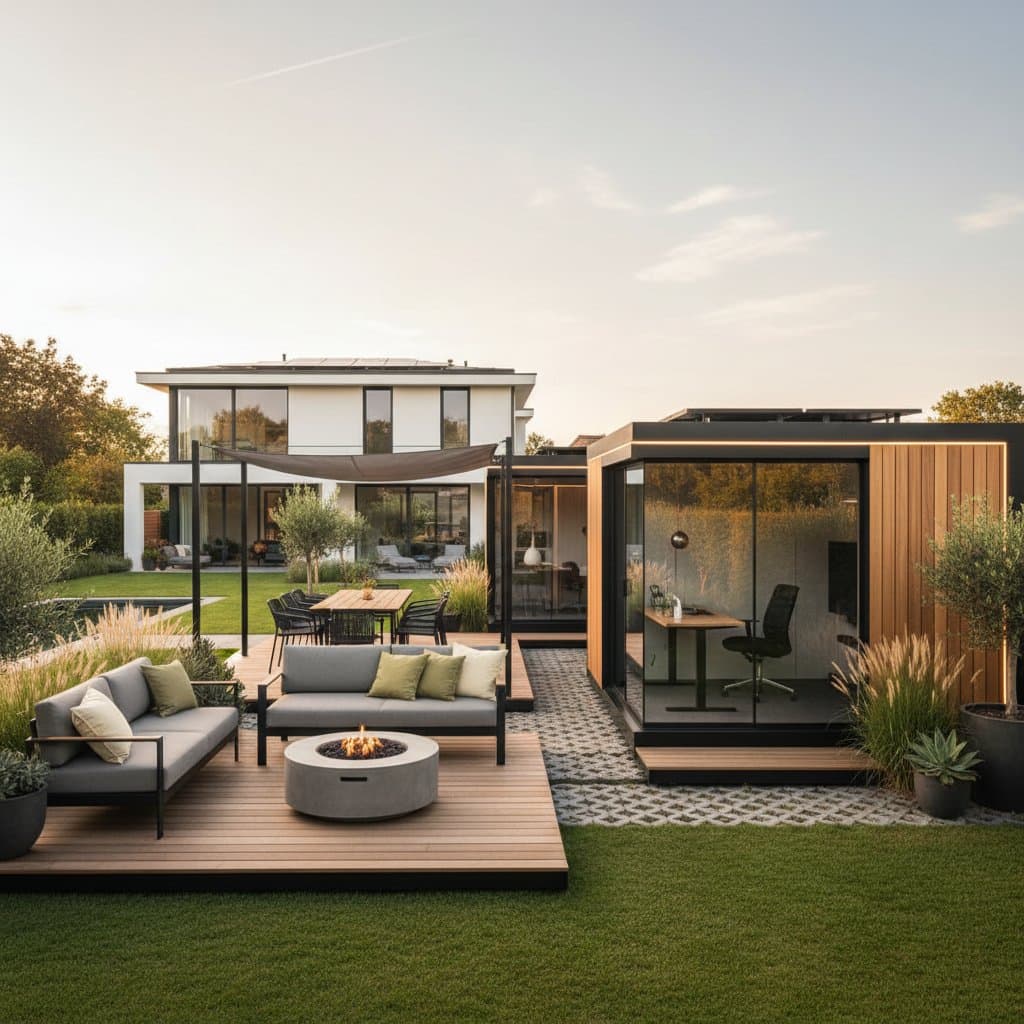
Versatile Modular Outdoor Spaces: Build, Move, and Adapt with Ease
Imagine an outdoor area that evolves with your daily needs, shifting from a quiet retreat to a lively gathering spot in hours. Modular outdoor spaces deliver this flexibility, allowing you to construct, relocate, and modify structures like lounges, dining areas, or home offices without major renovations. These designs prioritize convenience, blending modern aesthetics with practical functionality for patios, rooftops, or expansive yards.
Key Advantages:
- Effortless reconfiguration and relocation to suit changing preferences
- Streamlined installation that saves time and reduces expenses
- Suitable for spaces of all sizes, from compact balconies to large gardens
- Personalization options including integrated lighting, seating, and environmental controls
- Versatile solutions for property owners and tenants seeking adaptable extensions
Modular outdoor living redefines home environments by emphasizing user control over rigid layouts. This approach integrates elegance and adaptability, enabling spaces that enhance rather than constrain your routine.
The Appeal of Modular Outdoor Living for Property Owners
Outdoor areas that rival indoor comfort draw homeowners to modular designs for their versatility and long-term appeal. These structures offer design flexibility and economic benefits, turning underused yards into valuable assets.
Core Benefits
| Benefit | Details |
|---|---|
| Adaptability | Relocate or resize components as family dynamics or seasons evolve, such as expanding for guests or compacting for storage. |
| Cost Savings | Factory-built elements minimize on-site labor and waste, often cutting project expenses by 30 to 50 percent compared to custom builds. |
| Rapid Setup | Assembly typically requires one to three days with minimal tools, ideal for weekend projects. |
| Eco-Friendly Options | Incorporate recycled metals, sustainably sourced wood, or low-VOC finishes to support environmental goals. |
| Tailored Aesthetics | Select from various panel styles, color palettes, and modular add-ons to harmonize with existing architecture. |
Such features position modular outdoor rooms as smart investments, boosting property enjoyment without the permanence of traditional constructions.
Step-by-Step Guide to Creating Your Modular Outdoor Space
Planning a modular outdoor room involves straightforward decisions that lead to a seamless build. Follow these steps to align the project with your vision and site conditions.
Step 1: Identify the Primary Function
Assess how you will use the space most often, whether for solitary relaxation, family meals, or remote work sessions. This guides selections in dimensions, from 100-square-foot nooks to 400-square-foot pavilions, and essential elements like built-in benches or power outlets.
Step 2: Evaluate Site Suitability
Choose a location offering level terrain and effective water runoff to prevent moisture issues. Factor in daily sun patterns for optimal shading, nearby privacy screens from fences or plants, and proximity to electrical sources for features like fans or speakers.
Step 3: Research Modular Systems
Explore prefabricated kits from reputable suppliers, focusing on those with robust warranties of five to ten years. Evaluate material durability, expansion compatibility, and user reviews for real-world performance in varied climates.
Step 4: Review Building Codes
Contact your local planning office early to confirm permit needs, which vary by structure size and anchoring method. Simple ground-supported units often bypass extensive approvals, but anchored models may require engineering stamps.
Step 5: Site Preparation Essentials
Clear and grade the area to ensure even support, installing gravel bases or permeable pavers for drainage. For elevated sites, reinforce with adjustable footings to handle minor shifts over time.
Step 6: Installation and Personalization
Unpack and connect frame sections per manufacturer instructions, securing joints with provided hardware. Integrate custom elements such as weatherproof curtains or herb planters to reflect personal style.
Practical Advice: Allocate an extra 20 percent in your budget for contingencies like delivery fees or premium hardware upgrades to avoid project delays.
Selecting Materials and Design Elements
Durable materials form the foundation of a resilient outdoor room, balancing weather resistance with visual appeal. Prioritize options that withstand rain, UV exposure, and temperature swings while complementing your home's exterior.
Frame and Panel Options
- Aluminum Frameworks: Offer corrosion resistance and ease of transport, weighing up to 50 percent less than alternatives for frequent adjustments.
- Galvanized Steel Constructs: Provide superior load-bearing for expansive roofs or multi-level designs, though they demand occasional rust checks.
- Engineered Wood Composites: Deliver natural grain textures with treatments that repel insects and fading, ideal for a rustic-modern blend.
Functional Enhancements
- Bi-Fold or Sliding Panels: Facilitate seamless transitions between enclosed and open-air modes, maximizing ventilation on warm days.
- Adjustable Canopies: Employ motorized systems to block harsh sun or reveal stars, controlled via remote or smartphone.
- Integrated Illumination: Opt for LED strips or recessed fixtures powered by solar batteries, automating dusk activation for safety and ambiance.
- Thermal Insulation Layers: Use foam-core panels to maintain interior temperatures, reducing energy needs for heating in cooler months.
Visual Example: Envision a serene lounge featuring warm wood accents and soft, diffused lighting that invites evening unwinding.
Enhancing Functionality with Add-Ons
Modular spaces shine brightest when augmented with targeted accessories that elevate everyday use. These integrations focus on comfort, technology, and style to create multifaceted environments.
Environmental Controls
- Freestanding radiant heaters or wall-mounted units for targeted warmth during crisp evenings.
- Oscillating fans combined with fine-mist sprayers to cool humid afternoons effectively.
- Ventilated louvers that pivot to direct breezes while shielding from direct rain.
Technological Integrations
- Signal extenders to ensure reliable internet for video calls or entertainment setups.
- Concealed charging stations with multiple outlets and weatherproof covers.
- Automated sensors that adjust lights or activate fans based on occupancy and time.
Furnishings and Accents
- Reconfigurable sofas with interlocking pieces that adapt from seating to lounging configurations.
- Outdoor-rated textiles in fade-resistant fabrics for cushions and area rugs.
- Vertical gardens or modular pots that incorporate live plants for natural privacy and air purification.
Visual Example: Picture an inviting dining arrangement illuminated by festoon lights beneath a foldable awning, ready for al fresco meals.
Common Questions About Modular Outdoor Rooms
Relocating a Modular Structure
Disassembly involves loosening bolts and panel clips, a process manageable with standard hand tools in under a day for smaller units. Professional services ensure precise reassembly, preserving warranty coverage and structural integrity.
Year-Round Usability
Insulated walls paired with efficient HVAC options like mini-split units make these spaces viable across seasons, from summer barbecues to winter reading nooks.
Foundation Requirements
Compact designs rest on interlocking tiles or existing surfaces without excavation, while substantial builds benefit from shallow concrete slabs for added security against wind.
Design Customization
Suppliers provide configurators online, allowing previews of color schemes, window placements, and accessory integrations to achieve a cohesive look.
Options for Renters
Portable bases and non-invasive anchors permit full disassembly and transport, enabling temporary enhancements that leave no trace on leased properties.
Maximizing Daily Use of Your Modular Outdoor Area
Integrated into your routine, a modular outdoor room fosters moments of connection and productivity. Begin days with fresh-air yoga sessions, transition to collaborative work zones, or host intimate gatherings under adjustable shelters. In regions like coastal Southern California, where mild weather abounds, these spaces extend living areas naturally, promoting wellness through accessible nature. Their inherent flexibility ensures enduring relevance, adapting to life's rhythms with minimal effort.