
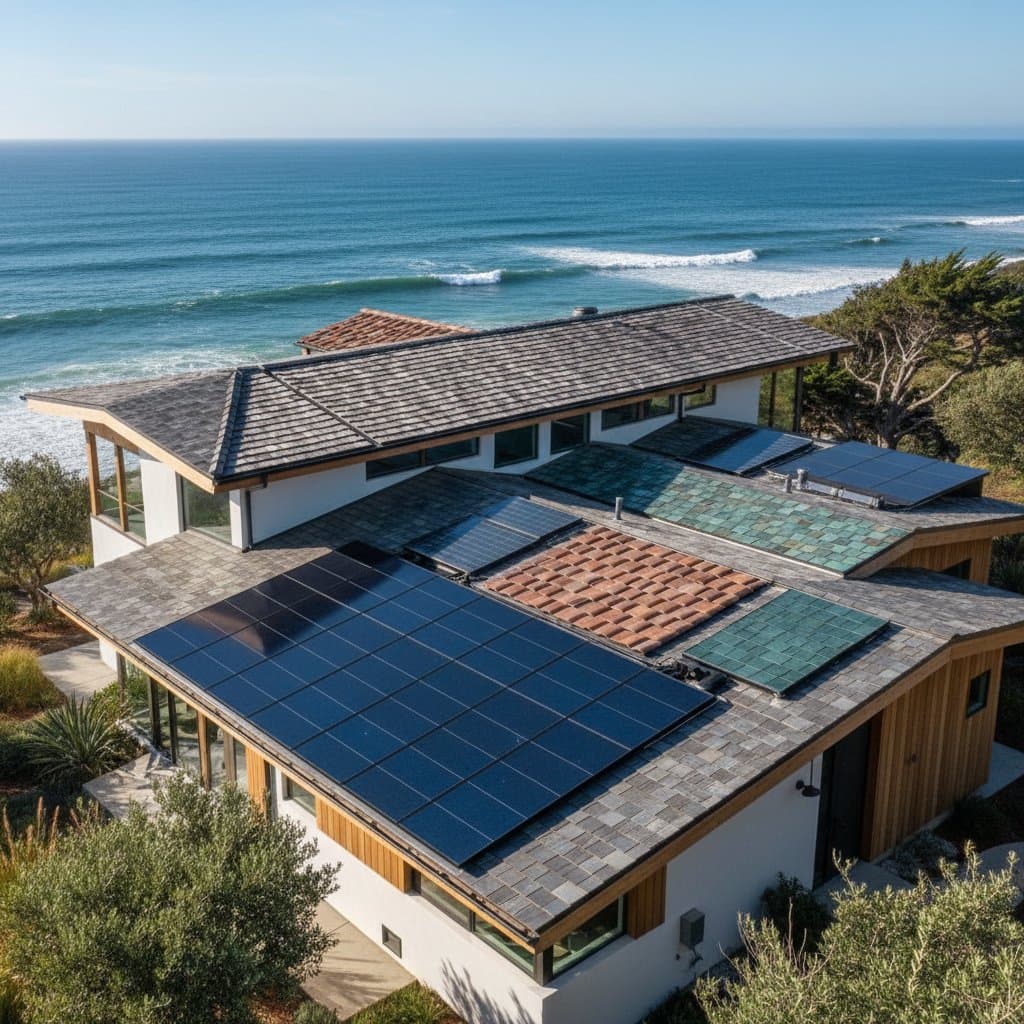
9 Solar Shingles That Harmonize with Coastal Designs for Sustainable Living
Coastal living features sea breezes, abundant sunlight, and a casual vibe that influences home construction and aesthetics. Homeowners in these areas seek renewable energy solutions that preserve the distinctive style of beachfront properties. Solar shingles provide an effective method to integrate clean power generation with a streamlined appearance that aligns seamlessly with coastal architecture.
Consider a roof that safeguards the home, generates electricity, and upholds the relaxed coastal appeal. Concerns about performance in salty air, high winds, and humidity are valid, yet appropriate materials and designs address these challenges effectively. This article examines nine solar shingle options and integration strategies tailored for coastal residences, enabling sustainable energy use while preserving environmental harmony.
Stylish and Functional Coastal Roofing Choices
1. Sleek Glass-Coated Solar Shingles for Modern Beach Homes
Glass-coated solar shingles suit residences with contemporary designs. The reflective surfaces complement white stucco exteriors and simple coastal outlines. Available in neutral shades such as gray, charcoal, or sand, these shingles align with common coastal color schemes.
Select tempered glass variants that withstand salt corrosion. Prioritize products certified for elevated humidity and marine exposure to guarantee enduring performance. Such choices ensure the shingles maintain efficiency over time in demanding conditions.
[Image: Modern coastal home with sleek glass-coated solar shingles]
2. Textured Solar Shingles That Mimic Wood Shake
For those who appreciate the rustic appeal of cedar shakes, textured solar shingles offer a sustainable substitute. These replicate the texture and color of natural wood, delivering a genuine seaside aesthetic alongside renewable energy production.
Installation involves interlocking panels that endure coastal winds. Brands provide options resistant to warping and fading, preserving the classic beach cottage style without ongoing upkeep concerns.
[Image: Beach cottage with textured wood-look solar shingles]
3. Ceramic-Toned Solar Roofs That Blend with Coastal Tiles
Mediterranean and Spanish-influenced coastal homes frequently incorporate terracotta or clay tiles. Solar shingles with ceramic-inspired finishes emulate this traditional appearance, allowing energy generation without altering the roof's heritage look.
These shingles excel in warm climates by reflecting solar heat, which helps cool interior spaces. The design supports both visual authenticity and operational efficiency, fulfilling aesthetic and ecological objectives.
[Image: Spanish-style home with ceramic-toned solar shingles]
4. Matte-Finish Solar Shingles for Subtle Elegance
Homeowners favoring restrained aesthetics benefit from matte-finish solar shingles. This finish delivers a gentle, refined look that coordinates with sandy hues and ocean-themed facades. The non-reflective quality minimizes glare, particularly advantageous for waterfront properties.
Matte surfaces conceal dust and salt deposits more effectively than glossy alternatives, simplifying maintenance routines. This approach enhances overall curb appeal while sustaining energy output.
[Image: Coastal home with matte black solar shingles]
Smart Design Integrations for Coastal Homes
5. Integrated Solar Skylights with Shingle Systems
Solar skylights combined with shingle arrays provide daylight and electricity in one unit. These elements illuminate interiors without disrupting the roof's profile. Compatible models integrate smoothly, forming a cohesive rooftop system.
During daylight hours, the skylights harness sunlight for power and assist in temperature control. They prove valuable in spacious coastal layouts that emphasize natural illumination and ventilation.
[Image: Rooftop with integrated solar skylight panels]
6. Coastal-Resistant Mounting Systems
The mounting framework holds equal importance to the shingles in coastal settings. Materials must counter corrosion and high winds. Opt for stainless steel or aluminum systems with specialized protective layers to secure the installation firmly.
Seek mounts evaluated for extreme wind areas. Correct setup minimizes leak potential and prolongs the system's durability.
[Image: Diagram showing corrosion-resistant solar mounting system]
7. Color-Coordinated Edging and Trim
Seamless integration requires aligning solar shingle borders and accents with the home's palette. Tones like soft whites, driftwood grays, and sandy beiges integrate naturally with coastal exteriors. Coordinated elements foster a unified visual narrative.
Several manufacturers supply tailored trim packages for solar shingles. Use these to synchronize the roof with siding or window details, refining the overall design.
[Image: Coastal roof with color-coordinated solar trim]
Sustainable and Low-Maintenance Options
8. Self-Cleaning Coatings for Salt and Sand
Marine environments deposit salt and sand on surfaces, potentially reducing material clarity. Solar shingles equipped with self-cleaning or water-repellent coatings release debris effortlessly, preserving peak efficiency. These features cut down on cleaning frequency by preventing sunlight-obstructing accumulations.
Enhance longevity with periodic freshwater rinses every few months. Steer clear of abrasive cleaners that might harm the coating or adjacent vegetation.
[Image: Close-up of self-cleaning solar shingles with water droplets]
9. Recyclable Solar Shingle Materials
True sustainability encompasses material lifecycle beyond energy yield. Certain solar shingles utilize recyclable or repurposed components, lessening ecological footprint. Composed of robust polymers and tempered glass, these items support reuse or recycling at end-of-life.
Selecting such options advances a circular economy and safeguards coastal habitats. This decision yields enduring energy cost reductions alongside environmental benefits.
[Image: Eco-friendly solar shingles made from recyclable materials]
Practical Strategies for Coastal Solar Installations
Conduct yearly evaluations to detect corrosion or insecure components. Maintain clear gutters to avoid moisture accumulation around shingles. Prune overhanging branches to prevent shading or litter on the roof. Verify adherence to regional codes, especially those addressing coastal wind standards, prior to proceeding.
Frequently Asked Questions
Do solar shingles perform as efficiently as traditional solar panels?
Modern solar shingles produce comparable energy per square foot to conventional panels. Efficiency depends on factors like roof pitch and solar exposure.
Are solar shingles more expensive than standard panels?
Initial costs exceed those of basic panels, approximating premium roofing plus solar integration. The advantage lies in the unobtrusive, all-in-one design.
How long do solar shingles last in coastal environments?
Premium models endure for decades with routine care. Warranties often include protections against corrosion, dampness, and wind damage.
Embracing Sustainable Coastal Energy
After installation, solar shingles operate discreetly to energize the home while merging with the seaside landscape. This fusion of elegance, eco-friendliness, and utility positions them as a superior selection for design-conscious residents committed to responsibility. Tailoring choices to the property's character ensures renewable power enhances rather than detracts from coastal allure.