
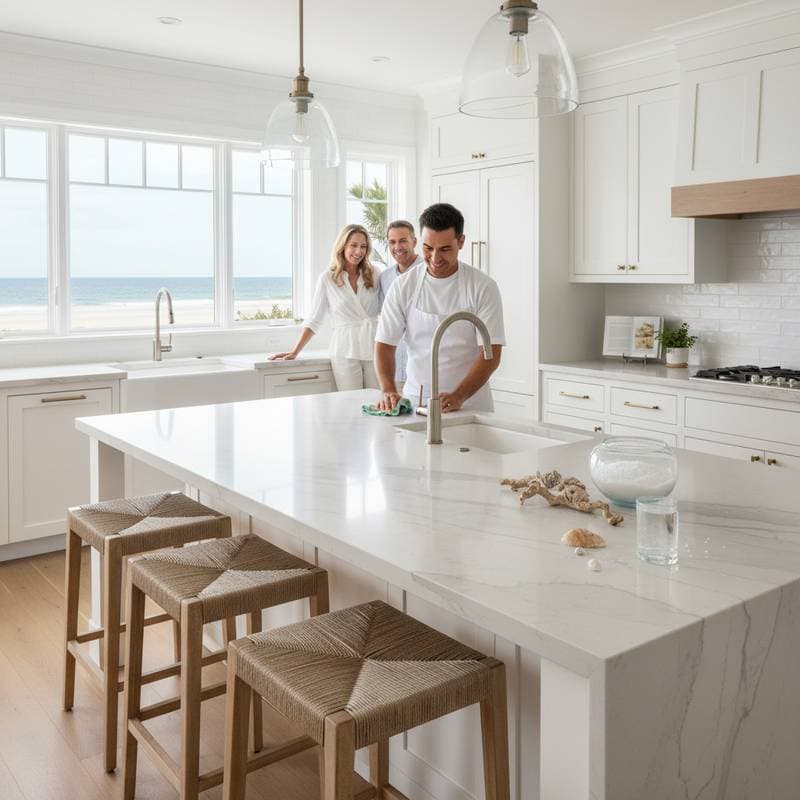
Why Quartz Countertops Excel Over Granite in Coastal Kitchen Remodels
Imagine a sun-drenched coastal kitchen where natural light reflects off sleek surfaces, bare feet track in beach sand from the adjacent patio, and the faint scent of ocean air mingles with fresh meals. This idyllic scene represents the aspiration of many seaside property owners. However, the harsh realities of saltwater intrusion, high humidity levels, and rigorous cleaning routines pose significant threats to countertop materials. Consequently, quartz countertops now surpass granite in selection by a ratio of three to one for beach house renovations.
For individuals contemplating a seaside kitchen refresh, this resource details the advantages of quartz in terms of resilience, upkeep requirements, and stylistic versatility. Readers will discover the underlying cost structures, direct comparisons to granite, and the motivations prompting both industry experts and hands-on renovators to adopt quartz. To initiate the process, obtain estimates from reputable local installers to evaluate fabrication techniques and identify the ideal material configuration.
Analyzing Cost Considerations
Installed quartz countertops generally range from $65 to $120 per square foot, resulting in a total expenditure of $4,500 to $7,800 for a standard mid-sized kitchen layout. In contrast, granite installations fall between $50 and $100 per square foot, with an average outlay of approximately $5,000 for comparable areas. Although granite may present a marginally lower initial price point, quartz frequently yields greater financial efficiency over time by eliminating the need for periodic sealing applications, professional polishing sessions, and intensive stain mitigation efforts.
Several variables influence these pricing elements. Slab thickness plays a key role; selections of 2 centimeters provide economical options, whereas 3-centimeter variants enhance structural integrity for high-traffic zones. Elaborate edge treatments, such as beveled or ogee profiles, or extended waterfall designs, incrementally elevate expenses. Fabrication demands, including precise cutouts for integrated sinks, stovetops, or appliance recesses, further amplify labor charges. Regional factors, particularly in shoreline communities, often incorporate elevated transportation fees due to material sourcing logistics.
Homeowners should verify local regulations, as countertop substitutions seldom necessitate formal permits. Nonetheless, consultation with the pertinent building department ensures compliance and averts potential delays.
Design Versatility and Coastal Aesthetic Integration
Quartz materials provide uniform patterns and an extensive palette of hues that harmonize with the serene, luminous ambiance of waterfront residences. Options encompass gentle white shades, earthy beige tones reminiscent of sandy shores, and subtle veining effects that mimic marble, complementing elements like reclaimed wood cabinetry or cerulean glass mosaic backsplashes.
Granite, with its inherent organic variations, attracts those seeking unique character, yet achieving consistency across multiple slabs proves challenging, especially in expansive layouts. Quartz, by comparison, guarantees a fluid, uninterrupted appearance that amplifies spatial openness and simplifies visual cohesion.
This material suits property owners pursuing an effortless, radiant, and unified kitchen environment that withstands daily coastal rigors. For visual inspiration, consider images of quartz installations in sunlit settings, such as those captured by photographers like Jodi Jacobson.
Strategies for Cost Optimization
Homeowners can implement several practical measures to moderate expenses without sacrificing quality. Opt for readily available standard color selections over bespoke or rare patterns to benefit from volume pricing discounts. Deploy thinner slab dimensions on less demanding areas, such as utility spaces or secondary counters, to conserve material usage.
Hybrid approaches prove effective; pair quartz islands with affordable alternatives like end-grain butcher block for dedicated food preparation stations, blending durability with warmth. Inquire about remnant pieces from fabricators for compact applications, including powder rooms or bar areas, which often come at reduced rates.
Finally, solicit detailed proposals from a minimum of three certified local specialists. This comparative analysis reveals variances in service inclusions, warranty provisions, and timeline commitments, empowering informed decision-making.
Frequently Asked Questions
Is Quartz Resistant to Heat?
Quartz demonstrates solid thermal tolerance, yet protective measures remain advisable. Place trivets or heat pads beneath hot cookware to prevent potential resin degradation from sustained high temperatures.
Does Quartz Discolor Under Sunlight Exposure?
Indoor installations experience negligible color shifts over years of use. However, prolonged direct ultraviolet rays in exterior applications could lead to minor fading; thus, quartz suits interior kitchen contexts best.
Is Quartz Prone to Chipping?
The engineered density of quartz confers exceptional impact resistance. That said, forceful blows to vulnerable edges may cause minor fractures; incorporating bullnose or rounded profiles mitigates this susceptibility.
How Does Quartz Handle Staining from Coastal Elements?
Quartz surfaces resist penetration by common coastal contaminants, including salt residues and food spills. Routine wiping with mild soap suffices for preservation, unlike porous granite that demands sealing.
What Maintenance Routine Does Quartz Require?
Quartz necessitates no specialized treatments beyond daily cleaning with non-abrasive solutions. Avoid harsh chemicals or abrasive pads to maintain the factory-applied finish.
Maximizing the Benefits of Your Coastal Kitchen Investment
Quartz countertops fuse aesthetic elegance with functional robustness, ideal for the demands of seaside living. Their inherent resistance to corrosive salts, persistent moisture, and persistent stains ensures enduring performance, allowing residents to prioritize leisure activities like seaside strolls over exhaustive surface care.
By selecting quartz, homeowners secure a space that evolves gracefully with the rhythms of coastal life, delivering lasting value through enhanced usability and preserved visual allure. Consult with design professionals early to customize selections that align with personal style and budgetary parameters.