
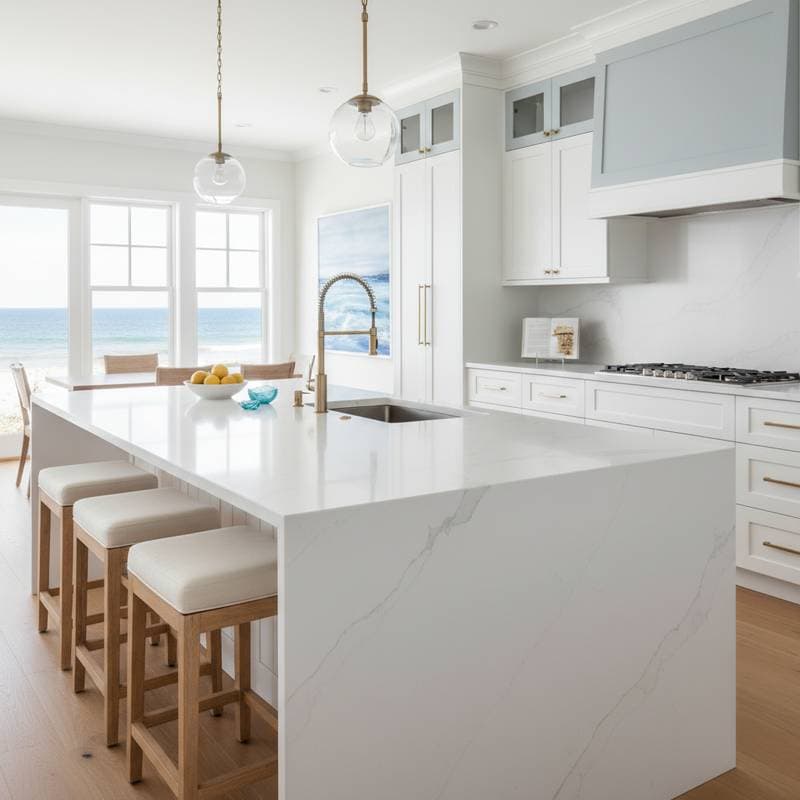
9 Reasons Quartz Surpasses Granite in Coastal Kitchens
Living near the coast presents distinct challenges for kitchen surfaces. Salt-laden air, elevated humidity levels, and frequent temperature shifts test the resilience of building materials. During a coastal kitchen renovation, selecting an appropriate countertop material ranks among the pivotal choices. Granite long served as the preferred selection, yet quartz now emerges as the superior alternative.
This transition occurs because quartz delivers the organic allure of granite alongside enhanced durability and reduced upkeep requirements. Quartz repels salt, moisture, and stains more effectively than many natural stones. Whether renovating a seaside cottage or crafting a contemporary coastal haven, quartz endures environmental stresses while preserving a pristine appearance.
The following outlines nine compelling reasons quartz excels over granite in coastal settings, accompanied by practical guidance to determine its suitability for your project.
Durability and Resistance
1. Exceptional Resistance to Salt
Coastal breezes transport salt particles that gradually degrade porous surfaces such as granite. Quartz, composed of crushed stone bound by resin, remains nonporous and impervious to salt-induced corrosion. This quality renders quartz ideal for ocean-adjacent kitchens exposed to saline atmospheres.
Practical Advice: In kitchens with windows oriented toward the shore, quartz maintains a flawless, unblemished finish despite repeated contact with maritime air.
[Image: Quartz countertop in a coastal kitchen overlooking the ocean]
2. Elimination of Sealing Requirements
Granite demands periodic sealing to block moisture and mineral penetration. Quartz requires no such treatment. The integrated resin layer repels liquids, oils, and contaminants that might otherwise cause discoloration or deterioration.
This feature conserves time and resources, allowing more opportunities to savor coastal pursuits rather than tending to countertop care.
3. Enhanced Resistance to Cracking
Variations in humidity and temperature prompt natural stone to expand and contract, potentially resulting in fractures or chips on granite. Quartz sustains structural integrity and color consistency amid such coastal fluctuations.
Maintenance Level: Straightforward. Clean with a soft cloth and mild detergent to ensure longevity without effort.
Aesthetic Appeal and Design Flexibility
4. Diverse Color Palette for Coastal Themes
Quartz offers an extensive array of hues aligned with seaside aesthetics. Options span gentle beige shades reminiscent of sand to serene blues and grays evoking the sea. Granite, though attractive, confines selections to naturally occurring tones.
Certain quartz varieties replicate the veining and dynamism of natural stone, yet provide predictable patterns that foster a tranquil, harmonious kitchen ambiance.
[Image: Quartz countertop in soft gray and white tones with blue tile backsplash]
5. Seamless Surfaces for Contemporary Coastal Styles
Quartz production enables fabrication of expansive slabs, minimizing seams in countertop installations. This approach yields a fluid, continuous expanse that captures and diffuses light effectively. Granite installations frequently incorporate multiple seams, particularly on expansive islands or prolonged runs.
Such seamless designs convey sophistication and simplify hygiene, as fewer joints reduce areas prone to residue accumulation.
6. Uniform Texture and Patterning
The inherent veining in granite varies between slabs, which can challenge achieving design uniformity. Quartz ensures consistency, facilitating precise planning for countertops, backsplashes, and islands.
Practical Advice: To achieve a refined seaside aesthetic, opt for quartz featuring understated veining paired with a matte or honed finish that echoes weathered coastal rock.
Maintenance and Longevity
7. Simplified Cleaning Process
Granite necessitates specialized cleaners alongside routine resealing, whereas quartz responds to basic soap-and-water cleansing. The nonporous composition inhibits bacterial growth, mold, and mildew development, a critical advantage in moisture-rich coastal zones.
Installation Cost Estimate: Quartz countertops typically range from $60 to $120 per square foot, including installation. Although initial expenses may exceed those of granite, reduced ongoing maintenance yields substantial long-term economies.
8. Sustained Color Vibrancy
Direct sunlight can subtly diminish the vibrancy of certain natural stones, particularly in sunlit kitchens with sea views. Quartz incorporates UV-stable resins that safeguard against fading, preserving original hues and luster under regular illumination.
[Image: Bright coastal kitchen with quartz countertops and large windows]
9. Resilience in Active Coastal Households
Seaside residences often host gatherings and intensive culinary activities. Quartz withstands routine abrasion without etching or marking. Prepare meals, host events, and utilize surfaces with assurance, secure in their protective qualities.
Practical Advice: Employ cutting boards to protect knife edges, as the material's density may otherwise accelerate blade wear.
Essential Considerations for Your Coastal Remodel
Selecting quartz for a seaside kitchen warrants attention to these recommendations:
- Favor light-colored options to amplify natural illumination and evoke coastal luminosity.
- Integrate quartz with organic elements such as rattan accents or salvaged timber for textural equilibrium.
- Specify bullnosed edges on countertops to introduce gentle, wave-like contours.
- Consult installers regarding integrated backsplash solutions to streamline sanitation.
Frequently Asked Questions
Is quartz more expensive than granite?
Quartz may involve a modest premium at purchase, yet it offsets costs through the absence of sealing and specialized care needs.
Does quartz manage humidity better than granite?
Affirmative. The nonporous nature of quartz bars moisture ingress, rendering it exceptionally suited to humid or maritime regions.
Can quartz sustain heat exposure?
It accommodates moderate temperatures well, though placing trivets or pads beneath hot items prevents any risk of resin alteration.
Realizing the Full Potential of Seaside Kitchen Living
Quartz empowers coastal kitchens to blend functionality with enduring appeal. By addressing environmental rigors head-on, it frees homeowners to focus on the joys of beachside existence. Invest in quartz to secure a space that endures and inspires for years ahead.