
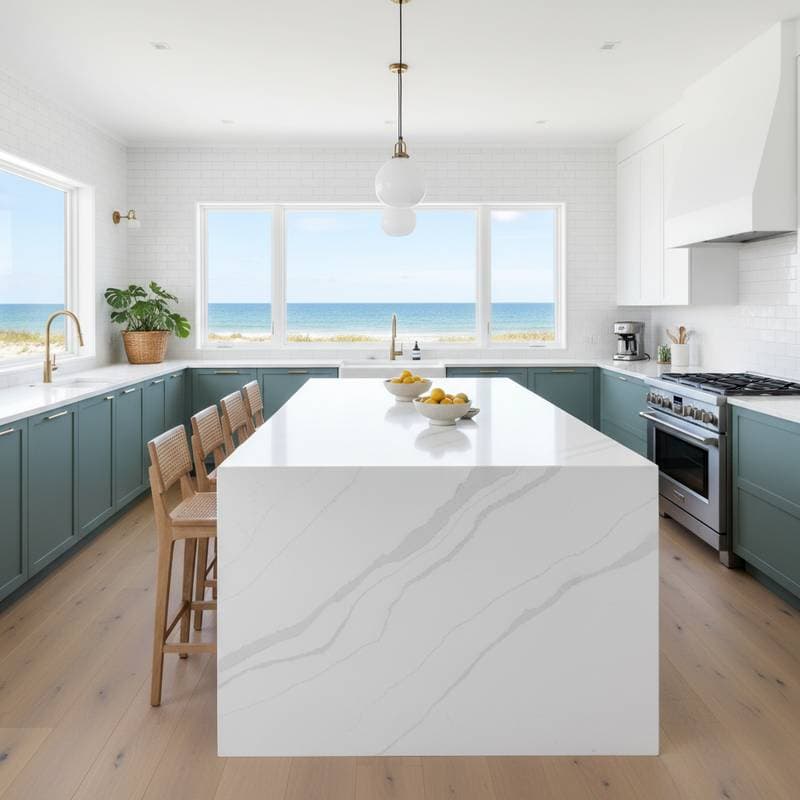
Introduction to Countertop Choices in Coastal Settings
Coastal living presents unique challenges for home materials, including exposure to salt air, humidity, and frequent moisture. Homeowners in these environments seek countertops that withstand such conditions while maintaining visual appeal. Quartz emerges as a leading option, offering advantages over traditional granite in durability and upkeep.
Quartz countertops consist of engineered stone, blending crushed quartz with resins for a nonporous surface. This composition resists bacterial growth and simplifies cleaning compared to granite, a natural stone that requires periodic sealing. For beachside kitchens, these qualities translate to less hassle and longer-lasting beauty.
Key Advantages of Quartz Over Granite
Durability in Harsh Environments
Quartz excels in coastal climates due to its resistance to etching from acidic substances and stains from spills. Granite, while sturdy, can absorb liquids if not sealed regularly, leading to potential discoloration in salty, humid areas. Quartz avoids this vulnerability, ensuring surfaces remain intact even after exposure to ocean spray.
In tests simulating coastal conditions, quartz maintains structural integrity without cracking under thermal stress from hot pots or cold seafood preparations. Granite may develop micro-fractures over time in similar scenarios. This reliability makes quartz suitable for high-use areas like island counters in family beach homes.
Low Maintenance Requirements
One primary appeal of quartz lies in its effortless care routine. Unlike granite, which demands resealing every one to three years to prevent moisture penetration, quartz requires no such treatment. Coastal homeowners appreciate this feature, as salt residue and sand do not adhere to the surface.
Daily cleaning involves a simple wipe with a soft cloth and mild cleaner, preserving the material's polish. Harsh abrasives or acidic cleaners can damage the resin binder in quartz, so selecting pH-neutral products ensures longevity. This approach keeps kitchens pristine without extensive effort.
Cost Considerations and Long-Term Value
Initial costs for quartz average $95 per square foot installed, comparable to mid-range granite options. However, savings accrue over time through reduced maintenance and repair needs. Granite installations may incur additional expenses for sealing services, particularly in corrosive coastal zones.
Quartz also offers consistent pricing regardless of slab variations, unlike granite where rare patterns command premiums. For budget-conscious remodels, quartz provides premium aesthetics at accessible rates, enhancing resale value in coastal properties where durable features attract buyers.
Design Versatility for Coastal Aesthetics
Quartz replicates natural stone looks with added uniformity, ideal for achieving serene beach-inspired designs. Colors like soft whites, seafoam greens, and sandy beiges complement coastal decor without the veining inconsistencies of granite. Custom edges, such as eased or bullnose profiles, integrate seamlessly with cabinetry.
Pair quartz with marine-grade hardware and backsplashes in subway tile for a cohesive look. Its ability to mimic marble or concrete expands creative possibilities, allowing homeowners to craft personalized spaces that evoke ocean tranquility.
Installation Process for Quartz Countertops
Installing quartz demands precision to avoid issues in moisture-prone coastal settings. Professional installation ensures proper handling and alignment, critical for longevity.
Essential Tools and Preparation
Gather a wet saw for clean cuts, suction lifters for maneuvering slabs, epoxy for bonding, a caulking gun for sealing, and leveling equipment to ensure flatness. These tools prevent common errors like jagged edges or instability.
Before installation, measure the space accurately and reinforce cabinets to support the 20 pounds per square foot weight of quartz. In humid coastal areas, acclimate materials indoors for 48 hours to minimize expansion risks.
Potential Risks and Mitigation
Cracking can occur during transport over uneven roads common near beaches; secure slabs with padding and straps. Uneven seams result from poor leveling, so use shims during setup. Limited warranty coverage often excludes damage from improper installation, underscoring the need for certified installers.
Hire a licensed contractor experienced in coastal projects. They assess local humidity and salt exposure, verifying that supports withstand environmental stresses. This step safeguards against future complications like warping or delamination.
Maintenance and Care Guidelines
Quartz thrives with minimal intervention, suiting the active lifestyle of coastal residents. Regular habits prevent wear from sand, salt, and spills.
Daily and Routine Care
Wipe surfaces daily with mild dish soap and warm water using a soft cloth. Avoid abrasive pads or harsh chemicals, which may dull the engineered finish. Always use cutting boards to protect against scratches from knives or utensils.
In outdoor kitchens, rinse countertops periodically to remove salt film from sea air. Dry thoroughly after cleaning to avert water spots in humid conditions.
Seasonal Inspections and Adjustments
Conduct annual checks on seams and caulked edges, particularly in exposed outdoor areas. Look for separation caused by moisture fluctuations and reseal with food-safe silicone if necessary. This maintenance extends the lifespan, keeping quartz vibrant for decades.
Store cleaning supplies in a dry cabinet to avoid residue buildup. For stubborn spots, a paste of baking soda and water gently lifts marks without abrasion.
Frequently Asked Questions
Can Quartz Countertops Withstand Outdoor Beach Exposure?
Yes, select outdoor-rated quartz engineered for UV resistance. Standard indoor varieties may fade or warp under prolonged sunlight, so review manufacturer specifications prior to selection.
Does Salt Air Affect Quartz Surfaces?
No, the nonporous nature of quartz repels salt residue effectively. This property surpasses granite, which benefits from frequent resealing in salty environments to maintain integrity.
How Does Quartz Compare to Granite in Heat Resistance?
Quartz handles moderate heat well but avoids direct placement of hot items to prevent resin scorching. Granite tolerates higher temperatures, yet both materials perform reliably in typical kitchen use with trivets.
Maximizing Enjoyment in Your Coastal Kitchen
Quartz countertops empower coastal homeowners to focus on living rather than labor. They endure salt, sun, and splashes while delivering timeless elegance that enhances every gathering. From preparing fresh catches to hosting sunset dinners, these surfaces support effortless hospitality.
Integrate quartz into your design for a space that reflects the ease of seaside life. With its proven performance, quartz ensures your kitchen remains a joyful hub for years to come.