
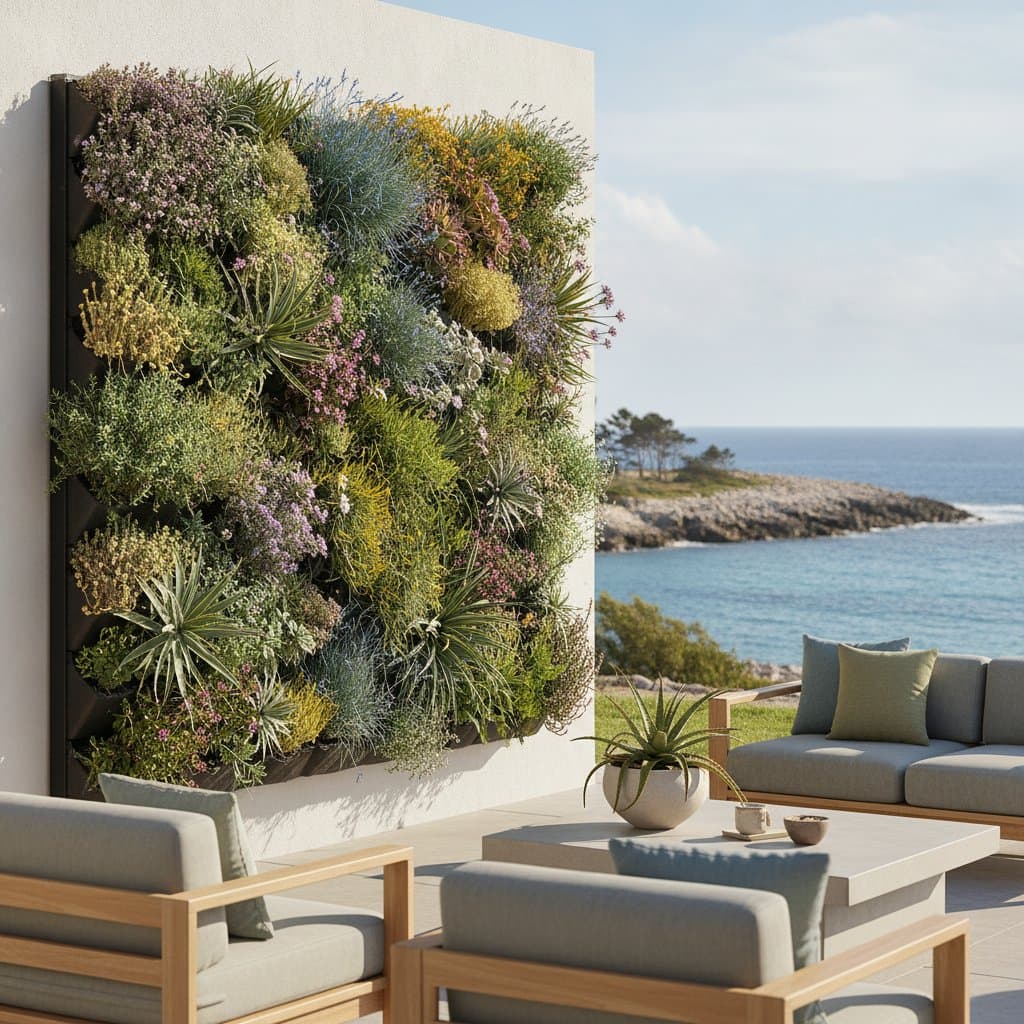
Vertical Gardens Transform Coastal Patios into Retreats
Coastal living brings fresh air, ocean views, and a connection to nature. A well-planned living wall turns an ordinary patio into a lush private retreat. This guide covers design, plant selection, materials, and maintenance for vertical gardens suited to salt air and wind.
Understanding Vertical Gardens
Vertical gardens, also called living walls, consist of plants grown on upright panels or frames. They attach to walls, stand alone, or integrate into fences. These systems save ground space and create visual focal points.
Advantages for Coastal Settings
Salt air, humidity, and wind challenge standard plantings. Vertical gardens address these issues with targeted benefits. They deliver space efficiency by adding greenery without occupying floor area. Tall plantings provide privacy and reduce noise. Plants cool the space through moisture release and filter air. The result is an evolving display of color and texture.
Planning the Design
Define goals such as shade creation, pollinator support, or added greenery before selecting components. Assess light exposure, wind direction, and moisture first. South-facing walls suit succulents and herbs. Shaded spots require ferns or ivy. Wind accelerates drying, so install screens or select tolerant species. Ensure drainage prevents salt-related rot.
Choose a structurally sound location. Brick, concrete, or reinforced wood supports the added weight of frames, soil, and plants. Renters or those seeking flexibility can use modular panels or freestanding units.
Match the style to surroundings. Tropical themes feature broad leaves and bold blooms. Minimalist designs repeat clean patterns in neutral tones. Coastal native selections emphasize succulents, grasses, and salt-tolerant vines.
Selecting Plants
Choose species that tolerate salt, humidity, and temperature shifts. Combine varied textures and heights for depth.
Recommended Coastal Varieties
- Succulents such as echeveria, crassula, and sedum store water and resist spray.
- Ferns including Boston and maidenhair types fill shaded zones with soft foliage.
- Grasses like fountain grass and blue fescue introduce movement.
- Flowering options such as geraniums, lantanas, and coastal daisies add color.
- Herbs including rosemary, thyme, and oregano perform in sun and emit fragrance.
- Vines such as jasmine and creeping fig cover large surfaces quickly.
Anchor the base with larger leaves. Allow trailing plants to cascade from the top. Fill middle sections with compact, colorful foliage. Favor evergreen types for year-round coverage.
Constructing the System
Select a build method based on skill level and maintenance preference. Modular panels allow easy swaps. Hydroponic setups circulate nutrients without soil for faster growth. Fabric pockets offer lightweight, budget options. Trellis frames support natural climbing.
Use corrosion-resistant materials. Stainless steel, treated wood, and UV-stable plastics withstand salt exposure. Avoid untreated metals. Employ lightweight, aerated potting mixes for soil systems.
Install drip irrigation with a timer for consistent root delivery. Include a drainage tray to protect patio surfaces.
Ongoing Maintenance
Check soil moisture several times weekly, adjusting for wind and sun. Prune to preserve shape and airflow. Apply slow-release fertilizer every few months. Inspect for aphids or mites and treat with insecticidal soap as needed. Replace struggling plants immediately. Rinse leaves periodically to clear salt residue. Secure the structure ahead of storms.
Enhancing the Patio Experience
Add warm LED lighting to highlight textures after dark. Position weather-resistant seating nearby for relaxation. Introduce a small fountain to mask noise and create calm. Blend stone or wood accents with the greenery. Incorporate ceramic details or natural rugs to reflect personal style.
Addressing Common Questions
Salt-tolerant succulents, ferns, grasses, and herbs such as rosemary form reliable choices. Small DIY walls start at a few hundred dollars. Larger automated systems reach several thousand. Sturdy masonry or reinforced wood walls handle the load. Water moderate amounts a few times weekly via drip systems. Healthy walls rarely face major pests when inspected regularly. Shallow-rooted herbs, lettuces, and vegetables succeed with six hours of sun. Proper care extends lifespan for many years.
Building Your Coastal Retreat
A completed vertical garden supplies a living backdrop that shifts with light and seasons. Thoughtful plant choices and steady care produce lasting color and privacy beside the sea.