
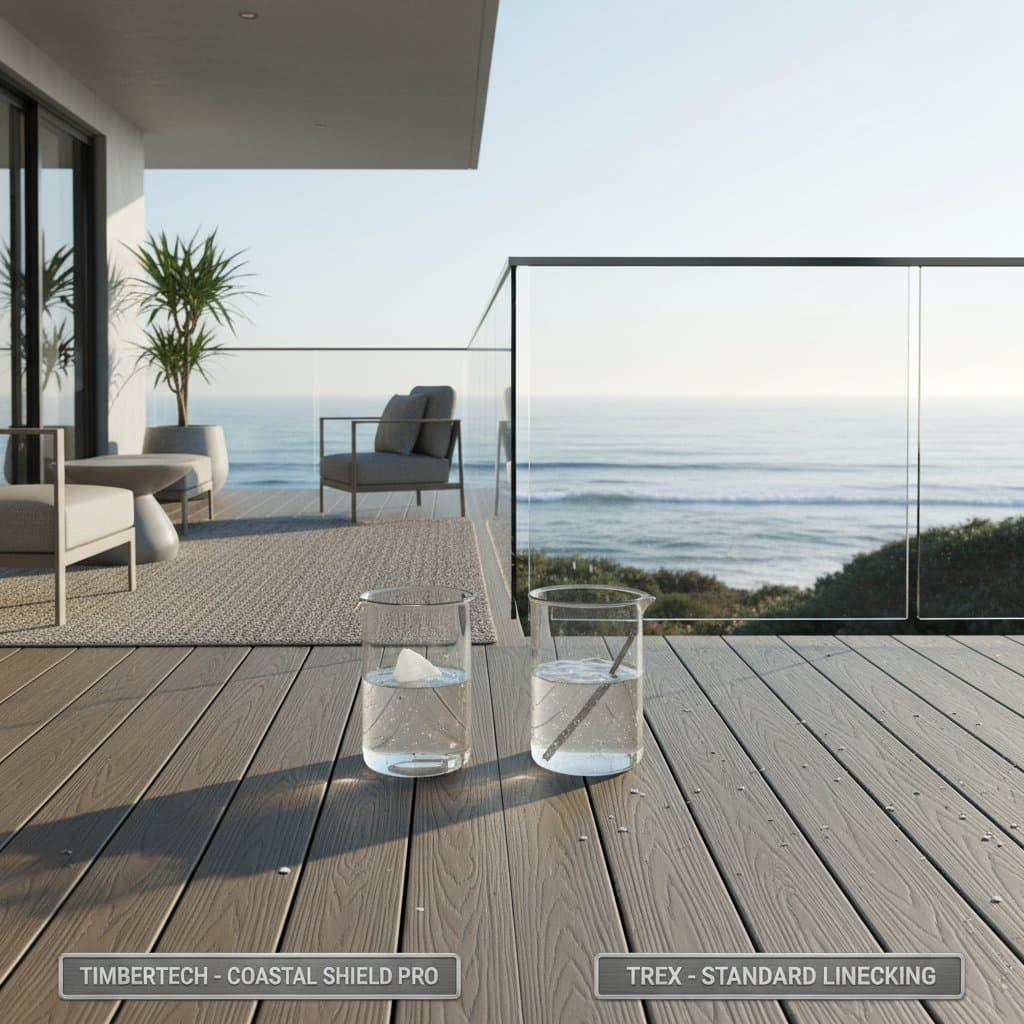
Trex vs TimberTech: Selecting the Ideal Composite Decking for Coastal Salt Air Environments
Coastal living exposes outdoor structures to relentless salt air, high humidity, and intense sunlight, which degrade traditional wood decks through fading, cracking, and mold growth. Homeowners increasingly opt for composite decking to counter these elements, with Trex and TimberTech emerging as leading choices. These materials blend durability with minimal upkeep, yet their formulations differ in resisting saltwater corrosion and long-term wear.
This analysis examines Trex and TimberTech across key dimensions: pricing, material strength, aesthetic options, and suitability for seaside conditions. Readers will find detailed comparisons of warranties, upkeep routines, and installation strategies tailored to oceanfront properties. These elements guide informed decisions for enhancing outdoor living spaces while safeguarding investments.
Key Insight: Installed costs for Trex typically range from $9 to $16 per square foot, whereas TimberTech falls between $11 and $18 per square foot. Both materials prevent rot and distortion, but TimberTech's capped polymer construction provides enhanced defense against salt infiltration. Consult local contractors for personalized estimates to align selections with specific site demands and financial plans.
Factors Influencing Costs
Pricing for Trex and TimberTech varies by product series, which also determines resilience and visual appeal. Trex decking averages $9 to $16 per square foot when fully installed, while TimberTech averages $11 to $18 per square foot.
Elements Impacting Overall Expenses
- Material Formulation: Trex incorporates a core of recycled wood fibers encased in plastic, offering solid performance. TimberTech provides composite options alongside fully polymeric boards; the latter excel in repelling salt and humidity, justifying the elevated price.
- Design and Surface Features: Higher-end collections feature realistic wood-grain embossing and varied color fades, increasing costs for a more natural appearance.
- Installation Labor: Allocate $3 to $7 per square foot for professional work, with rates influenced by terrain challenges and design intricacy.
- Support Structure and Hardware: Opt for corrosion-resistant stainless steel fasteners and framing to withstand marine environments, avoiding rust-prone alternatives.
- Regulatory and Site Preparation: Coastal regulations may mandate permits for decks proximate to water bodies; include these in budgeting alongside groundwork like grading and foundation reinforcement.
A standard coastal deck project, measuring 200 to 300 square feet, generally totals $12,000 to $20,000, contingent on selected grades and custom features.
Overview of TimberTech Collections
TimberTech organizes its products into EDGE, PRO, and AZEK categories. The AZEK series employs uncorrodible capped polymer without wood content, rendering it exceptionally robust against saline moisture, fungal growth, and staining.
Optimal Use: Decks adjacent to shorelines or exposed to frequent sea spray.
Advantages:
- Exceptional barrier to salt-induced erosion and water penetration
- Reduced surface temperature during sunny conditions for greater comfort
- Extended warranty periods on flagship models, often reaching 50 years
Drawbacks:
- Premium pricing demands careful budget assessment
- Installation precision is crucial to accommodate thermal movements
Image Credit: TimberTech / The AZEK Company / Getty Images
Installation Options: DIY or Professional
Undertaking composite deck installation independently can reduce expenses significantly, though coastal settings introduce variables like wind exposure and soil instability.
Required Expertise: Intermediate to expert level, encompassing knowledge of load-bearing frames, gap allowances, and moisture diversion.
DIY Installation Process
- Site Preparation: Remove debris and vegetation, ensure even grading, and lay a permeable base such as gravel to facilitate drainage.
- Framing Construction: Employ pressure-treated lumber suitable for direct earth contact, sealed with a marine-grade protectant prior to board attachment.
- Board Placement: Secure with concealed clips or marine-grade stainless screws, maintaining 1/8-inch gaps for expansion, particularly vital for polymer variants.
- Edge Finishing: Apply matching trim pieces to seal cut ends, deterring water ingress and achieving a seamless profile.
Benefits of Professional Installation
For sites with steep inclines, multi-tier designs, or direct ocean adjacency, experts guarantee adherence to building codes and structural integrity. Seek builders experienced in marine-grade applications; request portfolios of similar coastal projects to verify competence.
Upkeep Strategies for Coastal Composite Decks
Composite materials demand less maintenance than wood, yet proactive measures preserve appearance and functionality amid salt exposure.
- Routine Rinsing: Direct a low-pressure hose monthly to dislodge salt residues, preventing surface dulling and buildup.
- Periodic Deep Cleaning: Combine gentle detergent with lukewarm water, applying a soft-bristle brush to address stains without abrasion.
- Hardware Checks: Annually examine and replace any oxidized fasteners with high-grade stainless equivalents to maintain secure fastening.
- Power Washing Precautions: Maintain a minimum 8-inch distance from the deck surface to avoid damaging protective caps.
- Vegetation Management: Prune overhanging plants to promote under-deck ventilation, minimizing humidity retention.
Frequently Asked Questions
What is the expected lifespan of composite decking in marine environments?
Trex and TimberTech installations endure 25 to 30 years or beyond with consistent care and airflow. Polymer constructions, such as TimberTech's AZEK, frequently surpass wood-plastic hybrids in saline settings.
Will exposure to saltwater invalidate warranties?
Neither brand excludes salt air from coverage, provided installation and maintenance follow specified protocols.
Is it advisable to apply paint or stain to composite decking?
Such modifications are discouraged, as integrated UV inhibitors safeguard the finish. Most warranties become void upon staining or painting.
Which option remains cooler during hot weather?
TimberTech polymer boards dissipate heat more effectively, resulting in lower foot temperatures relative to Trex surfaces.
Finalizing Your Coastal Deck Selection
Equipped with these comparisons, evaluate Trex and TimberTech based on your property's proximity to the sea, aesthetic preferences, and long-term maintenance tolerance. Prioritize polymer options like TimberTech AZEK for maximal salt resistance in high-exposure zones. Contact certified installers promptly to initiate planning, ensuring your deck withstands coastal rigors while elevating outdoor enjoyment.