
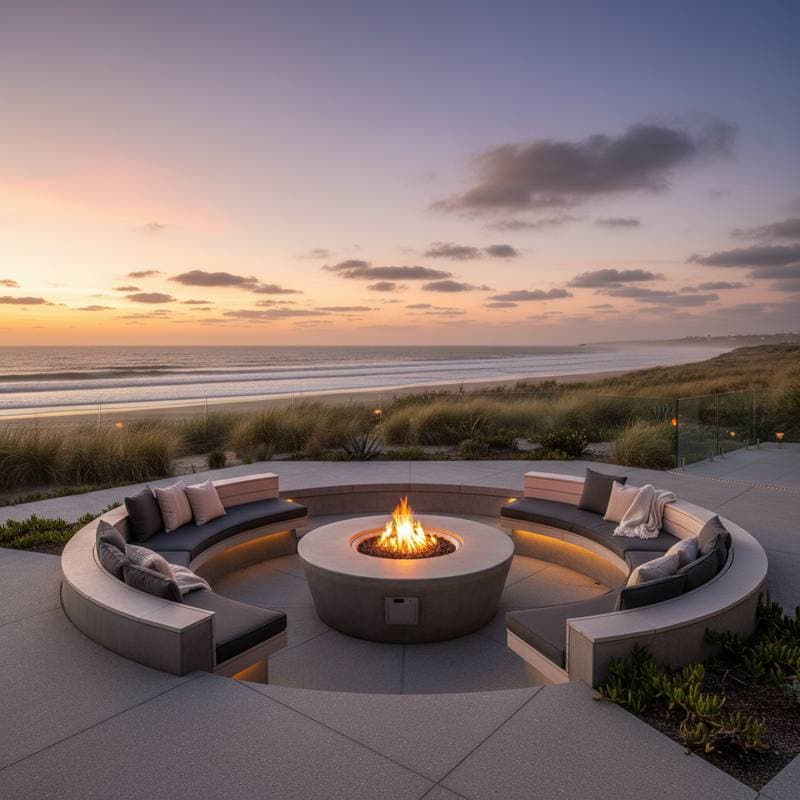
Introduction to Sunken Fire Pits
Sunken fire pits represent an innovative solution for coastal homeowners facing persistent winds. By recessing the fire feature into the ground, these designs minimize exposure to breezes while fostering intimate gathering areas. This approach combines aesthetic appeal with practical functionality, allowing families and friends to enjoy extended evenings outdoors.
Coastal environments present unique challenges, including salt-laden air and shifting sands. Sunken pits address these issues through thoughtful engineering that prioritizes durability and safety. Homeowners appreciate how such installations transform patios or beachfronts into cozy havens, shielded from the elements.
Key Design Considerations
Effective sunken fire pit designs begin with essential features that ensure performance in windy conditions. Ventilation ports play a critical role, particularly for gas-powered models. These openings allow for proper airflow, preventing dangerous gas accumulation and promoting efficient combustion.
Material Durability
Selecting robust materials proves vital for withstanding coastal rigors. Concrete withstands salt corrosion effectively when properly sealed, while marine-grade stainless steel resists rust from ocean spray. Natural stones, such as granite or flagstone, offer timeless beauty if treated with penetrating sealants to block moisture penetration.
Avoid materials prone to rapid deterioration, like untreated wood or basic iron. Instead, opt for composites engineered for outdoor exposure. These choices extend the lifespan of the installation, reducing replacement costs over time.
Safety Clearances and Features
Position the fire pit with ample distance from potential hazards. Maintain at least 10 to 15 feet of separation from buildings, plants, or combustible items to contain sparks and heat. Incorporate spark screens made of heavy mesh or tempered glass wind guards to further contain embers.
Surrounding surfaces require attention to prevent slips, especially in sandy or damp areas. Install non-slip pavers or textured concrete around the pit. Consult local authorities to verify compliance with fire codes and coastal regulations before proceeding with any installation.
Fuel Options: Comparing Wood and Gas
Choosing between wood-burning and gas fire pits involves weighing ambiance against ease of use, alongside regulatory constraints common in coastal zones.
| Type | Pros | Cons |
|---|---|---|
| Wood-Burning | Provides traditional crackling sounds and natural aroma; operates without utility connections. | Demands wood storage space; produces smoke that may violate beach restrictions; requires manual tending. |
| Gas (Propane or Natural Gas) | Delivers clean, odor-free flames with simple push-button starts; allows precise heat adjustment. | Necessitates skilled installation and ongoing fuel access; higher initial setup expenses. |
Gas options often suit coastal settings best due to their wind-resistant flames and reduced smoke output. Propane models offer portability for semi-permanent setups, while natural gas provides seamless integration for fixed installations. Wood fires retain appeal for occasional use where permits allow, evoking classic beach bonfire experiences.
Photo description: A sleek gas fire pit embedded in a smooth concrete terrace, overlooking the Pacific Ocean at dusk.
Maintenance for Enduring Performance
Regular care ensures a sunken fire pit remains safe and attractive for years. Focus on shielding components from environmental stressors like salt buildup and seasonal rains.
Essential Maintenance Practices
- Clear the fire bowl or burner weekly by sweeping away sand, ash, and debris to maintain airflow.
- Apply a fresh sealant to stone or concrete elements each year, following manufacturer guidelines for application.
- Secure a fitted cover over the pit during idle periods to block rainwater, leaves, and coastal dust.
- For gas systems, schedule annual inspections of lines and valves to detect corrosion or potential leaks early.
Select covers crafted from durable materials, such as powder-coated metal or UV-resistant canvas, to match the pit's aesthetic. These steps not only preserve functionality but also enhance the feature's visual integration with surrounding landscapes.
Enhancing the Coastal Gathering Experience
Sunken fire pits serve as focal points that elevate outdoor entertainment. Integrate complementary elements to craft versatile spaces suited for relaxation or socializing.
Practical Design Additions
- Install curved benches with weatherproof cushions in neutral tones to encourage lingering conversations.
- Embed low-voltage LED strips along pathways and seating for subtle illumination that guides guests safely.
- Position compact side tables nearby, constructed from teak or recycled plastic, to hold beverages and appetizers.
- Weave in coastal motifs through decorative accents like polished seashells or drought-tolerant succulents.
These enhancements create a seamless blend of comfort and style, turning the area into an extension of indoor living.
Photo description: A rugged stone sunken fire pit encircled by cushioned benches, softly lit by LED accents against a vibrant coastal twilight.
Frequently Asked Questions
What depth is ideal for a sunken fire pit?
A depth ranging from 12 to 18 inches strikes a balance between wind shielding and user accessibility. Align this measurement with adjacent seating heights to promote comfortable posture during gatherings.
Is construction on a beach feasible?
Public beaches frequently prohibit permanent open flames, so review municipal rules carefully. On private properties, opt for removable sand-based pits that can be dismantled and restored post-use.
Do permits apply to these installations?
Most jurisdictions require them to uphold fire safety, plumbing standards, and ecological protections. Contact the local permitting office early to outline your project and secure approvals.
Where should a coastal fire pit be placed?
Seek naturally protected locations, such as behind dunes or low retaining walls, to reduce wind impact. Steer clear of flood-prone zones or areas susceptible to tidal encroachment.
Can sunken pits integrate with decks or patios?
Yes, provided adequate insulation and venting are in place. Employ fire-resistant decking materials like composite boards and engage certified professionals for the recessing process.
Building Lasting Coastal Memories
Installing a sunken fire pit redefines seaside leisure by merging protection with inviting warmth. The recessed structure fosters closeness among guests, undeterred by coastal gusts, while the steady glow invites shared stories under the stars.
Whether embedded in a terraced yard or nestled amid native grasses, this feature harmonizes with the rhythm of ocean life. Embrace the opportunity to design a space that nurtures connection, one flame-lit evening at a time.