
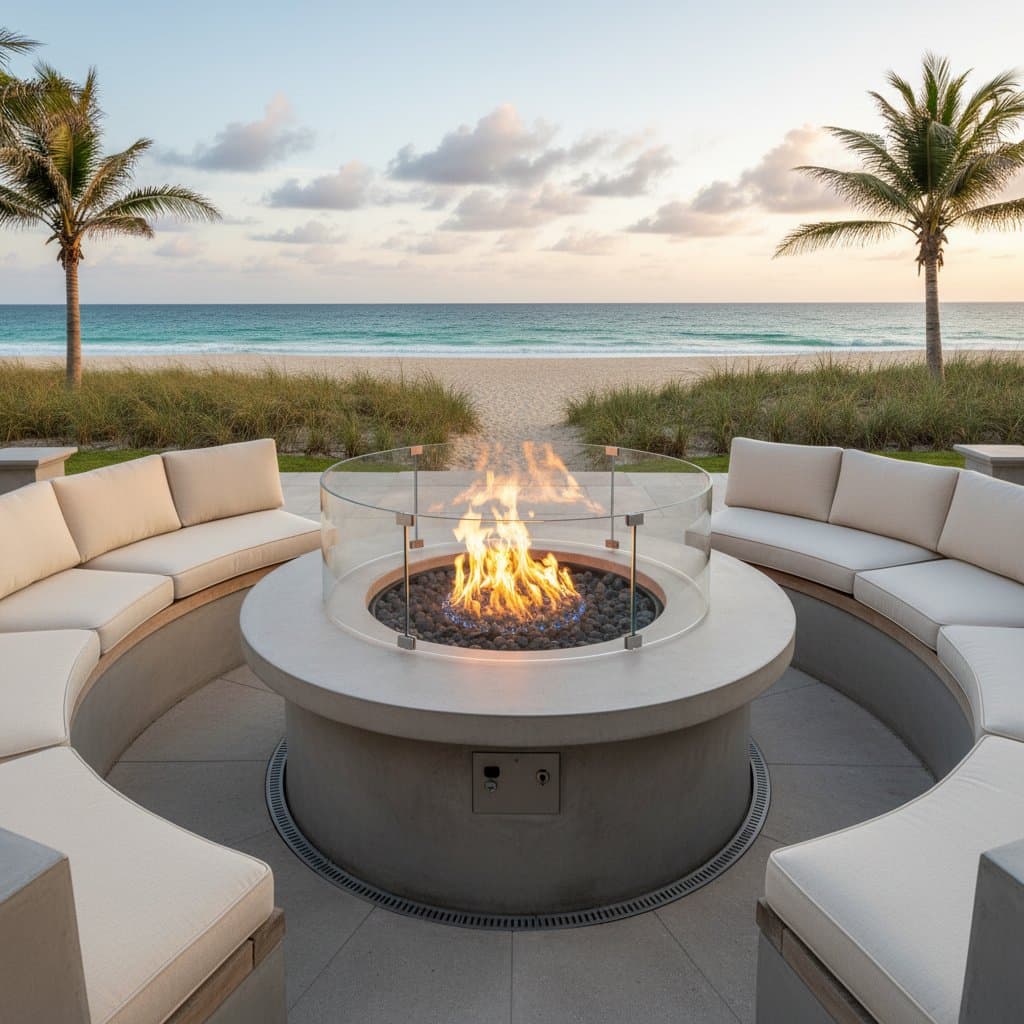
9 Sunken Fire Pit Ideas for Windproof Coastal Outdoor Living
Coastal living offers endless enjoyment, from salt-kissed air to panoramic ocean views. Residents near the coast face the challenge of frequent breezes that transform a cozy fire pit evening into a smoky struggle. Traditional above-ground fire pits lose heat quickly or allow wind to scatter embers. Sunken fire pits address these issues through smart design and natural wind protection, creating a warm gathering spot suited to coastal environments.
Picture settling into comfortable seating surrounded by steady flames, even as wind increases. A sunken fire pit delivers style while resolving outdoor comfort concerns. These designs suit sleek modern aesthetics or rustic coastal retreats, providing wind-resistant features tailored to specific spaces.
The following nine ideas integrate function, safety, and visual appeal for outdoor projects.
Design and Layout Inspiration
1. Built-in Seating with Stone Surrounds
A classic sunken fire pit employs natural stone or concrete walls to form a below-ground basin. Built-in bench seating along the edge provides structure and comfort. Stone serves as a wind barrier, trapping warmth and directing smoke downward.
Select local stone varieties that align with existing patio or retaining wall materials for seamless coastal integration. Consider limestone or granite, which withstand salt exposure and offer textured surfaces that enhance grip and durability. Position benches at 18 to 24 inches high to accommodate easy access while maximizing heat retention.
[Image: Stone sunken fire pit with curved seating in a coastal backyard]
2. Circular Concrete Bowl Design
Circular pits foster intimacy and simplify maintenance. A custom-poured concrete bowl embedded in the ground yields a smooth, modern appearance resistant to wind and moisture. Incorporate waterproof cushions or a curved backrest to elevate seating comfort.
Opt for reinforced concrete with a 4- to 6-foot diameter to balance space efficiency and gathering capacity. Seal the interior with high-heat epoxy to prevent cracking from thermal expansion. This setup ensures even flame distribution and minimizes wind interference across the open area.
3. Glass Wind Guards for Added Protection
For yards exposed to strong coastal gusts, tempered glass panels around the seating area block wind effectively. These panels preserve views of the flames and surroundings while distributing heat uniformly.
Install panels 3 to 4 feet high, anchored securely to stone or metal frames for stability. Choose frosted or clear options based on privacy needs; clear glass maintains openness, while frosted variants diffuse light softly. Regular cleaning with mild soap prevents salt buildup, extending panel lifespan.
Functional and Comfort Features
4. Integrated Drainage Systems
Coastal climates introduce mist or rain, making drainage crucial. Incorporate a gravel base layer or concealed drain pipe to channel water away from the pit. This approach maintains cleanliness and averts moisture accumulation that damages materials.
Layer 4 to 6 inches of gravel beneath the pit floor, sloped at a 1% grade toward drainage outlets. Connect pipes to the home's stormwater system or a dry well to handle excess flow. Test the system during installation with simulated rainfall to confirm efficient water evacuation.
5. Recessed Lighting for Ambiance
Soft, low-level lighting along steps or benches enhances safety and creates atmosphere. LED strips or recessed fixtures accentuate textures and elevate evening gatherings.
Position lights at 12-inch intervals to illuminate pathways without overwhelming the fire's glow. Select warm white bulbs at 2700K temperature for a inviting ambiance that harmonizes with natural flames. Wire installations through conduit to protect against moisture, ensuring reliable performance in humid conditions.
6. Fire Glass or Lava Rock Fill
Replace traditional logs with fire-safe glass or lava rock to retain heat longer and resist wind dispersal. These fillers complement coastal backdrops by reflecting light elegantly.
Choose tempered fire glass in blue or amber tones to evoke ocean hues, or black lava rock for a neutral, earthy contrast. Layer materials 2 to 4 inches deep over a gas burner for optimal coverage and minimal soot production. This selection reduces cleanup time and enhances visual depth during use.
Coastal Materials and Styling
7. Weather-Resistant Concrete Finishes
Select concrete formulations engineered for marine settings to combat salt corrosion and fading. Tint the concrete in sand, gray, or white shades to echo the coastal color scheme.
Incorporate admixtures like silica fume for increased density and water resistance. Apply a penetrating sealer annually to shield against UV degradation. These finishes support custom stamping or polishing for subtle patterns that mimic beach textures without excessive maintenance.
8. Teak or Composite Seating Accents
Incorporate teak or composite wood for seating to introduce warmth and texture. These materials endure salty air and moisture while evoking a relaxed beachside atmosphere alongside stone or concrete pits.
Teak's natural oils provide inherent protection; source FSC-certified options for sustainability. Composite alternatives mimic wood grain with recycled plastics for low upkeep. Cushion seats with marine-grade fabrics treated for UV and mildew resistance to prolong comfort in variable weather.
9. Layered Landscaping Around the Pit
Encircle the sunken pit with dune grasses, succulents, or low palms to soften edges and provide natural wind buffering. Strategic boulders or driftwood accents finalize the coastal motif.
Plant species like beach grass or sea thrift, which thrive in sandy soils and require minimal irrigation. Space plants 2 to 3 feet from the pit edge to avoid fire hazards while creating layered barriers. Mulch with crushed shell or pea gravel to suppress weeds and retain soil moisture effectively.
[Image: Sunken fire pit surrounded by native coastal plants and stone paths]
Steps to Build Your Sunken Fire Pit
Constructing a sunken fire pit demands careful planning for enduring results. Review local fire codes prior to excavation and select materials appropriate for coastal conditions. Diagram seating depth at 12 to 18 inches, integrate drainage, and account for prevailing wind directions to optimize comfort.
Engage a professional for gas line installations or structural reinforcements if the site involves slopes. Budget for permits and inspections to comply with safety standards. Upon completion, this feature becomes a captivating centerpiece that draws family and friends throughout the seasons.
The inherent windproof qualities and coastal elegance of a sunken fire pit convert ordinary backyards into sheltered havens, where ocean breezes enhance the allure of radiant firelight.