
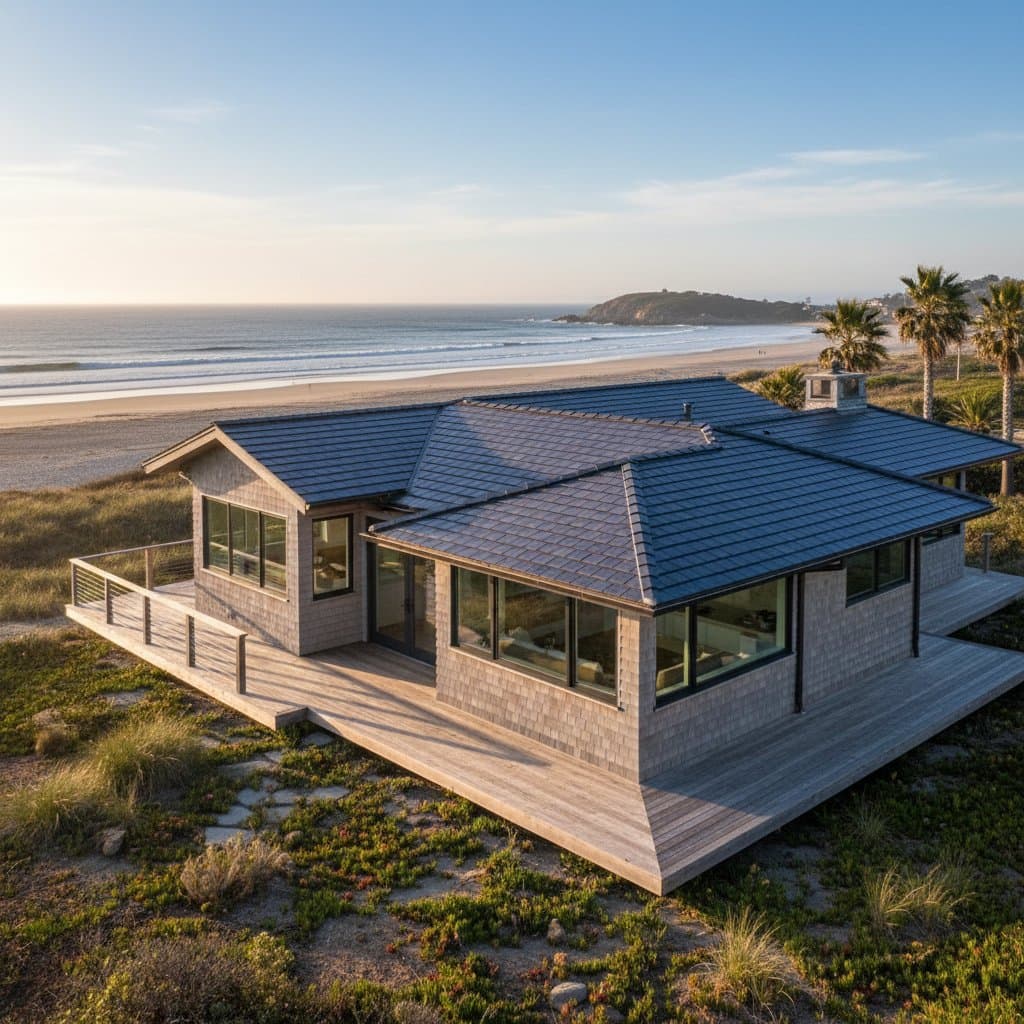
Solar Shingles Seamlessly Fit Coastal Home Styles
Homeowners along the coast often face a unique challenge when upgrading their roofs or energy systems. They seek the savings and sustainability of solar energy, yet they prioritize preserving the charm of their coastal home designs. Traditional solar panels can appear bulky or industrial, clashing with the clean lines and light tones of beachside architecture. Solar shingles provide a modern solution that blends technology with style, allowing efficient home powering without compromising coastal character.
This guide explains what solar shingles are, how they function, their benefits for coastal homes, and key considerations before installation. It outlines practical steps for planning a roof remodel, including budgeting, material selection, and finding a qualified contractor experienced in solar technology and coastal construction.
Understanding Solar Shingles
Solar shingles, also known as solar roof tiles, are roofing materials that resemble and perform like traditional shingles while generating electricity from sunlight. Each shingle integrates photovoltaic cells to convert sunlight into usable home energy. Rather than mounting panels atop an existing roof, solar shingles integrate directly into the roof structure, delivering a sleek, unified appearance.
How Solar Shingles Differ from Solar Panels
Both technologies harness sunlight for power, but their design and installation vary significantly:
- Integration: Solar panels mount on racks over an existing roof, while solar shingles attach directly to the roof deck.
- Aesthetics: Shingles replicate standard roofing materials for a uniform, refined look.
- Durability: High-quality solar shingles function as both an energy source and a protective roofing layer against weather.
- Maintenance: Individual shingles simplify upkeep and replacement compared to extensive panel arrays.
For coastal homes, this seamless integration proves especially beneficial. The shingles preserve the roofline's architectural flow and endure salt air, wind, and humidity common in seaside environments.
Why Solar Shingles Suit Coastal Homes
Coastal properties typically incorporate design elements drawn from nature, including soft colors, abundant natural light, and streamlined lines. Solar shingles align with these aesthetics while delivering robust functional advantages.
Preserving Architectural Style
Contemporary coastal homes span Cape Cod-inspired cottages to modern beachside villas. Residents favor materials that reflect light and harmonize with neutral tones. Solar shingles come in low-profile finishes that enhance these designs. Their subtle profile upholds curb appeal and complies with most local design standards and homeowners' association rules.
Withstanding Coastal Conditions
Salt-laden air, persistent moisture, and strong winds degrade conventional roofing quickly. Solar shingles feature protective coatings and durable glass surfaces to combat corrosion and water penetration. Many models withstand winds up to 130 miles per hour, ideal for oceanfront or elevated bluff properties.
Energy Efficiency in Sunny Climates
Coastal areas receive plentiful sunlight, boosting solar system performance. Solar shingles capitalize on this resource and promote cooler roof temperatures, which minimize indoor heat buildup and decrease air conditioning demands.
Establishing Your Remodeling Budget
Develop a detailed financial plan before proceeding with solar shingles. Costs fluctuate based on roof size, shingle type, and household energy requirements. Expect pricing from $20 to $40 per square foot installed, influenced by material quality and labor demands.
Key Budget Components
- Material Costs: Premium solar shingles exceed standard shingles at $15 to $25 per square foot, yet they consolidate roofing and solar expenses.
- Installation: Labor varies with roof pitch, complexity, and access; coastal designs may add 20 to 30 percent to fees.
- Permits and Inspections: Seaside regulations often mandate enhanced wind and flood protections, increasing administrative costs by $500 to $2,000.
- Incentives and Rebates: Federal tax credits cover up to 30 percent of costs, with state programs offering additional rebates; verify current offerings through local energy offices.
Prices and incentives differ by location, brand, and project details. Obtain at least three quotes to inform your decision.
Estimating Energy Savings
Solar shingles substantially lower electricity bills. Savings hinge on usage patterns and solar exposure; a typical 2,000-square-foot home might offset 70 to 90 percent of needs. Pairing with energy-efficient appliances and battery storage accelerates payback, often within 7 to 10 years.
Finding and Vetting the Right Contractor
Select an installer adept in roofing and solar systems to ensure optimal results and longevity.
Check Licenses and Insurance
Confirm the contractor possesses current roofing and electrical licenses specific to your jurisdiction. Require evidence of general liability and workers' compensation insurance to safeguard against installation mishaps.
Interview Multiple Candidates
Consult at least three specialists. Inquire about their track record with solar shingles in coastal settings, solicit client references from similar projects, and review completed installations. Expect discussions on warranties, system lifespan (typically 25 years), and routine upkeep.
Request a Detailed Bid
Comprehensive bids must detail:
- Project timeline, accounting for weather delays
- Itemized costs for materials, labor, and contingencies
- Coverage for shingles, inverters, and workmanship
- Protocols for site cleanup and old material disposal
Reject ambiguous proposals; detailed terms prevent future conflicts.
Key Phases of the Project
Solar shingle installation exceeds standard roofing in complexity. Familiarity with phases establishes accurate timelines.
1. Roof Evaluation
Experts assess current roof condition, sun orientation, and load-bearing capacity. Aging structures might require reinforcements, such as added framing, to support the system's weight.
2. Design and Approval
Contractors create a layout optimizing solar capture while preserving visual harmony. Submit plans to municipal authorities and associations for wind-load and aesthetic approvals, which may take 4 to 8 weeks.
3. Installation
Remove old roofing, apply waterproof underlayment, and lay shingles row by row. Integrate wiring to the home's electrical panel and optional batteries for energy storage.
4. Inspection and Activation
Conduct electrical and structural inspections for code adherence. Upon clearance, connect to the grid and monitor initial output to confirm performance.
Maintenance and Longevity
Solar shingles demand minimal upkeep compared to panels, yet regular attention sustains efficiency.
- Clean surfaces yearly with a gentle hose to eliminate dust and salt deposits.
- Examine for damage post-storms, repairing loose or fractured units promptly.
- Monitor output via app or meter; service connections if production dips below 90 percent of rated capacity.
Quality installations endure 25 to 40 years, matching premium roofs and delivering sustained energy and protection.
Frequently Asked Questions
How do solar shingles perform in coastal weather?
Engineered for harsh elements, they resist salt corrosion, high winds up to 130 mph, and moisture with sealed, tempered glass construction.
Can solar shingles power my entire home?
System size determines coverage; a contractor's energy audit reveals if full off-grid capability or grid-tied supplementation suits your needs.
Are solar shingles more expensive than regular solar panels?
Initial costs run 20 to 50 percent higher due to dual functionality, but they streamline projects and yield faster savings through integrated efficiency.
How long does installation take?
Projects span 3 to 14 days, varying by roof scale, permitting speed, and weather; plan for off-peak seasons to minimize disruptions.
Do solar shingles require special maintenance near the ocean?
Quarterly rinses prevent salt accumulation, alongside bi-annual professional checks to uphold warranties and output.
Will solar shingles increase my home value?
Integrated solar boosts appeal by 3 to 5 percent in eco-conscious markets, attracting buyers with reduced utility bills and green credentials.
Can I install solar shingles on an older roof?
Replace end-of-life roofs concurrently; engineers evaluate framing to ensure compatibility without major overhauls.
Realizing Benefits from Your Solar Roof
With solar shingles in place, your coastal home gains enduring style and reliable power generation. Daily sunlight fuels reduced bills and environmental stewardship. Professional execution ensures this upgrade enhances both daily living and property resilience for years ahead.