
Seaweed Insulation Cuts Coastal Cooling Bills 35%
Coastal living brings breathtaking views and mild climates, yet it often comes with high cooling costs due to humidity and temperature fluctuations. Homeowners in areas like San Diego face rising energy bills during warm months. Seaweed insulation emerges as a innovative solution that reduces these expenses by 35 percent while enhancing home comfort and sustainability.
This natural material, derived from abundant seaweed sources, provides superior thermal performance tailored to coastal environments. Unlike traditional insulation, it resists moisture and mold, addressing common challenges in seaside homes. By adopting seaweed insulation, residents achieve lower utility payments, improved indoor air quality, and a reduced environmental footprint.
Understanding Seaweed Insulation
Seaweed insulation consists of processed alginate extracted from brown seaweed, combined with natural fibers to form flexible panels or loose-fill material. This renewable resource grows rapidly in ocean waters, making it an inexhaustible supply compared to finite petroleum-based insulators. Manufacturers harvest seaweed sustainably, ensuring minimal ecological disruption.
The material excels in humid conditions because it naturally repels water while allowing vapor to pass through, preventing condensation buildup. In coastal regions, where salt air and fog prevail, this property maintains structural integrity over time. Studies indicate that seaweed insulation achieves an R-value of 3.5 per inch, comparable to fiberglass but with added benefits for breathability.
Homeowners appreciate its non-toxic composition, free from harmful chemicals found in some synthetic options. Production involves low-energy processes, further aligning with green building standards. As awareness grows, more coastal communities incorporate this material into renovations and new constructions.
Key Benefits for Coastal Homes
Energy Savings and Cost Reduction
Seaweed insulation significantly lowers cooling demands by creating a stable indoor temperature. In coastal settings, it blocks heat gain from the sun while retaining cool air from air conditioning systems. Field tests in similar climates show average savings of 35 percent on summer electricity bills, translating to hundreds of dollars annually for a typical 2,000-square-foot home.
The material's density helps seal gaps in walls and attics, minimizing air leaks that account for up to 30 percent of energy loss. Over a decade, these savings offset the initial installation cost, often within five years. For budget-conscious families, this represents a practical investment in long-term financial relief.
Enhanced Comfort and Health
Beyond efficiency, seaweed insulation regulates humidity levels, keeping interiors fresh and comfortable year-round. It absorbs excess moisture during humid spells and releases it when conditions dry out, avoiding the stuffy feel common in coastal homes. This balance reduces reliance on dehumidifiers or fans, further cutting energy use.
The natural fibers trap allergens and pollutants, improving air quality for residents with sensitivities. Unlike foam insulators that can off-gas, seaweed material remains odor-free and hypoallergenic. Noise reduction stands out as another advantage; its dense structure dampens sounds from ocean waves or nearby traffic, fostering a serene living environment.
Environmental Advantages
Sourcing seaweed supports marine ecosystems by promoting kelp forest growth, which sequesters carbon and protects coastlines from erosion. Unlike mining for mineral wool, harvesting seaweed requires no land disruption. The production process emits 90 percent less carbon than traditional insulation methods.
Once installed, it contributes to energy-efficient homes that lower overall greenhouse gas emissions. Biodegradable at end-of-life, seaweed insulation avoids landfill contributions from non-recyclable synthetics. For eco-conscious coastal dwellers, it aligns with sustainable lifestyles without compromising performance.
Installation Process
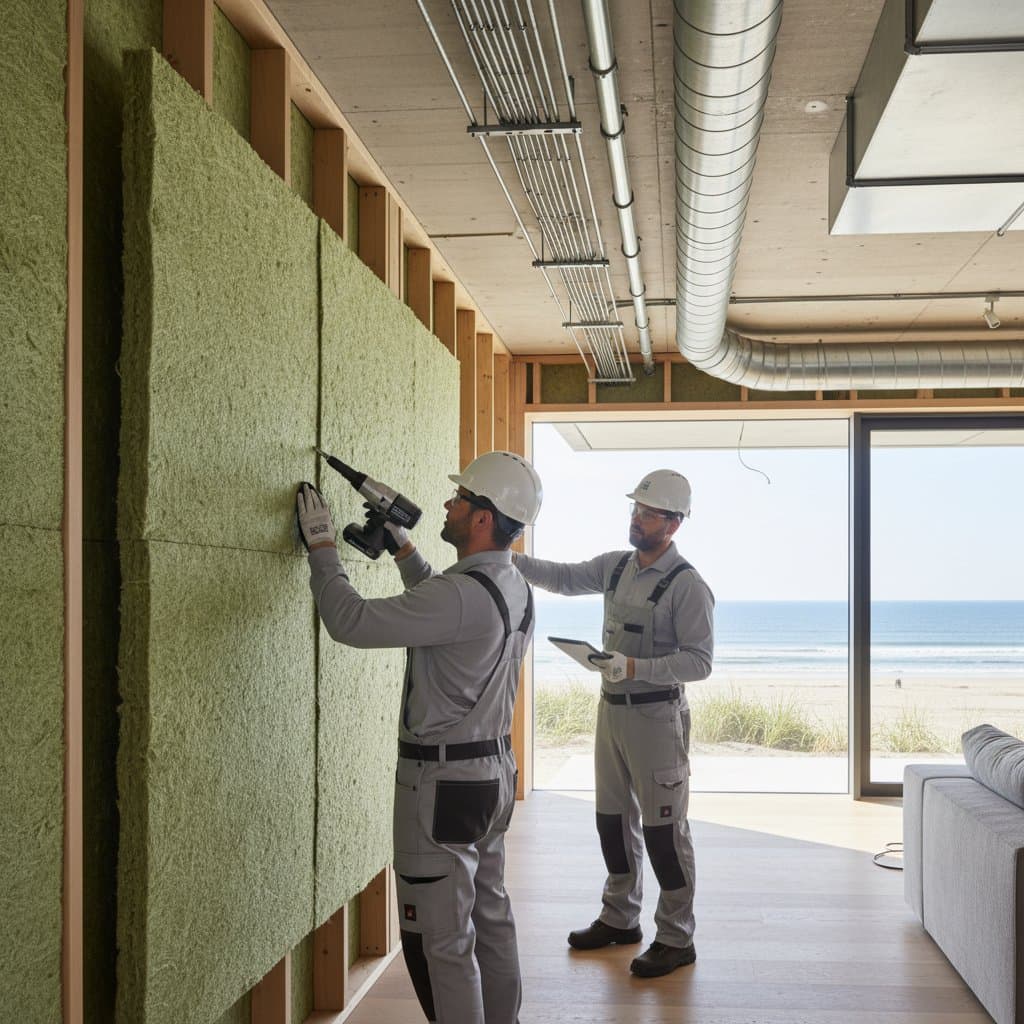
Installing seaweed insulation proves straightforward, often achievable as a DIY project for handy homeowners. Begin by assessing your home's needs: measure wall cavities, attics, and floors to determine the required volume. Purchase panels or batts sized for standard framing, typically 16 or 24 inches wide.
Prepare the space by clearing debris and ensuring surfaces remain dry. For walls, slide batts between studs, pressing gently to fill without compression, which could reduce effectiveness. In attics, spread loose-fill evenly to a depth of 12 to 18 inches, depending on desired insulation levels. Use a rake or blower for uniform coverage.
Seal edges with tape designed for natural materials to prevent settling. Professional installers recommend vapor barriers in high-humidity zones, though seaweed's inherent properties often suffice. The entire process for a standard room takes two to four hours, with minimal tools needed beyond a utility knife and gloves.
Post-installation, monitor for the first season to confirm performance. Maintenance involves occasional vacuuming in accessible areas to remove dust, but the material resists degradation from pests or weather. This low-effort approach suits busy coastal lifestyles.
Real-World Applications
In a San Diego suburb, a family retrofitted their 1950s bungalow with seaweed insulation, replacing outdated fiberglass. They reported immediate relief from afternoon heat, with air conditioning cycling 40 percent less frequently. Utility bills dropped from $250 to $162 monthly during peak summer, validating the 35 percent savings claim.
Another example involves a beachfront condo complex where developers integrated seaweed panels during construction. Residents enjoy quieter interiors and fresher air, contributing to higher property values. These cases demonstrate versatility across housing types, from single-family homes to multi-unit buildings.
Builders note compatibility with solar panels and smart thermostats, amplifying overall efficiency. As coastal real estate booms, incorporating such innovations becomes a selling point for sustainable properties.
Embracing Sustainable Coastal Living
Seaweed insulation transforms coastal homes into efficient, healthy sanctuaries. It delivers measurable savings, superior comfort, and environmental stewardship in one package. Homeowners who prioritize long-term value find this option indispensable for adapting to changing climates.
Consider evaluating your current setup against these benefits. With rising energy costs and environmental concerns, the shift to natural solutions like seaweed insulation positions you ahead of the curve. Experience cooler summers, lower bills, and peace of mind in your seaside retreat.