
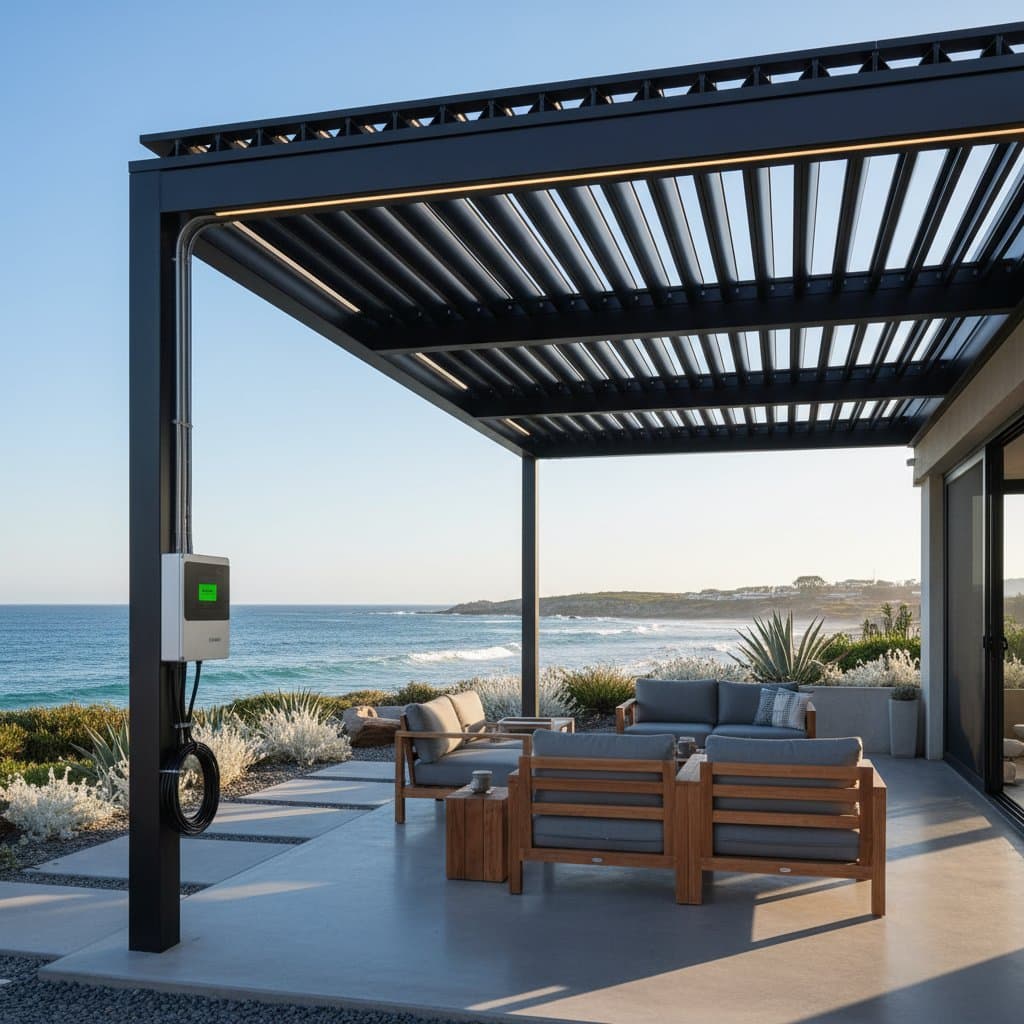
Solar Pergolas: Shade and Power for Coastal Homes
Imagine your sunny backyard in the afternoon, with waves crashing in the distance and a light breeze drifting through. You relax beneath a stylish pergola that casts cool shade and powers your home through rooftop solar panels. This is the appeal of a solar pergola, a structure that combines comfort, design, and renewable energy in one practical outdoor upgrade.
A solar pergola provides shelter from harsh sunlight and generates clean electricity. These systems produce enough power to offset a substantial portion of household energy use, particularly in sun-rich coastal areas. Homeowners typically invest between $8,000 and $25,000 in a solar pergola, with an average of $15,000, based on size, materials, and energy capacity. To ensure a smooth process, obtain quotes from qualified professionals to evaluate choices.
In This Article
Cost Factors
Solar pergolas cost between $8,000 and $25,000, and custom designs may exceed this range with premium wood, composite materials, or added lighting. Several elements influence the total expense.
- Size and Design Complexity: A compact pergola for a small patio incurs lower costs than a large freestanding unit that serves as a carport or outdoor kitchen cover.
- Solar Panel Quality: Monocrystalline panels offer higher efficiency and greater energy output, though they raise the price.
- Frame Materials: Options such as cedar, aluminum, and steel vary in cost and longevity.
- Labor and Permits: Installation labor accounts for $2,000 to $5,000, and local regulations often demand a solar permit or structural assessment.
- Wiring and Inverter Setup: Integrating the system with your home electrical panel involves safety inspections and expert labor.
An average residential solar pergola generates 2 to 5 kilowatts of power, sufficient to cover a meaningful part of daily energy needs in coastal settings.
Types and Options
Attached Solar Pergolas
These units attach directly to your home or garage wall, extending shade to patios or decks. They suit smaller yards or areas where indoor-outdoor flow matters most.
Best For: Homeowners seeking an economical, integrated setup with straightforward electrical connections.
Pros: Reduced installation expenses, space-efficient design, simplified wiring.
Cons: Restricted dimensions, possible interference from adjacent walls.
Photo: Artur Debat / Getty Images
Freestanding Solar Pergolas
Freestanding designs position independently in your yard or driveway. They provide versatility in alignment and aesthetics, optimizing sunlight capture.
Best For: Expansive properties or open coastal sites with unobstructed sun.
Pros: Enhanced creative options, superior energy production, appealing yard element.
Cons: Demands more materials, extended wiring, and a robust base.
Photo: Alexander Spatari / Getty Images
Adjustable or Motorized Pergolas
Certain models feature louvers or panels that adjust for shade and solar intake throughout the day.
Best For: Those desiring precise light management and peak performance.
Pros: Adaptable coverage, optimized energy collection.
Cons: Elevated price and upkeep demands.
Photo: Westend61 / Getty Images
DIY Versus Professional Installation
Assembling a solar pergola requires carpentry and electrical expertise. Constructing the frame qualifies as a moderate DIY task, yet connecting panels to your home demands a licensed electrician for safety.
DIY Approach:
- Minimizes labor expenses.
- Necessitates understanding of load-bearing principles and code compliance.
- Involves adherence to building and electrical standards.
Professional Installation:
- Delivers complete service, including permits and inspections.
- Positions panels for ideal coastal sunlight angles.
- Involves higher initial outlay but guarantees safety and warranty protection.
Professionals can also add solar panels to an existing pergola, which lowers total expenses.
Strategies to Reduce Costs
- Leverage Existing Structures: Install panels on a prebuilt pergola or patio cover to avoid new framing.
- Select Mid-Range Materials: Aluminum frames balance durability and affordability compared to cedar or steel.
- Pursue Incentives: Coastal locales frequently provide rebates or tax credits for solar installations.
- Combine with Home Systems: Pair the pergola with rooftop solar for potential volume discounts.
- Position for Efficiency: Orient the structure southward to minimize required panels for desired output.
Maintenance and Longevity
Solar pergolas demand little routine care. Wipe panels every few months to clear salt and debris, particularly beachside. Check electrical links yearly and apply sealant to frames as needed. Panels endure 20 to 30 years, and the framework lasts longer with consistent attention.
FAQs
How Much Power Does a Solar Pergola Generate?
A standard setup yields 2 to 5 kilowatts, powering lights, appliances, or part of home consumption.
Is a Permit Required for a Solar Pergola?
Building and electrical permits apply in most regions, especially for grid connections. Consult your local office prior to starting.
Can a Solar Pergola Handle Coastal Conditions?
It withstands weather when built with resistant materials and secure anchors. Opt for anti-corrosion elements to combat wind and salt.
Does a Solar Pergola Justify the Cost?
In sunny areas, it lowers bills over time, boosts property worth, and improves outdoor usability.
Maximizing Benefits from Your Solar Pergola
Your solar pergola elevates outdoor spaces into efficient, shaded havens that sustain home energy needs. Use it for meals, relaxation, or coastal enjoyment, blending sustainable power with refined style for lasting value.