
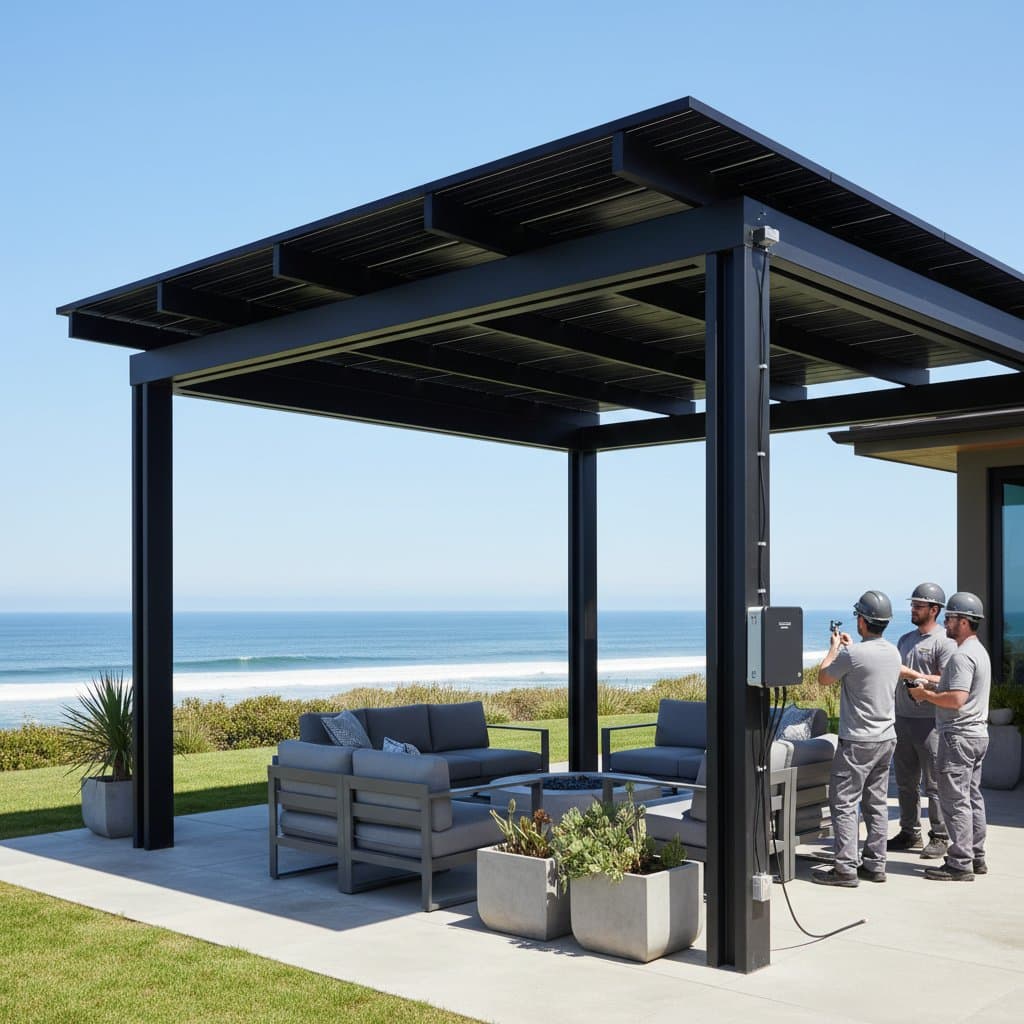
How Solar Pergolas Slash Coastal Energy Bills by Up to 50 Percent
Coastal homeowners find an effective method to enhance outdoor living and lower energy expenses. Solar pergolas merge the protective shade of conventional pergolas with the power-generating capabilities of solar panels, emerging as a highly efficient and visually appealing option for coastal conditions. Numerous households experience reductions in electricity bills reaching 50 percent, positioning solar pergolas as both a lifestyle enhancement and a sound financial choice.
This guide details the mechanics of solar pergolas, their pricing structure, and the mechanisms behind substantial savings. Readers gain insights into evaluating materials, selecting qualified installers, and computing return on investment to inform decisions.
Average Cost of a Solar Pergola
Solar pergolas generally range from $20,000 to $45,000 in total cost, varying by dimensions, solar capacity, and construction materials. The national average approximates $32,000 for a medium-sized installation that shades an outdoor patio and generates sufficient electricity for typical daytime household needs.
| Project Type | Size (sq. ft.) | Solar Output (kW) | Typical Cost Range |
|---|---|---|---|
| Small (basic patio cover) | 150–200 | 3–4 | $18,000–$25,000 |
| Mid-range (entertainment space) | 250–350 | 5–6 | $28,000–$36,000 |
| Large (poolside or multi-panel) | 400+ | 7–10 | $38,000–$50,000 |
Installation expenses constitute 40 to 50 percent of the overall budget, encompassing electrical integration, structural assembly, and required permits. Remaining funds allocate to solar panels, inverters, and pergola components like aluminum, steel, or wood frames.
Cost Variations by Material
Frame materials affect both visual appeal and enduring performance. Coastal settings demand corrosion-resistant options due to exposure from salt-laden air and moisture.
| Material | Average Cost per Sq. Ft. | Durability | Maintenance | Appearance |
|---|---|---|---|---|
| Aluminum | $45–$65 | Excellent | Low | Modern and sleek |
| Steel | $50–$75 | Very high | Medium | Contemporary industrial |
| Pressure-treated wood | $40–$55 | Moderate | High | Warm and natural |
| Composite wood | $55–$70 | High | Low | Traditional with longevity |
Powder-coated aluminum stands out as optimal for coastal properties. It withstands rust effectively, demands minimal upkeep, and complements diverse architectural styles.
Understanding Labor Costs
Labor rates for solar pergola projects average $80 to $120 per hour, influenced by geographic location and installer proficiency. Complete installations span 3 to 5 days, covering foundation preparation, panel securement, and electrical linkages. Homeowners may opt for distinct contractors for solar and structural elements, though unified teams minimize scheduling issues and streamline warranty management.
Key Factors Shaping Total Costs
Multiple elements dictate the ultimate expense and output efficiency of a solar pergola:
- Local electricity rates: Elevated utility prices amplify prospective savings.
- Sun exposure: Properties with partial shade might require extra panels for peak performance.
- Material enhancements: Features such as ornamental beams, embedded lighting, or drainage systems elevate expenses.
- Battery storage integration: This addition costs $8,000 to $12,000, enabling energy utilization after dark.
- Permitting and engineering needs: Coastal regulations frequently mandate certifications for wind resilience.
- Proximity to the home: Closer placements ease wiring and shorten labor duration.
Mechanisms Behind Energy Bill Reductions in Coastal Areas
Coastal zones benefit from intense sunlight and extended daylight, rendering solar pergolas highly productive. Panels absorb solar energy throughout the day to operate home systems including air conditioning units, refrigerators, and pool pumps. Surplus generation feeds into the grid, yielding net metering credits that balance evening consumption.
A mid-sized pergola with 5 kilowatts capacity produces approximately 7,000 to 8,000 kilowatt-hours yearly. At a rate of $0.35 per kilowatt-hour, this yields $2,500 to $2,800 in yearly savings. Across ten years, savings exceed $25,000, excluding tax credits or utility rebates that further boost returns.
Strategies to Minimize Solar Pergola Expenses
- Select standard panel dimensions to avoid premiums on custom fabrication.
- Integrate with concurrent projects, such as patio resurfacing or lighting additions, to consolidate labor efforts.
- Investigate available incentives, where utility programs and environmental initiatives rebate 10 to 30 percent of initial outlays.
- Favor straightforward designs over elaborate configurations to curb engineering and labor demands.
- Obtain itemized bids from no fewer than three providers, distinguishing structural from solar components.
Weighing DIY Against Professional Installation
Constructing a simple wooden pergola suits DIY enthusiasts, but incorporating solar elements demands specialized knowledge. Professionals handle wiring standards, energy load assessments, and regulatory adherence.
| Aspect | DIY | Professional |
|---|---|---|
| Cost | Reduced upfront expenses | Elevated initial investment with warranty coverage |
| Safety | Risk of regulatory infractions | Full inspections and compliance assurance |
| Efficiency | Constrained by expertise and equipment | Tailored for superior energy yield |
| Warranty | Typically absent | Extends 10 to 25 years for panels and framework |
Professionals deliver dependable outcomes and preserve eligibility for financial incentives in most scenarios.
Pitfalls to Sidestep in Solar Pergola Projects
- Neglecting corrosion risks: Unprotected steel or substandard hardware accelerates structural failure.
- Misjudging sunlight availability: Obstructions from foliage or buildings diminish panel efficacy.
- Bypassing permits: Unauthorized setups complicate property transactions or loan approvals.
- Prioritizing aesthetics over engineering: Visual preferences must align with optimal panel alignment and structural integrity.
Frequently Asked Questions on Solar Pergolas
Do solar pergolas require permits?
Yes, jurisdictions typically mandate building and electrical permits for solar installations. Coastal locales impose additional wind-load verifications to ensure safety.
What maintenance do solar pergolas need?
Routine cleaning of panels every three to six months suffices, alongside annual frame inspections for coastal wear. Professionals recommend sealing joints against moisture ingress.
How long do solar pergolas last?
Quality installations endure 20 to 30 years, with panels warrantied for 25 years at 80 percent efficiency. Frames in corrosion-resistant materials match this longevity.
Can solar pergolas integrate with home solar systems?
Absolutely, they expand existing setups by adding ground-mounted capacity, often qualifying for combined incentives and simplifying grid connections.
Maximizing Returns from Your Solar Pergola
Position your solar pergola to capture peak sunlight, ideally facing south with minimal obstructions. Integrate smart monitoring apps to track production and optimize usage, such as scheduling high-draw appliances during daylight hours. Pair with energy-efficient outdoor features like LED lighting or automated shades to amplify overall savings. Over time, this setup not only cuts bills but elevates property appeal, potentially increasing resale value by 5 to 10 percent in eco-conscious markets. Consult local experts to tailor the design to your site's unique conditions and long-term goals.