
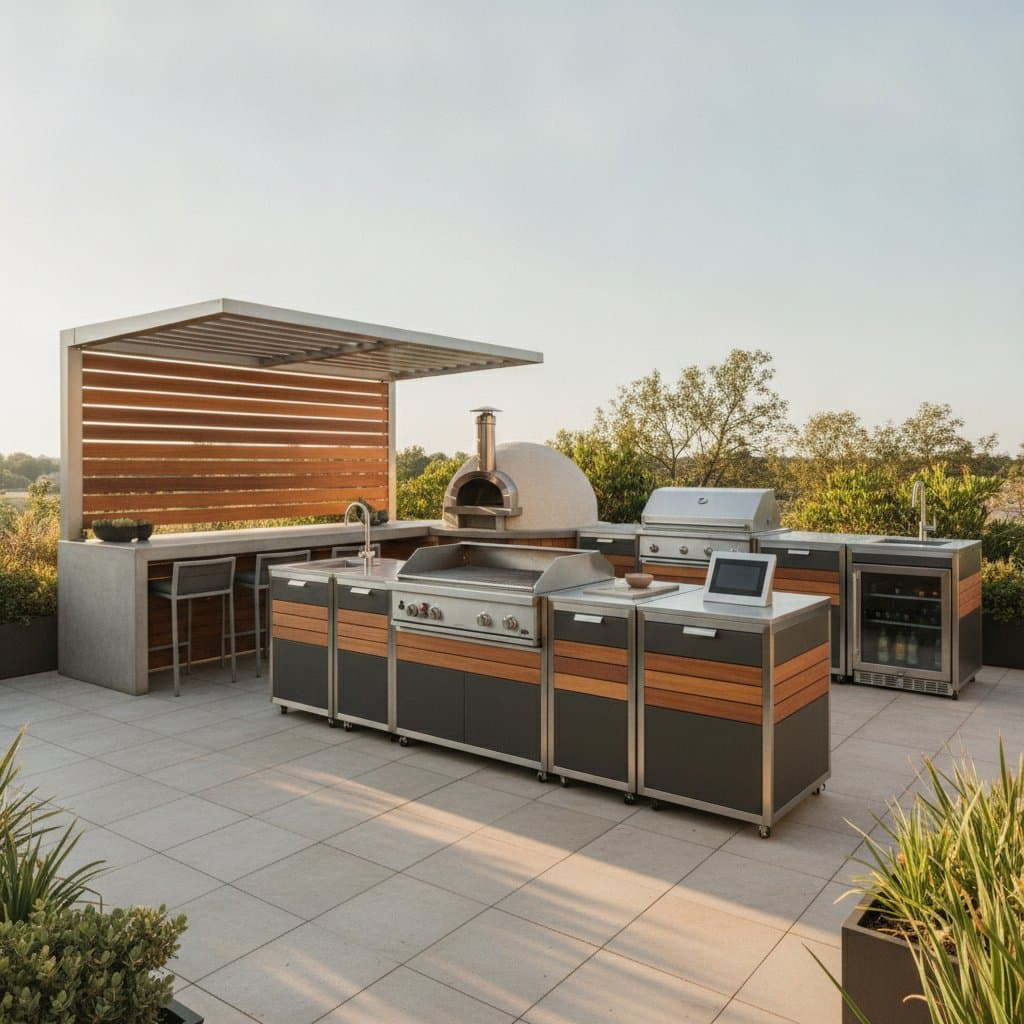
9 Smart Module Swaps to Revitalize Your Modular Outdoor Kitchen
Modular outdoor kitchens support incremental updates that restore function and visual appeal. Swapping individual stations allows adaptation to new cooking preferences or larger gatherings while preserving the existing framework. Targeted replacements deliver measurable improvements in performance and layout.
Cooking Upgrades
1. Add a Pizza Oven Module
A dedicated pizza oven module expands cooking options beyond standard grilling. Gas, wood-fired, or hybrid units fit directly into most modular frames and accommodate bread, vegetables, and roasts as well. Select a model equipped with an integrated thermometer to maintain precise heat levels during use. Professional installation for gas connections typically ranges from 800 to 2000 dollars.
2. Swap in a Flat-Top Griddle
A flat-top griddle module supports quick preparation of breakfast items and one-pan meals. Stainless steel surfaces withstand frequent use and clean with minimal effort. Position the griddle adjacent to the primary grill and add a side shelf to keep tools within reach during service.
3. Replace a Grill with a Smoker Station
A smoker module introduces consistent low-temperature cooking for larger cuts of meat. Pellet, electric, or charcoal models each produce distinct flavor profiles. Units with digital controllers maintain steady temperatures across extended sessions and cost between 600 and 1500 dollars.
Functional Additions
4. Integrate a Beverage Cooler
An outdoor-rated beverage cooler or dual-zone refrigerator keeps drinks and ingredients accessible during extended outdoor use. Weatherproof construction prevents corrosion, and some models include separate compartments for beverages and perishable items.
5. Add a Prep Sink or Dishwashing Station
A sink module supplies running water for rinsing produce and cleaning utensils at the cooking station. Choose a single-bowl unit for compact spaces or a double-bowl configuration when volume increases. A pull-down faucet paired with a fitted cutting board maximizes workspace efficiency.
6. Upgrade Countertops with Swappable Surfaces
New countertop materials alter the overall appearance and durability of the kitchen. Non-porous options such as granite or composite stone resist staining from oils and weather exposure. Modular attachment systems allow surface removal with basic tools and minimal disruption to surrounding components.
Style and Comfort Enhancements
7. Add a Bar or Serving Extension
A bar extension module increases seating and serving capacity for social events. Attachment to the main island or placement as a standalone station improves traffic flow around cooking areas. Weather-resistant stools and low-level lighting extend usability into evening hours.
8. Install Modular Storage Drawers
Stainless steel drawer units replace open shelving and organize tools, spices, and small appliances. Track-based systems permit reconfiguration without structural changes. One drawer fitted with an integrated bin simplifies waste disposal during meal preparation.
9. Add Modular Lighting Panels
LED lighting panels mounted beneath counters or along backsplashes improve visibility for nighttime cooking. Outdoor-rated, energy-efficient fixtures connect to existing electrical runs and support smart-home dimming controls when desired.
Installation Considerations
- Verify module dimensions against existing openings before purchase.
- Retain the original manufacturer for gas and electrical connections to maintain warranty coverage.
- Confirm utility shutoff locations prior to any module removal.
- Balance new functional modules with aesthetic updates to achieve cohesive results.
Frequently Asked Questions
How hard is it to change modules in a modular outdoor kitchen?
Most manufacturers design systems for straightforward replacement. Users typically disconnect utilities, release mounting hardware, and slide the new module into position. Gas or electrical work often requires a licensed technician.
Can I mix brands of modular components?
Compatibility depends on matching dimensions and connection points. Components from a single manufacturer provide consistent finishes and reliable fit.
What are the best materials for outdoor kitchen modules?
Stainless steel, natural stone, and composite surfaces resist moisture and temperature extremes. Untreated wood and lower-grade metals degrade quickly under outdoor conditions.
Putting the Updated Kitchen to Daily Use
Once modules are installed, test each station under typical cooking loads to confirm performance. Regular cleaning routines and seasonal inspections preserve the upgrades and extend service life. The refreshed layout supports both routine meals and larger gatherings with greater efficiency.