
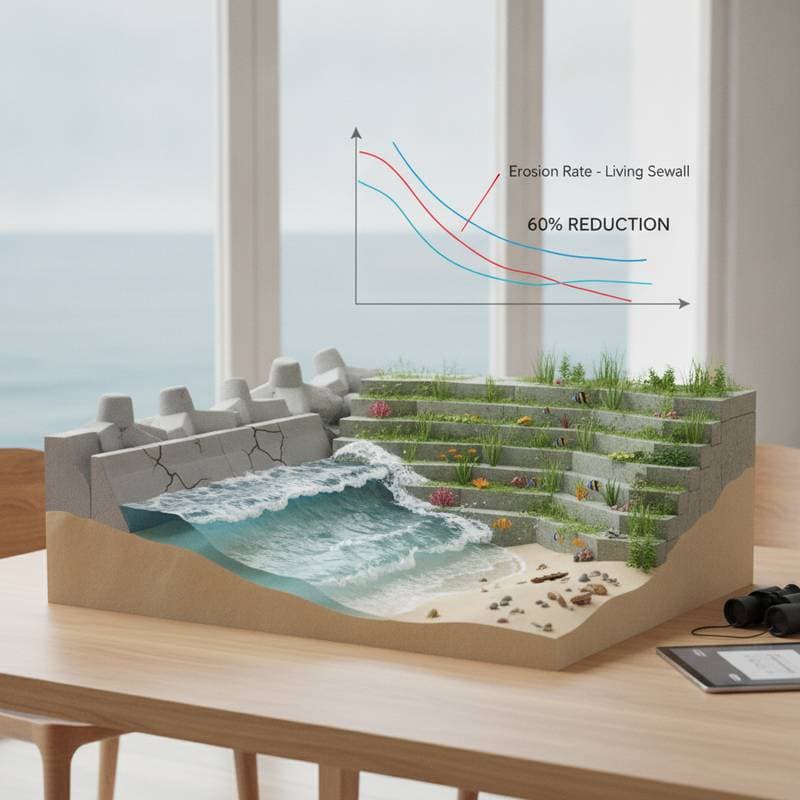
Living Seawalls Cut Coastal Erosion 60% vs Barriers
Coastal communities face ongoing pressure from wave action and sediment loss. Traditional concrete barriers often worsen nearby erosion while damaging marine habitats. Living seawalls combine structural support with biological growth to deliver stronger long-term results.
Research indicates these hybrid systems reduce erosion rates by up to 60 percent compared with plain concrete walls. They absorb wave energy, stabilize sediment, and create habitat at the same time. Property owners gain both shoreline protection and ecological improvement.
What Is a Living Seawall?
A living seawall integrates engineered panels or rock with surfaces that support marine organisms. Textured concrete, oyster shells, or planted terraces replace flat vertical walls. Organisms attach and grow, adding mass and flexibility over time.
How Living Seawalls Differ from Standard Barriers
Standard bulkheads reflect waves and accelerate scouring at the base. Living designs dissipate energy through frictionand reef structures. This approach limits undercutting and preserves sediment on adjacent shorelines.
Available Design Options
- Oyster reef units that recruit filter feeders to build natural breakwaters.
- Salt-tolerant plant terraces anchored by biodegradable coir logs or rock.
- Precast panels with ridges and pockets sized for algae and invertebrates.
- Mixed rock and habitat layers suited to moderate wave climates.
Site-specific factors such as tidal range and soil type guide the final selection.
How Living Seawalls Reduce Erosion
Wave energy drops when it encounters irregular, vegetated surfaces. Roots and shell layers trap sand that would otherwise move offshore. The structure gains strength as biomass accumulates.
Over multiple seasons the living layer adapts to changing water levels and storm patterns. Traditional walls require replacement when cracks appear. Living systems often self-repair minor damage through continued growth.
Performance and Environmental Trade-offs
Field comparisons show living seawalls maintain beach width better than concrete alternatives. They also host fish, crabs, and mollusks while filtering suspended particles from the water column. Visual impact improves because the finished surface blends with the natural shoreline.
These systems still need professional evaluation. Sites exposed to extreme wave energy or poor tidal flushing may require supplemental rock toe protection. Early consultation with a coastal engineer prevents costly redesigns.
Steps to Install a Living Seawall
Begin with a site survey that measures slope, sediment type, and seasonal water levels. Next define priorities such as maximum erosion control or maximum habitat gain. Budget ranges vary by region and material, yet long-term maintenance costs typically fall below those of concrete replacements.
Engage a licensed marine contractor who supplies references from completed ecological projects. Submit plans to local permitting agencies well before construction. Installation usually starts with foundation work, followed by placement of structural units and introduction of plants or oyster spat during calm weather windows.
Schedule annual inspections to check for settlement, remove debris, and adjust plantings. Prompt minor repairs keep the system functional after storms.
Managing Common Site Issues
Excessive algae growth can restrict water flow. Selective hand removal restores circulation without harming beneficial species. Storm damage often appears first at corners or transitions. Adding rock aprons or extra vegetation at these points restores stability quickly.
Choosing Protection That Fits Your Shoreline
Living seawalls deliver measurable erosion reduction alongside measurable habitat gains. Property owners who complete proper site assessment and permitting receive durable, self-improving shoreline defense. The result is a shoreline that resists erosion while supporting the surrounding marine environment.