
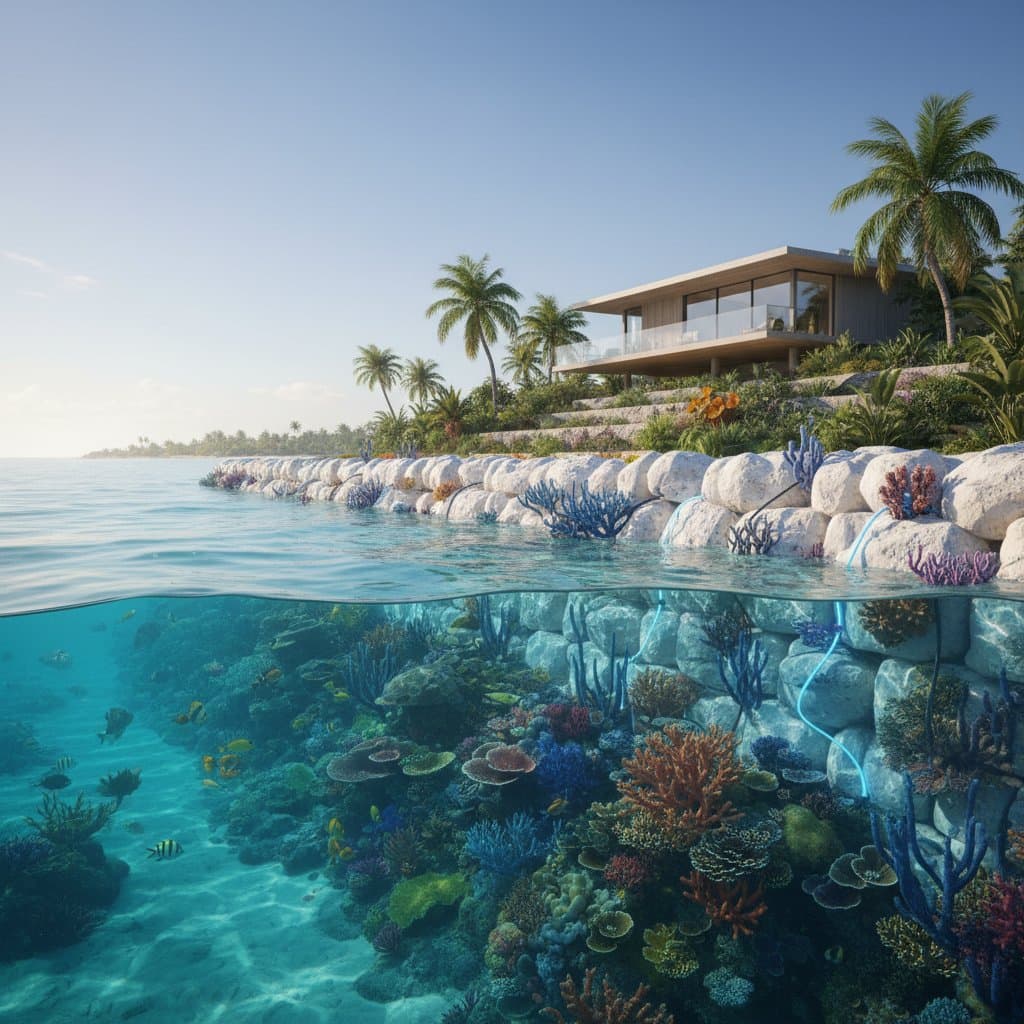
Understanding Biorock Seawalls
Biorock seawalls represent a breakthrough in coastal engineering. These structures utilize a process called mineral accretion to build and reinforce themselves naturally. By applying a low-voltage electrical current to steel frames submerged in seawater, positively charged calcium ions and negatively charged carbonate ions bond to form a durable limestone coating. This method not only fortifies the wall but also creates an ideal substrate for coral and marine life to thrive.
Traditional seawalls often exacerbate erosion by reflecting waves aggressively. In contrast, biorock designs mimic natural reefs, absorbing energy and supporting biodiversity. Homeowners and communities in vulnerable areas, such as those along California's coast, increasingly adopt this technology to address sea-level rise and storm surges.
How Biorock Seawalls Are Installed
Installation follows a systematic process to ensure structural integrity and ecological success. Professionals begin with site assessment to evaluate wave patterns, water depth, and environmental conditions.
-
Design and Frame Construction: Engineers create custom steel frames shaped to fit the shoreline. These frames serve as the foundation for mineral growth and coral attachment.
-
Submerge the Frame: The frame is positioned underwater along the coast. Anchoring secures it against currents and tides.
-
Apply Electrical Current: A low-voltage direct current connects to the frame. Seawater acts as an electrolyte, initiating mineral deposition immediately.
-
Initiate Mineral Accretion: Over weeks, a hard limestone layer forms on the frame. This coating grows at rates up to several millimeters per month, depending on current strength and water chemistry.
-
Add Coral or Marine Life: Coral fragments or other organisms attach to the frame. As minerals accumulate, the corals begin to grow and spread.
-
Monitor and Maintain: Regular inspections ensure the system remains active and safe. Over time, the wall becomes more stable and biologically diverse.
Benefits of a Living Shoreline Approach
Biorock seawalls offer multifaceted advantages over conventional barriers. They integrate protection with ecological enhancement, yielding long-term value for coastal properties.
-
Erosion Control: The structure dissipates wave energy rather than reflecting it, reducing scour and sediment loss.
-
Marine Habitat Restoration: Coral, fish, and other species return to the area, rebuilding lost ecosystems.
-
Water Quality Improvement: Reefs filter nutrients and support clearer water, benefiting nearby beaches and bays.
-
Aesthetic and Ecological Value: A living seawall enhances the natural beauty of the shoreline while boosting biodiversity.
These benefits extend beyond immediate protection. Property values often increase due to improved environmental appeal, and insurance premiums may decrease with demonstrated resilience.
Cost and Maintenance Expectations
Typical Cost Ranges
Costs vary widely based on location, design complexity, and available materials. A small residential biorock installation may start at around $50,000 to $100,000, comparable to mid-range traditional seawalls. Larger community projects can range from $200,000 to over $1 million. These figures represent rough national averages; local factors like permitting and labor influence final pricing. Always request detailed bids from qualified contractors to understand the full scope.
Maintenance Considerations
Unlike concrete walls that require frequent patching, biorock seawalls self-repair through ongoing mineral accretion. The primary maintenance involves ensuring the electrical current remains consistent, typically checked every few months. Solar panels or other renewable sources power the system with minimal oversight, often requiring only annual battery replacements. As the structure matures, stability increases, which reduces future costs significantly.
Environmental and Community Advantages
Restoring Local Ecosystems
Living seawalls support coral reefs, seagrasses, and fish populations. By rebuilding the base of the food chain, they enable marine ecosystems to recover naturally. Healthier shorelines better withstand storms and rising water levels, creating resilient coastal zones.
This restoration extends to broader environmental gains. Enhanced reefs sequester carbon and mitigate ocean acidification, contributing to global climate efforts. Local wildlife, including endangered species, finds refuge in these revitalized habitats.
Supporting Coastal Communities
Coastal homeowners, resorts, and cities gain from reduced erosion and stronger natural barriers. These projects attract ecotourism and scientific research, fostering new economic opportunities. Investing in living shorelines protects assets while advancing global reef restoration initiatives.
Communities experience indirect benefits as well. Cleaner waters support recreational activities like swimming and fishing. Collaborative projects build social cohesion, uniting residents in shared environmental goals.
Finding and Hiring the Right Professionals
Selecting experienced contractors ensures project success. Focus on firms with proven track records in marine construction and sustainable design.
Qualities to Look For
-
Experience with Biorock Technology: Choose contractors familiar with mineral accretion systems and marine installations.
-
Environmental Expertise: Select teams that understand coral ecology and habitat design.
-
Strong References: Request case studies or previous project results to verify reliability.
-
Clear Contracts: Confirm the scope, costs, and timelines appear in writing before work begins.
Questions to Ask During Consultations
-
What experience do you have with biorock or living shoreline projects?
-
What type of electrical system will you install, and how reliable is it?
-
How do you handle environmental permitting?
-
What kind of maintenance plan do you provide after installation?
-
How long before the structure becomes self-sustaining?
These inquiries help identify partners committed to quality and transparency.
Frequently Asked Questions
What makes biorock seawalls different from regular seawalls?
Biorock seawalls function as living structures that grow stronger over time. They employ a low-voltage electrical current to attract minerals forming a natural limestone coating, which supports coral and marine life. Traditional seawalls merely block waves without providing ecological benefits.
Do biorock seawalls require electricity all the time?
Yes, but the electrical demand remains very low. Solar, wind, or tidal energy powers the system efficiently. Once coral and mineral layers form, the structure stays stable even if power interrupts temporarily.
How long does it take for coral to grow on a biorock seawall?
Coral growth rates vary by species and water conditions. Many installations observe visible coral attachment within months, with mature coral cover developing over several years.
Are biorock seawalls safe for marine life?
Yes. They encourage marine life intentionally. The mild electrical current proves safe for fish, corals, and other organisms. The growing reef offers shelter and feeding areas for many species.
Can homeowners install a small biorock seawall?
Yes, smaller-scale installations suit residential properties. These systems adapt to private shorelines, providing personalized protection and habitat enhancement. Consult local experts to assess feasibility and comply with regulations.
What happens if the electrical system stops working?
Temporary power loss halts new mineral growth but does not compromise the existing structure. The limestone and coral layers persist, maintaining strength. Restarting the current resumes accretion promptly.
Are biorock seawalls more expensive than concrete ones?
Initial costs may align or slightly exceed those of concrete seawalls, depending on scale. However, long-term savings from self-repair and reduced maintenance often make biorock more economical. Ecological benefits add intangible value not found in traditional options.
Implementing Your Living Seawall
Biorock seawalls demonstrate how coastal protection aligns with environmental restoration. These innovative barriers transform defensive needs into opportunities for ecosystem revival. Homeowners and communities along beaches or rocky coasts benefit by securing properties while promoting ocean health. Start by consulting local specialists to explore options tailored to your shoreline.