
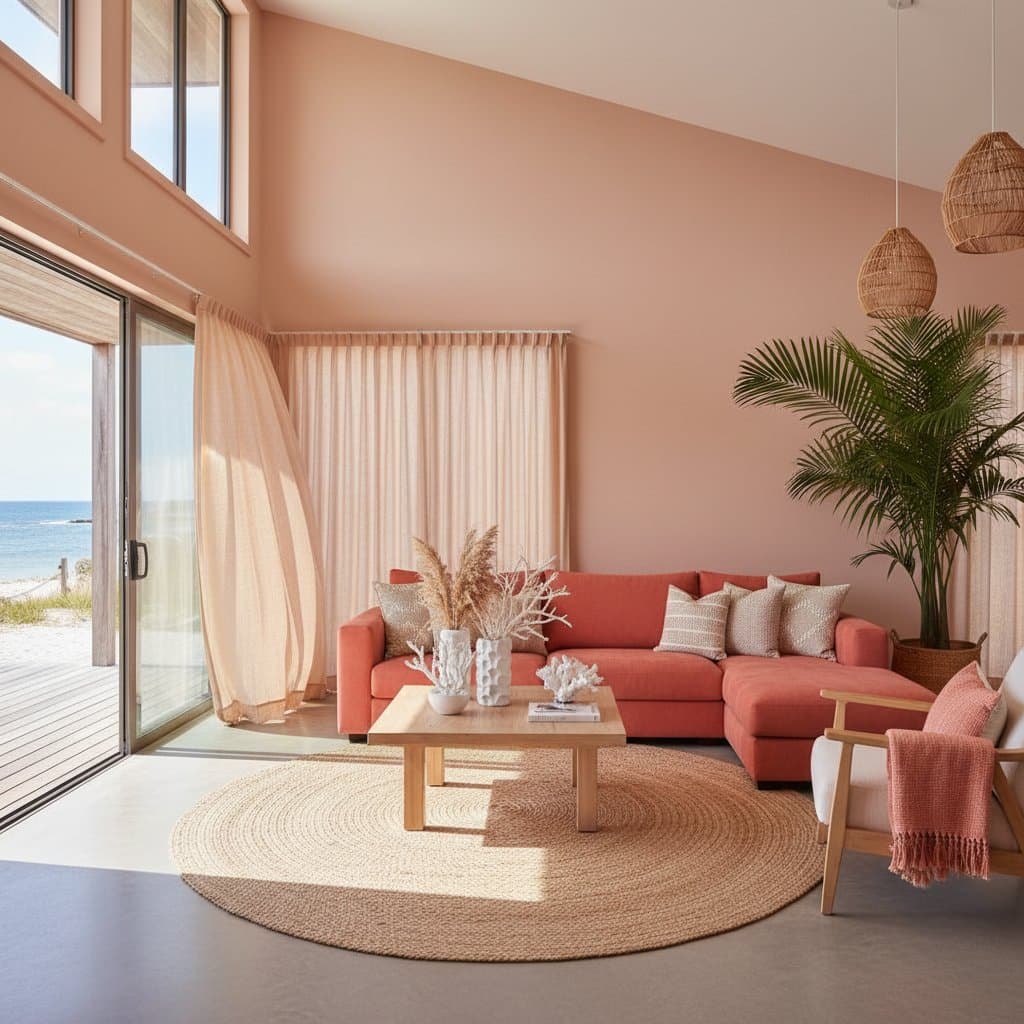
Coral Colors Redefine Beach House Renovation Trends
A serene and uplifting beach house interior emerges from a thoughtfully selected color palette. Homeowners increasingly shift from conventional blues and whites toward coral tones, which introduce warmth, vibrancy, and authentic coastal appeal. These hues redefine the essence of beach homes by injecting subtle energy that complements the relaxed vibe of seaside living.
This guide delves into the transformative potential of coral in beach house renovations. It covers shade selection, integration with complementary materials and textures, and strategic application techniques. Readers gain insights to craft enduring coastal designs that balance tranquility with freshness.
Why Coral Paint Colors Are Making a Comeback
Coral tones harmonize the airy essence of seaside aesthetics with refined elegance. By merging the uplifting quality of pink with the comforting depth of orange, they produce a palette that appears organic yet polished.
Homeowners select coral for several compelling reasons. It captures sunlight effectively, ensuring interiors remain luminous and welcoming throughout the day. The color integrates seamlessly with enduring beach elements such as rattan furnishings, linen textiles, and driftwood accents. Moreover, coral imparts a gentle warmth absent in many neutral schemes, fostering an inviting atmosphere.
Applied with precision, coral delineates spaces without dominating them. Consider it for focal points like accent walls in living rooms, cabinetry in kitchens, or trim on exterior features. In one renovation project along the Southern California coast, designers painted a sunroom wall in a mid-tone coral, which amplified natural light and created a cozy nook for reading during afternoon hours.
Choosing the Right Coral Shade
Selecting the appropriate coral shade depends on the desired mood and the home's lighting conditions. Each variation serves distinct purposes within a beach house setting.
Soft and Subtle Corals
Pastel corals, diluted with ample white, evoke a serene coastal ambiance. These gentle shades suit bedrooms, bathrooms, or expansive living areas bathed in natural light. They form a soothing foundation infused with understated warmth, allowing other elements to shine.
For instance, apply a soft coral to bedroom walls paired with white bedding and sheer curtains. This combination promotes restful sleep while subtly echoing the blush of a seashell at dawn. Brands like Benjamin Moore offer shades such as "Peach Parfait," which provide this delicate effect without overpowering smaller spaces.
Bold and Vibrant Corals
Brighter coral variants deliver a dynamic, tropical flair for those seeking bold impact. These hues excel on statement pieces like front doors, kitchen islands, or patios overlooking the ocean. To prevent visual overload, balance them with crisp whites or soft grays.
Imagine a vibrant coral on an entry door, welcoming guests with its lively presence. In a Malibu beach house redesign, architects used a shade akin to Sherwin-Williams "Coral Reef" for outdoor seating, which contrasted beautifully against neutral stucco walls and enhanced the home's playful yet sophisticated character.
Muted or Earthy Corals
Muted corals incorporating brown or terracotta notes align with rustic coastal motifs. They mimic the sun-bleached patina of beach finds, grounding the design in earthy realism. These shades complement textured elements like woven baskets, jute area rugs, and reclaimed wood pieces.
Incorporate an earthy coral on dining room walls to create a sun-faded vignette. Pair it with sage green accents and natural fiber upholstery for a layered, lived-in feel. Such applications, as seen in Hamptons-inspired renovations, bridge traditional and modern coastal styles effortlessly.
How to Incorporate Coral Into a Beach House Renovation
Integrating coral requires a measured approach to maintain harmony within the coastal framework. Begin with foundational steps and build layers for cohesive results.
-
Start Small with Accents
Test coral's compatibility by introducing it through accessories. Opt for throw pillows in coral fabric on neutral sofas, coastal-themed artwork on walls, or ceramic lamp bases in living areas. This method reveals how the color interacts with current finishes, such as hardwood floors or stone countertops, before larger commitments like painting. -
Layer Complementary Colors for Contrast
Pair coral with hues drawn from the seaside palette, including teal for depth, sandy beige for neutrality, or seafoam green for freshness. These pairings mirror ocean and shore landscapes, ensuring visual equilibrium. For example, a coral accent wall in a hallway can offset teal upholstered chairs, creating a rhythmic flow between rooms. -
Leverage Natural Light Dynamics
Coral's appearance evolves with daylight, shifting from soft glows in morning light to richer tones at dusk. Position coral elements where sunlight streams in, such as east-facing windows, to maximize its reflective qualities. In low-light zones, select warmer undertones to counteract dimness and sustain vibrancy. -
Incorporate Diverse Textures for Depth
Combine painted coral surfaces with organic materials to add tactile interest. Drape linen curtains over coral-trimmed windows, arrange rattan chairs in coral-painted alcoves, or lay white oak flooring beneath coral rugs. This textural blend, evident in many Florida Keys renovations, elevates the space from flat to multidimensional. -
Consider Scale and Proportion
In larger rooms, extend coral to ceilings or built-in shelving for expansiveness. For compact areas, limit it to one wall or furniture pieces to avoid constriction. Always sample paints on-site to observe real-world effects.
Frequently Asked Questions
What colors go best with coral in a beach house?
Coral harmonizes with whites and creams for brightness, soft blues for oceanic ties, and sea greens for natural contrast. These selections preserve the coastal theme while highlighting coral's unique warmth. Avoid stark blacks, which can disrupt the light, airy feel.
Can coral paint work in small spaces?
Lighter coral variants expand small rooms by reflecting light and fostering openness. Glossy sheens amplify this effect, bouncing illumination to diminish enclosure. Test samples in various times of day to confirm the shade enhances rather than overwhelms the area.
Should coral be used on exterior walls?
Thoughtful application of coral on exteriors yields striking results. Reserve it for doors, shutters, or trim to inject coastal vitality without dominating the structure. Weather-resistant formulas ensure longevity against salt air and sun exposure.
How can coral fit into a modern coastal style?
Integrate coral with sleek lines, sparse decor, and monochromatic furnishings to achieve modernity. Use it sparingly on architectural details, allowing clean surfaces to dominate. This approach, popular in contemporary San Diego homes, infuses personality without clutter.
Are coral colors suitable for rental beach properties?
Coral proves ideal for rentals, cultivating a hospitable, getaway ambiance that draws visitors. Select semi-gloss, washable paints for practicality in high-traffic settings. Neutral pairings facilitate broad appeal while the color adds memorable charm.
Elevate Your Coastal Space with Coral Integration
Coral colors infuse beach house renovations with vitality, warmth, and personal flair. From tentative accents to comprehensive applications, they unlock versatile design possibilities. Experiment with shades in your lighting, blend with seaside textures, and witness how coral revives the heart of your seaside dwelling.