
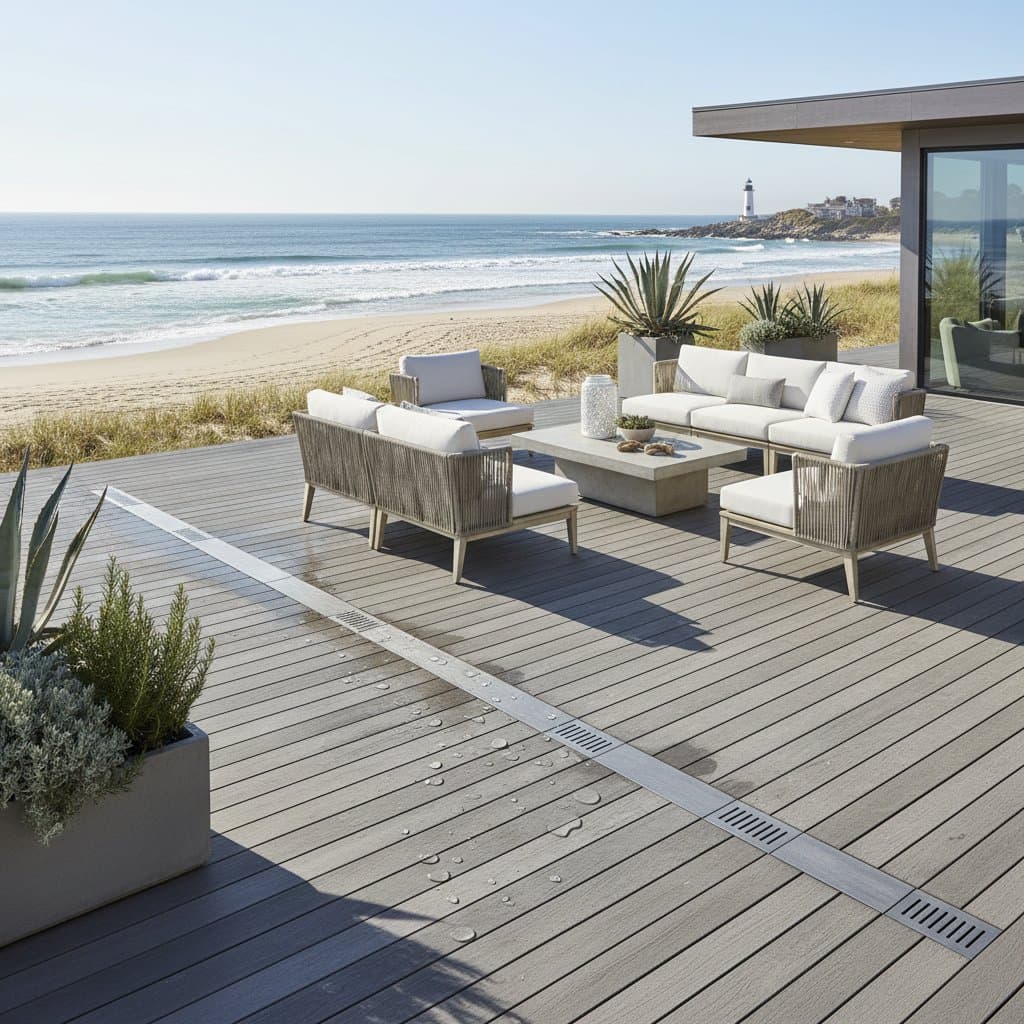
Introduction to Salt-Resistant Composite Decking
Coastal homeowners face unique challenges from salt air, relentless moisture, and corrosive elements that degrade traditional wood decks over time. Salt-resistant composite decking addresses these issues head-on by combining durable materials with smart design features. This solution not only resists environmental damage but also enhances the aesthetic appeal of outdoor living areas.
Engineered for marine climates, composite decking uses a blend of recycled polymers and wood fibers to create boards that repel salt buildup and prevent rot. Built-in drainage systems ensure water flows away efficiently, reducing the risk of warping or mold. Homeowners enjoy a surface that maintains its look and structural integrity without frequent interventions.
Selecting the right decking material transforms a seaside property into a resilient retreat. This article explores the benefits, installation best practices, environmental advantages, and common questions to guide informed decisions.
Key Benefits for Coastal Environments
In salty, humid regions, standard decking materials often succumb to corrosion and decay within a few years. Salt-resistant composite decking stands out by incorporating protective coatings and moisture-resistant cores that block salt penetration. These boards remain stable even after exposure to ocean spray and heavy rains.
Durability extends beyond resistance to salt; the material handles temperature fluctuations and UV rays without fading or cracking. Unlike wood, which requires annual treatments, composite options demand little effort to preserve their finish. This longevity translates to cost savings over time, as replacements become rare.
Aesthetic versatility adds another layer of appeal. Available in various colors and textures that mimic natural wood grains, these decks blend seamlessly with coastal architecture. The result is an inviting space that withstands the elements while elevating property value.
Essential Features of Drainage-Integrated Decking
Effective drainage forms the cornerstone of salt-resistant performance. Many composite systems feature grooved undersides or clip mechanisms that create channels for water to escape. This design prevents pooling, which can lead to salt crystallization and material breakdown.
Integrated ventilation further bolsters resilience. Airflow beneath the deck dries any residual moisture quickly, inhibiting fungal growth and extending the frame's life. High-quality composites also resist insects and mildew, common threats in damp coastal settings.
Sustainability plays a role in modern formulations. Manufacturers often source materials from recycled content, reducing environmental impact without compromising strength. These features collectively ensure a deck that performs reliably in demanding conditions.
Installation Best Practices for Optimal Performance
Proper installation maximizes the lifespan of salt-resistant composite decking. Begin with a solid foundation by ensuring the substructure supports even weight distribution and includes a slight slope for natural runoff. Use corrosion-resistant fasteners, such as stainless steel screws, to secure boards and avoid future rust issues.
-
Prepare the Site Thoroughly: Clear the area of debris and level the ground to prevent uneven settling. Apply a weed barrier if installing over soil to maintain cleanliness.
-
Select Compatible Framing: Opt for pressure-treated lumber or aluminum joists rated for coastal use. Space joists no more than 16 inches apart to support the decking's weight and flexibility.
-
Incorporate Drainage Elements: Install under-deck drainage panels or membranes before laying boards. These systems direct water away from the structure, safeguarding against submersion.
-
Ventilate the Underside: Position boards with gaps for air circulation to prevent trapped humidity. This step promotes drying and reduces the chance of condensation-related damage.
-
Hire a Certified Installer: Manufacturers typically validate warranties only for installations by trained professionals. Experts ensure compliance with guidelines, avoiding common pitfalls that could void coverage.
(Photo: Contractor installing composite decking with integrated drainage channels.)
Following these steps yields a deck that withstands coastal rigors for decades. Professional oversight proves especially valuable in complex projects, guaranteeing seamless integration and peak functionality.
Environmental Advantages of Composite Materials
Composite decking contributes positively to ecological balance through its composition and lifecycle. Boards typically incorporate recycled plastics and reclaimed wood fibers, diverting substantial waste from landfills. This approach conserves natural resources and supports circular economy principles.
The extended durability minimizes the need for frequent replacements, thereby lowering the demand for raw materials and reducing manufacturing emissions. Homeowners benefit from a product that aligns with green building standards without sacrificing performance.
Maintenance practices enhance these benefits further. Without the requirement for chemical sealants or paints, runoff into nearby waterways decreases, protecting sensitive marine ecosystems. For environmentally conscious coastal residents, composite decking represents a responsible choice that harmonizes utility with sustainability.
Frequently Asked Questions
How does drainage composite decking prevent salt rot?
Built-in channels and under-deck systems facilitate water management, ensuring boards and supporting frames remain dry. Absent standing moisture, salt fails to crystallize or corrode the materials, halting rot at its inception.
Can drainage composite decking install over an existing wooden frame?
Affirmative, provided the substructure shows no signs of deterioration and features adequate slope for drainage. Numerous owners upgrade legacy decks by incorporating drainage panels under new composite surfaces.
Does composite decking heat up under direct sunlight?
Opt for lighter hues such as gray or beige, which reflect sunlight effectively and stay cooler in intense coastal sun. Supplemental shade from pergolas or outdoor rugs provides additional comfort during peak hours.
Is the surface slippery when wet?
Premium composites include textured patterns for enhanced grip. Coupled with efficient drainage that minimizes water accumulation, these decks reduce slipping risks following rainfall or ocean mist.
What maintenance routine does it require?
Periodic rinsing with a hose suffices, supplemented by gentle scrubbing using a mild soap solution as needed. Free from the demands of staining or sealing, this material simplifies outdoor care significantly.
Securing Long-Term Coastal Deck Success
Investing in salt-resistant composite decking equips homeowners to overcome environmental challenges effectively. Consult local suppliers for material samples and obtain multiple installation estimates to match specific needs. This proactive approach fosters a deck that endures seasonal demands, preserving beauty and functionality for generations.
With thoughtful selection and execution, coastal living gains a durable extension that invites relaxation without ongoing concerns. Embrace this advancement to create an outdoor haven resilient to the sea's influence.