
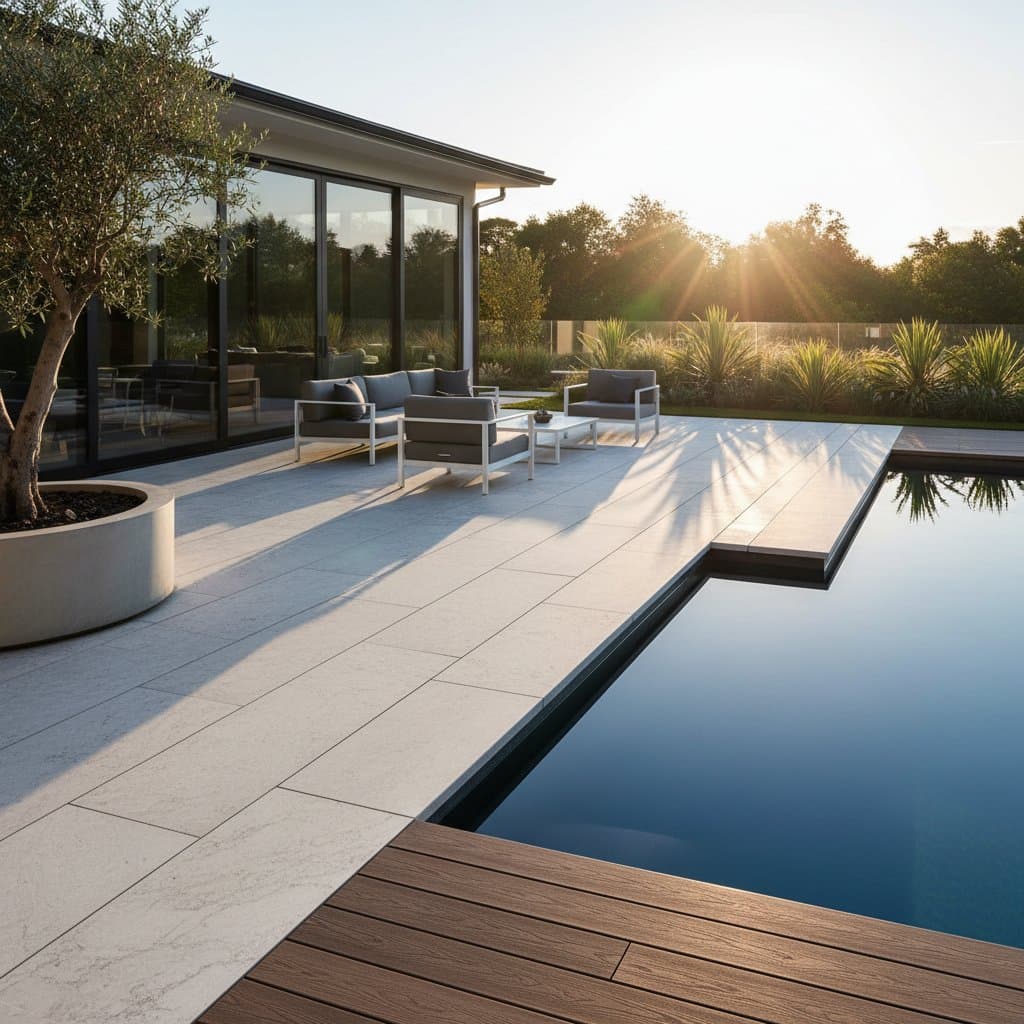
Quartz Decking: Achieve 30% Savings Over Composite in 2025
Envision a deck that captures the refined elegance of natural stone while remaining comfortable underfoot even on hot days. Consider its potential to endure for decades with basic care and to reduce expenses by nearly one-third relative to composite alternatives. Quartz decking fulfills these expectations, gaining popularity among homeowners who seek a blend of sophistication, resilience, and economic benefits.
Quartz decking provides the sophisticated appearance of high-end stone at a fraction of the cost and without demanding intensive upkeep. On average, this material proves 30% more affordable than composite decking, positioning it as a leading premium choice for budget-conscious upgrades. For backyard sanctuaries or poolside enhancements, quartz combines lasting performance, visual appeal, and practical value.
To secure professional installation, obtain estimates from qualified experts to evaluate costs and schedules prior to final decisions.
In this article
- Cost factors
- Types and options
- DIY versus professional installation
- Strategies to reduce expenses
- Frequently asked questions
Cost Factors
Installed quartz decking generally falls between $15 and $45 per square foot, whereas composite options span $20 to $60 per square foot. A typical mid-sized deck project with quartz averages around $9,000, influenced by design complexity and surface selections.
Several elements drive these costs:
- Material quality: Higher-grade quartz infused with UV stabilizers commands a premium yet excels in color retention over time.
- Labor: Expert installation ranges from $5 to $15 per square foot, adjusted for local rates and project intricacies.
- Framing and support: Quartz's density may necessitate sturdier joists, adding to foundational expenses.
- Permits and preparation: Site grading, engineering reviews, or regulatory approvals contribute $500 to $2,000.
Many owners discover that quartz's reduced long-term maintenance expenses balance any initial outlay differences when compared to traditional wood.
Types and Options
Available in tiles, planks, and modular panels, quartz decking accommodates diverse styles and uses, from contemporary to rustic settings.
- Quartz tiles: These suit pool surrounds or patios, featuring enhanced grip and moisture resistance for safety around water.
- Quartz planks: They mimic wood grains with uniform hues, offering a versatile look for expansive deck surfaces.
- Quartz panels: Designed for efficiency, they facilitate rapid assembly on sizable areas, promoting seamless finishes.
All variants feature dense, non-absorbent surfaces that ward off mold growth, color degradation, and surface damage. Such properties ensure consistent performance in varied climates.
DIY Versus Professional Installation
Quartz decking demands intermediate to expert capabilities for successful placement. The weight of components requires careful handling, and precise cuts call for specialized tools like a wet saw equipped with a diamond blade.
For modest areas, individuals experienced with heavy materials and assisted by others can manage DIY efforts effectively. However, larger or detailed layouts benefit from certified contractors who address framing integrity, water runoff, and manufacturer guarantees.
Professional teams complete most installations in two to four days, scaling with the project's scope and site conditions.
Strategies to Reduce Expenses
- Purchase during off-peak seasons: Suppliers frequently lower prices on quartz materials in winter or early spring.
- Opt for straightforward designs: Linear configurations minimize labor compared to curved edges or tiered structures.
- Reuse stable existing frameworks: Sound substructures eliminate needs for new lumber, cutting material and workforce costs.
- Source overstock inventory: Excess from commercial installations often becomes available at discounted rates through wholesalers.
These approaches enable significant budget adjustments without sacrificing quality or aesthetics.
Frequently Asked Questions
Does quartz decking become slippery in wet conditions?
Most products incorporate textured surfaces for reliable traction, making them appropriate for wet zones like pools or rainy regions.
What is the expected lifespan of quartz decking?
Proper care yields 25 to 40 years of service, with minimal signs of wear such as discoloration or fractures.
Can quartz decking withstand intense heat and UV exposure?
Affirmative; its protective coatings maintain lower surface temperatures than numerous composites and prevent distortion from solar rays.
Is sealing or staining required for quartz decking?
The non-porous composition eliminates such needs. Routine cleaning with mild soap and water suffices for preservation.
Essential Care for Enduring Appeal
Quartz decking supports effortless upkeep to preserve its pristine condition. Remove loose particles through regular sweeping, clean surfaces with a gentle solution as needed, and inspect seams annually for stability. These simple practices extend the material's beauty and functionality, ensuring your outdoor space remains a welcoming retreat for years ahead.