
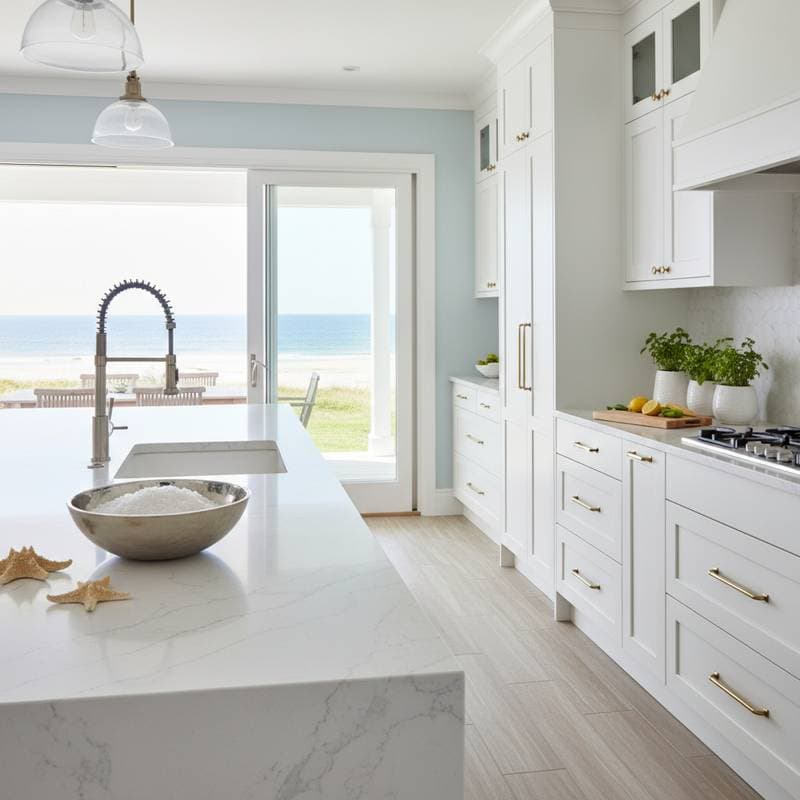
Quartz Counters Outlast Granite in Salty Coastal Air
Residents near the ocean recognize the relentless impact of salty air on household items. Vehicles develop faded paint, and outdoor furnishings corrode over time. In kitchen settings, these environmental factors influence countertop selection significantly. Quartz surfaces demonstrate superior performance compared to granite in salty coastal air, providing enhanced durability, reduced maintenance demands, and sustained aesthetic appeal that granite often fails to achieve.
Key Advantages
- Quartz countertops exhibit stronger resistance to salt-induced corrosion than granite.
- Their non-porous composition facilitates straightforward cleaning and minimizes stain risks.
- These surfaces suit coastal kitchens exposed to persistent humidity and salt.
- Maintenance remains minimal, eliminating the need for periodic sealing.
- Colors and finishes preserve vibrancy and luster in oceanfront residences.
- Engineered consistency ensures predictable performance in harsh conditions.
Quartz Superiority in Coastal Settings
Manufacturers engineer quartz countertops by combining crushed quartz crystals with resin binders, resulting in a fully sealed, non-porous material. This construction effectively blocks moisture and salt penetration. Granite, derived from natural stone, features microscopic pores that persist despite sealing efforts. Over time, these pores permit salt and humidity to infiltrate, leading to surface dullness and minor imperfections.
Coastal regions expose surfaces to airborne salt particles on a daily basis. High humidity exacerbates this exposure, accelerating material breakdown in vulnerable substances. The impermeable nature of quartz halts such degradation, maintaining the countertop's pristine appearance for extended durations. Homeowners benefit from this reliability, particularly in areas like Southern California where ocean proximity intensifies these elements.
Photo: A luminous coastal kitchen featuring white quartz countertops that capture sunlight streaming through expansive windows.
Quartz Versus Granite: A Coastal Comparison
To evaluate suitability for seaside homes, consider the following attributes side by side.
| Feature | Quartz Countertops | Granite Countertops |
|---|---|---|
| Salt Resistance | Excellent | Moderate |
| Moisture Resistance | High | Medium |
| Maintenance | Simple cleaning, no sealing | Regular sealing required |
| Durability | Resists scratches and stains | Prone to etching from salt |
| Color Stability | Consistent over time | Susceptible to fading |
| Cost Range | Moderate to high | Moderate |
Although quartz involves a modest initial investment premium, its enduring stability and low upkeep justify the expense for coastal property owners. This choice translates to reduced long-term expenditures on repairs and refinishing.
Simplified Maintenance Routines
Quartz countertops require only basic care to remain in optimal condition. Prepare a solution of mild soap and warm water, then apply it with a soft cloth for effective cleaning. Unlike granite, quartz demands no resealing or polishing procedures. Granite necessitates frequent sealing applications to shield against salt, water, and oils, yet dull areas may still emerge despite diligent efforts.
Tip: Perform a daily wipe-down on quartz surfaces to eliminate accumulated salt residue. This practice sustains the high-gloss finish and promotes a sanitary kitchen environment. For instance, after handling fresh seafood, a quick rinse prevents any potential buildup.
Photo: A homeowner cleaning quartz countertops with a soft cloth following the preparation of a seafood meal.
Aesthetic Integration in Coastal Designs
Quartz offers an extensive palette of colors and patterns, ranging from crisp whites evoking ocean waves to warm beige tones that harmonize with beach motifs. As an engineered product, quartz delivers uniform veining and consistent slabs, aligning seamlessly with contemporary or transitional kitchen aesthetics. Granite provides natural uniqueness through varied veining, which occasionally disrupts the serene, uncluttered vibe preferred in coastal interiors.
Those seeking a spacious, light-filled atmosphere find quartz ideal alongside white cabinetry, satin-finish metal accents, and translucent backsplash tiles. The material's light-reflective properties amplify natural illumination, enhancing the sense of openness in compact kitchen spaces. Consider selecting veined quartz patterns that subtly mimic marble for added elegance without the maintenance drawbacks.
Photo: A beach-themed kitchen showcasing pale gray quartz countertops paired with cabinets in driftwood hues.
Enduring Performance and Investment Value
The disparities between quartz and granite sharpen with prolonged exposure to coastal elements. Quartz withstands color fading, corrosive pitting, and surface erosion, even when windows remain open to capture sea breezes. This resilience minimizes the need for corrective measures, preserving the countertop's original polish across years of use. Granite's inherent porosity invites gradual wear if salt and moisture accumulate unchecked.
For individuals prioritizing sustained value, quartz delivers assurance through its capacity to endure routine activities while countering environmental stressors. It elevates kitchen functionality and visual appeal simultaneously. In high-salt zones, this translates to fewer interventions and a consistently impressive appearance.
Protecting Your Coastal Kitchen Investment
Quartz countertops enable homeowners to embrace oceanfront living without compromising interior quality. They combine refined style, structural integrity, and ease of care into a cohesive solution. Selecting quartz over granite shields against salt-related damage, ensuring your kitchen retains its allure and operational efficiency amid seaside demands.