
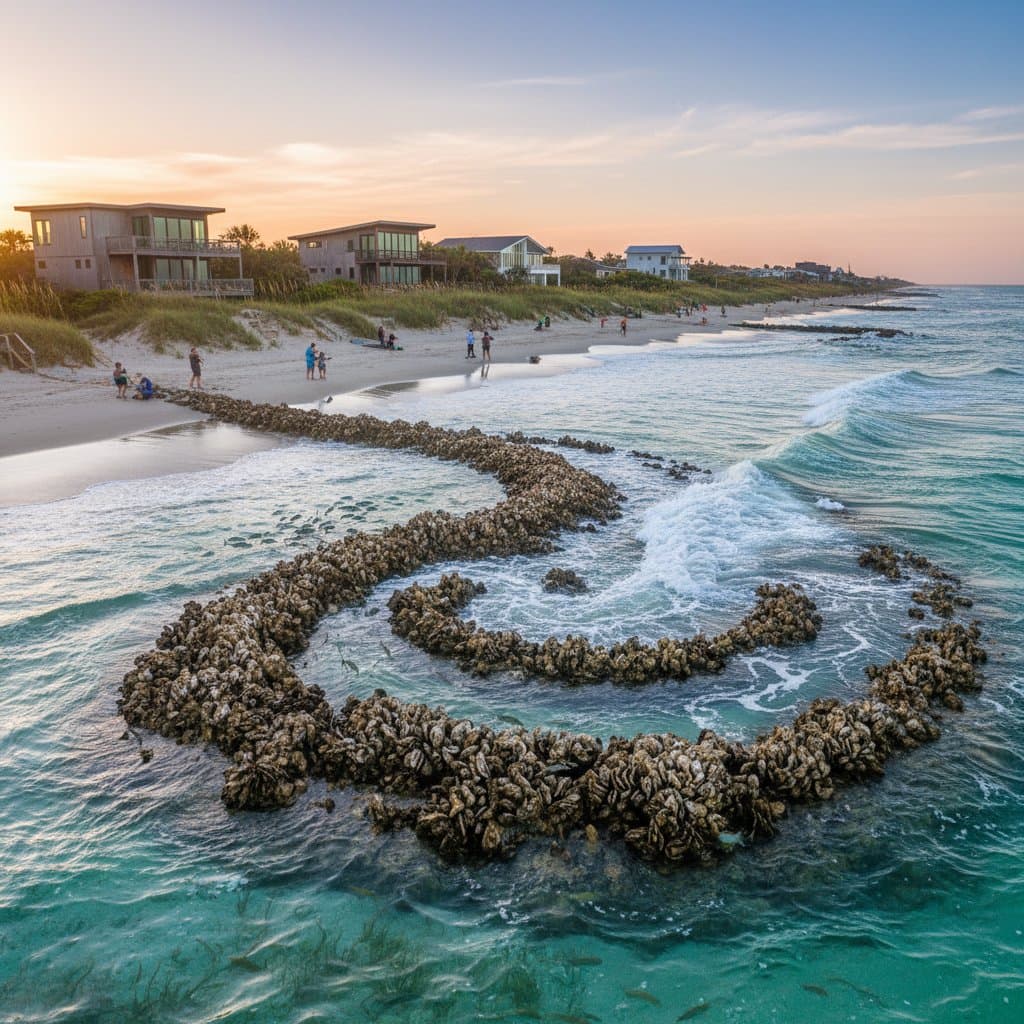
Why Oyster Reefs Excel Over Traditional Seawalls
Concrete seawalls have long served as the go-to solution for protecting coastlines from waves and erosion. However, these structures often harm marine habitats by creating barren zones that disrupt ecosystems. In contrast, oyster reefs emerge as a superior, living alternative that integrates seamlessly with the environment.
Oyster reefs consist of layered oyster shells that form natural barriers along shorelines. As oysters attach and grow, the reef expands, absorbing wave energy more effectively than solid concrete. Studies show these reefs reduce wave heights by up to 50 percent in moderate conditions, outperforming seawalls that merely reflect waves back toward the sea.
Beyond protection, oyster reefs support a thriving food web. They provide habitats for fish, crabs, and birds, boosting local biodiversity. Each oyster filters up to 50 gallons of water daily, removing pollutants and algae to clarify coastal waters.
The Mechanics of Oyster Reef Protection
Oyster reefs function through a combination of physical and biological processes. The porous structure of the reef dissipates wave energy, preventing the forceful impacts seen with concrete barriers. This dissipation leads to less beach erosion and maintains sediment in place.
Oysters themselves contribute to resilience. They secrete calcium carbonate shells that bind sediment and stabilize the seabed. Over time, the reef accretes vertically and horizontally, adapting to rising sea levels and intensifying storms.
Communities in regions like the Chesapeake Bay and Gulf Coast have documented these benefits. Restoration projects there demonstrate that reefs not only protect property but also enhance recreational fishing and tourism by attracting diverse marine species.
Environmental and Economic Advantages
Switching to oyster reefs yields multiple gains. Environmentally, they restore balance to degraded coasts, countering the habitat loss caused by seawalls. Concrete structures can exacerbate erosion on adjacent beaches, while reefs promote natural sediment flow.
Economically, oyster reefs prove cost-effective in the long term. Initial construction costs rival those of seawalls, but maintenance expenses drop as the reef self-repairs through oyster growth. Programs in Texas and Florida report savings of up to 30 percent over a decade.
These reefs also support commercial oyster harvesting in suitable areas, creating jobs and sustainable food sources. Homeowners benefit from increased property values tied to healthier, more attractive shorelines.
Addressing Challenges in Oyster Reef Implementation
Implementing oyster reefs involves navigating several hurdles. Permitting and Regulations: Authorities often require environmental impact assessments to ensure compliance with coastal protection laws. Applicants must demonstrate that the project enhances rather than disrupts local habitats.
Time for Growth: Reefs demand patience to reach optimal strength. Seed oysters need one to two years to establish, with full protective capacity emerging after three to five years. During this period, supplemental measures like temporary barriers may provide interim defense.
Predation and Disease: Oysters face threats from predators such as drill snails and environmental issues like low oxygen levels. Selecting disease-resistant strains and monitoring water quality mitigate these risks effectively.
Despite these obstacles, success stories abound. Coastal regions pair rigorous scientific input with community participation to overcome barriers. Ongoing monitoring tracks growth rates and adjusts strategies as needed.
Practical Tip: Collaborate with marine biologists or conservation organizations to identify ideal sites and materials. Substrate choices, such as recycled oyster shells, accelerate establishment while minimizing environmental footprint.
Frequently Asked Questions
How long does it take for an oyster reef to form?
Oyster reefs deliver initial benefits within one to two years, such as early wave buffering and water filtration. Complete maturity, where the structure offers maximum protection, typically requires three to five years. Early interventions like oyster spat deployment speed this process.
Do oyster reefs produce odors or attract pests?
Well-maintained oyster reefs remain odor-free, as healthy oysters process waste efficiently. They draw in desirable marine life, including pollinating species for seagrasses, rather than terrestrial pests. Integration into the ecosystem prevents any nuisance issues.
Can oyster reefs fully replace seawalls?
Oyster reefs suit many scenarios but not all. In zones with extreme wave forces, hybrid designs blend reefs with vegetation or partial concrete elements for comprehensive defense. Site-specific assessments determine the optimal configuration.
Are oyster reefs safe for swimming and boating?
Oyster reefs pose minimal risks when navigated properly. Sharp shells necessitate water shoes for swimmers, and boaters should observe marked channels to avoid grounding. Designated safe zones ensure recreational access without compromise.
How can homeowners support reef restoration?
Homeowners contribute by volunteering for shell collection drives or participating in planting events organized by local groups. Donating to certified restoration funds or advocating for policy changes also amplifies impact. Simple actions, like reducing fertilizer use to protect water quality, sustain reef health from afar.
Building Resilient Coasts Through Natural Innovation
Oyster reefs represent a paradigm shift in coastal management, blending protection with ecological restoration. Communities that embrace these solutions secure their shores against rising threats while revitalizing marine environments. The result is durable coastlines that sustain both human needs and natural vitality.
For coastal residents, this approach means safer homes and enriched surroundings. Clearer waters invite leisurely swims, and abundant wildlife enhances daily life. By investing in oyster reefs, individuals foster a legacy of balanced, thriving shorelines for future generations.