
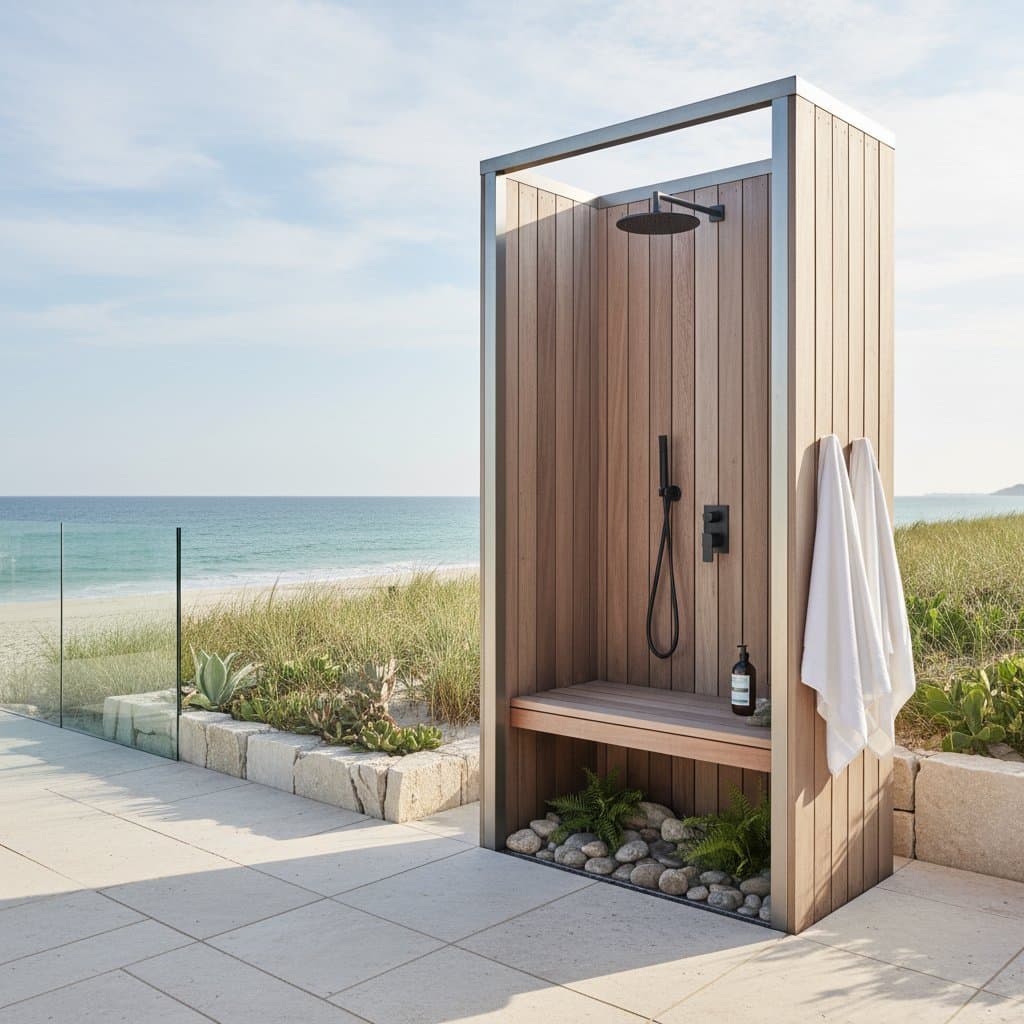
Understanding New 2025 Rules for Coastal Outdoor Showers
Rinsing off salt and sand under the open sky after a beach day offers one of the greatest joys of coastal living. Outdoor showers provide that convenience, yet installing one near the shoreline requires careful planning. New building regulations in San Diego reshape the process for designing and permitting these features.
Coastal homeowners must familiarize themselves with updates to outdoor shower codes. These rules address water runoff, environmental protection, and structural safety. Proper compliance ensures that homeowners enjoy their showers without legal issues.
Key Highlights:
- Regulations emphasize water runoff control, environmental safeguards, and structural integrity.
- Specific permits verify adherence to drainage, zoning, and setback standards.
- Shower placement, particularly distance from bluffs or beaches, influences permitting rigor.
- Selecting appropriate materials and drainage systems supports compliance and boosts property appeal.
- Violations may result in fines or mandatory removal of unauthorized installations.
Home offers unmatched comfort, especially with an ocean-inspired rinse station in the backyard. The following sections detail how to approach this project legally, safely, and attractively.
Do You Need a Permit for an Outdoor Shower?
In coastal regions, a permit is generally required. Even a basic outdoor shower qualifies as a plumbing fixture linked to the home water supply.
Essential permits include:
| Type of Permit | What It Covers | When It Is Required |
|---|---|---|
| Building Permit | Structural or plumbing modifications | Whenever water lines, drains, or foundations are involved |
| Coastal Development Permit | Impacts on the environment and shoreline | For properties in the coastal zone or adjacent to bluffs and beaches |
| Plumbing Permit | Connections for water supply or drainage | Upon tying into home plumbing or graywater setups |
Essential Permit Information
Portable rinse stations without plumbing connections may qualify as temporary fixtures, provided they direct water to designated containment zones. Structures on decks, patios, or within setback areas often require evaluation, regardless of scale. Approval demands a site plan, material specifications, and drainage outline from a licensed expert.
Bypassing permits invites complications. Authorities can mandate demolition of non-compliant features, escalating expenses beyond initial proper installation costs.
Key Design Requirements for Coastal Outdoor Showers
Adhering to codes allows for stylish integration. Thoughtful selections maintain legality while harmonizing with beachside aesthetics.
Drainage and Plumbing
Direct shower water to a graywater system or an established household drain. Refrain from channeling water into sand or soil without departmental approval. Equip installations with backflow prevention devices to block saltwater and debris from contaminating indoor lines.
Practical Advice: Incorporate a sloped base featuring a removable grate for straightforward maintenance and oversight. Natural stone or teak platforms facilitate efficient water movement and add visual elegance.
Materials and Durability
Select marine-grade stainless steel or powder-coated aluminum for fixtures. Apply non-toxic sealants to wood and choose anti-slip flooring options. Steer clear of untreated wood or prone-to-corrosion metals in salty environments.
Placement and Privacy
Site the shower in areas shielded from neighbors' views. Incorporate bamboo screens, frosted glass panels, or living walls for seclusion. Observe mandated separations from boundaries and bluffs to satisfy regulations.
Suggested Visualization: Envision a refined coastal shower with teak decking, stone enclosures, and surrounding lush greenery that ensures privacy.
Common Mistakes Homeowners Make
DIY projects in coastal settings demand precision. Sidestep these errors to maintain project efficiency.
-
Overlooking Drainage Planning
Homeowners frequently neglect water destinations. Absent a defined drainage route, erosion or runoff infractions become likely. -
Selecting Inappropriate Materials
Standard steel and unsealed wood degrade rapidly near the ocean. Prioritize corrosion-resistant alternatives for longevity. -
Positioning Near Setback Boundaries
Proximity to bluff edges invites sanctions or demolition orders. -
Disregarding Privacy and Visual Harmony
Functionality pairs best with landscape enhancement. Blend in vegetation, barriers, or enclosures for appeal and usability. -
Failing to Plan for Upkeep
Exposed elements accumulate minerals and rust without attention. Conduct routine checks to address concerns promptly.
How to Get Your Outdoor Shower Approved
Navigating permits seems daunting, yet structured steps simplify the effort.
Step-by-Step Approval Process
-
Investigate Local Regulations
Reach out to the municipal building department or consult their online resources to determine coastal zone status for your property. -
Develop a Site Plan
Detail measurements to boundaries, bluffs, and structures. Specify drainage routes and material choices. -
Collaborate with a Licensed Expert
Engage a contractor or architect to draft compliant schematics for building and coastal criteria. -
File Permit Applications
Submit necessary documents, visuals, and payments. Certain municipalities support digital filing for smaller endeavors. -
Arrange Inspections
Officials confirm that the build aligns with sanctioned designs and fulfills plumbing and ecological norms. -
Retain Records
Store permit duplicates and inspection summaries for resale or future alterations.
Additional Guidance: For properties under homeowners association governance, review their guidelines prior to commencement. Associations may impose extra stipulations on outdoor elements or communal visibility.
Frequently Asked Questions
How Far Should an Outdoor Shower Be from the Bluff or Beach?
Setback minimums differ by locality, though many coastal districts mandate several feet from bluff edges or sensitive habitats. Verify specifics with the regional coastal development authority before layout decisions.
Can You Connect an Outdoor Shower to Existing Bathroom Plumbing?
Connection is feasible, provided a licensed plumber handles it with adequate drainage and backflow safeguards. Such links necessitate permits in coastal jurisdictions.
Do You Need a Drainage Pit or Graywater System?
Ground-directed drainage typically requires graywater capture or purification. Coastal proximity prohibits direct soil or sand discharge due to pollution hazards.
What Materials Last Longest in a Coastal Environment?
Durable choices include marine-grade stainless steel, powder-coated aluminum, and sealed teak or composite woods. These resist salt corrosion and moisture while supporting eco-friendly designs.
Integrating Compliance with Coastal Enjoyment
A compliant outdoor shower elevates daily routines while safeguarding the environment. Homeowners gain peace of mind knowing their setup withstands inspections and enhances property value. Embrace these guidelines to create a sustainable feature that captures the essence of beachside living.