
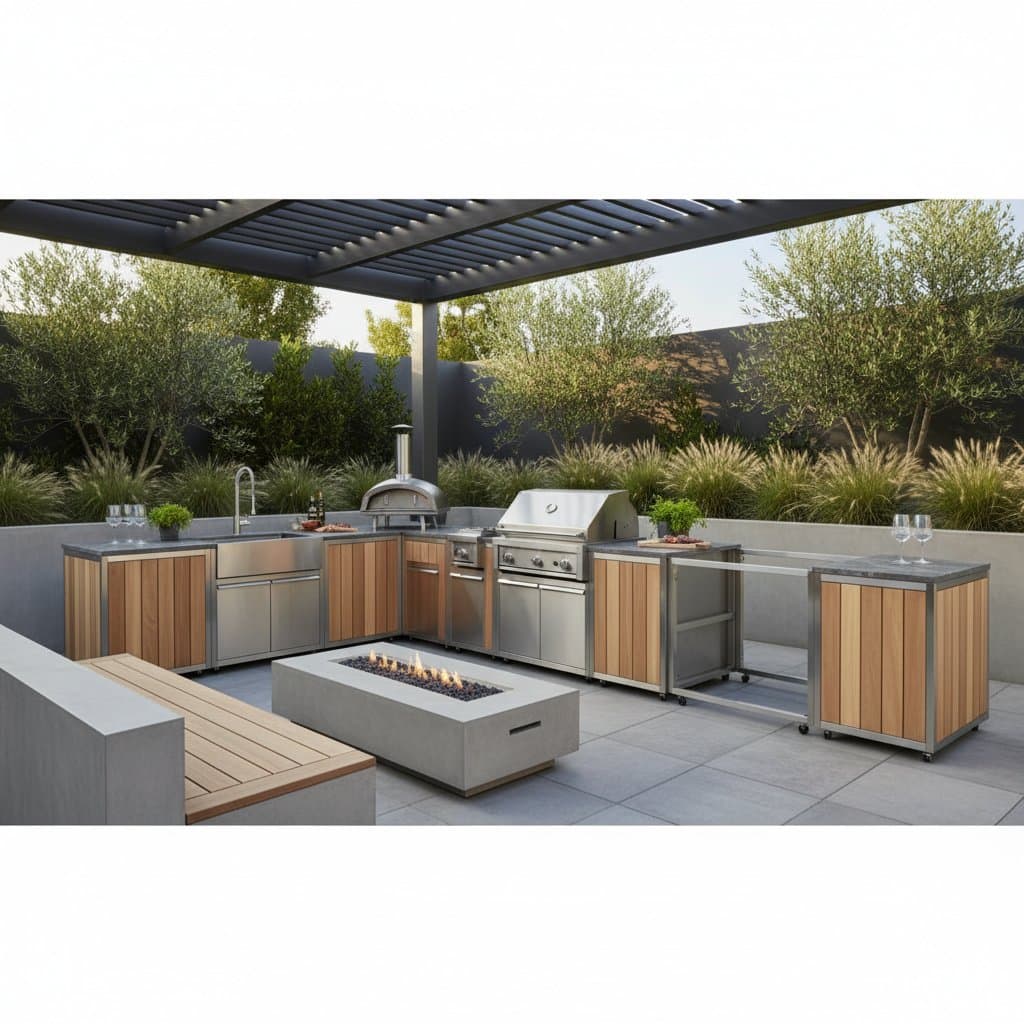
Modular Outdoor Kitchens: Build and Expand at Your Pace
Creating an inviting outdoor cooking space ranks among the most rewarding home improvements. Homeowners envision casual weekend barbecues or elegant outdoor dinners, and a modular outdoor kitchen provides the freedom to construct and expand gradually. These designs employ interchangeable components that allow rearrangement, replacement, or upgrading with minimal disruption, unlike rigid fixed installations.
This guide explains modular outdoor kitchens, their functionality, and their suitability for adaptable outdoor living. Readers gain insights into planning layouts, selecting enduring materials, and implementing upgrades that align with budgets and lifestyles.
Understanding Modular Outdoor Kitchens
A modular kitchen consists of prefabricated units, known as modules, that assemble into a comprehensive cooking and entertaining area. Each module fulfills a specific role, such as accommodating a grill, sink, refrigerator, or storage cabinet.
In contrast to traditional masonry or built-in kitchens, these units permit swapping or reconfiguration. Homeowners begin with essential pieces and scale up as requirements and finances permit. This method appeals to those who prioritize adaptability and financial management.
Benefits of Modular Outdoor Designs
1. Flexibility and Customization
Modular systems enable layouts tailored to available space. Configurations adapt to narrow side yards or expansive decks, ensuring optimal use of the area.
2. Easy Upgrades
Homeowners replace or incorporate modules for new appliances, such as an advanced grill or smoker, without dismantling the entire structure.
3. Cost Control
Construction occurs in phases, distributing expenses over time. Essential elements come first, followed by enhancements as resources allow.
4. Portability
Certain freestanding units relocate easily during moves or yard redesigns, safeguarding the investment.
Planning Your Modular Outdoor Kitchen
Effective planning forms the foundation of a successful modular kitchen. Before acquiring components, evaluate intended uses for the space.
Define Cooking and Entertaining Goals
Consider primary activities in the kitchen. Large gatherings demand ample storage and seating, while family dinners require straightforward prep areas. Essential features include:
- Primary cooking equipment, such as gas or charcoal grills
- Prep surfaces for chopping and plating
- Storage for utensils and tools
- Cooling units, including mini-fridges or ice drawers
- Sinks with plumbing for cleanup
A defined list guides selection of appropriate modules.
Measure and Map the Space
Record precise dimensions of the patio or deck with a tape measure. Draw a layout incorporating doors, seating, and pathways, while maintaining safety clearances around cooking zones.
Standard configurations encompass:
- Linear arrangements for compact patios
- L-shaped setups for corners
- U-shaped designs for broader spaces
Select Appropriate Materials
Outdoor exposure demands resilient materials that withstand sun, rain, and temperature fluctuations.
Viable choices include:
- Stainless steel for corrosion resistance and simple maintenance
- Concrete for durability and contemporary aesthetics
- Powder-coated aluminum for lightweight, weather-resistant properties
- Natural stone for timeless elegance
Verify that hardware and hinges resist corrosion, particularly in coastal regions affected by salt air.
Selecting Modular Components
The modular format supports versatile combinations, allowing setups customized to individual preferences.
Core Cooking Modules
The grill typically anchors the kitchen. Select based on size and fuel source to match cooking habits.
Recommended varieties feature:
- Gas grills for rapid ignition and precise temperature management
- Charcoal grills for authentic smoky flavors
- Hybrid models blending gas and charcoal capabilities
- Pizza ovens or smokers for specialized preparations
Prep and Storage Modules
Prep modules offer countertop areas for food handling and serving. Storage options organize tools, dishes, and seasonings with features like soft-close drawers, weatherproof seals, and wipeable surfaces.
Refrigeration and Sink Modules
Compact refrigerators or beverage coolers enhance convenience for extended events. Sink modules require drainage and plumbing integration; in plumbing-absent locations, opt for portable units with integrated water reservoirs.
Add-On Features
After establishing basics, incorporate enhancements such as:
- Bar counters for informal seating
- Side burners for simmering sauces or sides
- Lighting for nighttime functionality
- Pergolas or shades for protection
- Dedicated storage for propane tanks or firewood
These elements integrate progressively, allowing organic development.
Installation and Assembly Guidance
Modular kitchens facilitate simple assembly, yet preparation ensures stability and longevity.
Establish a Solid Base
A level, firm foundation proves essential. Concrete slabs or paver installations serve ideally; steer clear of placing units on yielding soil or irregular terrain.
Manage Utility Connections
For gas, water, or electrical integrations, engage certified professionals. Accurate connections avert leaks, shocks, and related risks.
Anchor and Protect Units
Secure modules against movement. Seal joints with weatherproof compounds and employ protective covers for appliances during idle periods.
Maintenance and Future Upgrades
Modular designs excel in longevity through regular upkeep and targeted modifications.
Routine Cleaning and Seasonal Preparation
Clean surfaces with mild soap solutions. Inspect metal components for rust. Maintain grills and burners post-use. Relocate cushions and accessories indoors ahead of severe weather.
Module Replacement or Expansion
Adapt to evolving needs by detaching utilities and substituting sections. Introduce innovations like connected grills or efficient coolers without full reconstruction.
Broader Integration
Extend the kitchen into comprehensive outdoor zones with added seating, fire features, or dining areas. Modular compatibility streamlines these evolutions.
Frequently Asked Questions
What Distinguishes Modular Outdoor Kitchens from Built-In Versions?
Modular kitchens utilize prefabricated, relocatable units for reconfiguration. Built-in models rely on permanent masonry or custom builds, offering less versatility and demanding more intensive installation.
What Is the Cost Range for a Modular Outdoor Kitchen?
Expenses depend on scale, materials, and features. Basic assemblies begin at several thousand dollars; elaborate systems with high-end appliances escalate accordingly. Regional and brand variations influence pricing.
Do Modular Kitchens Withstand Varied Weather?
Constructed from robust materials like stainless steel, aluminum, or treated stone, these kitchens endure outdoor conditions. Confirm manufacturer specifications match local climates.
Is Self-Installation Feasible for Modular Kitchens?
Freestanding systems support do-it-yourself assembly. Professional assistance becomes necessary for utility-involved setups to uphold safety standards.
Can Modular Kitchens Relocate with Homeowners?
Portable designs disassemble for transport; semi-permanent ones require additional labor. Review product details for mobility assurances.
What Maintenance Do Modular Kitchens Demand?
Standard cleaning and periodic inspections suffice. Monitor seals, burners, and connections to address minor concerns promptly. Covers and proper storage prolong durability.
How Does One Expand a Modular Kitchen?
Incorporate additional modules seamlessly, such as bars, extra cooktops, or cabinets. Brand compatibility ensures straightforward growth.
Maximizing Your Outdoor Culinary Haven
A well-planned modular outdoor kitchen elevates everyday meals and gatherings into memorable experiences. As needs shift, the system's flexibility supports ongoing refinements. Invest in quality components to enjoy a durable, versatile space that enhances outdoor living for years.