
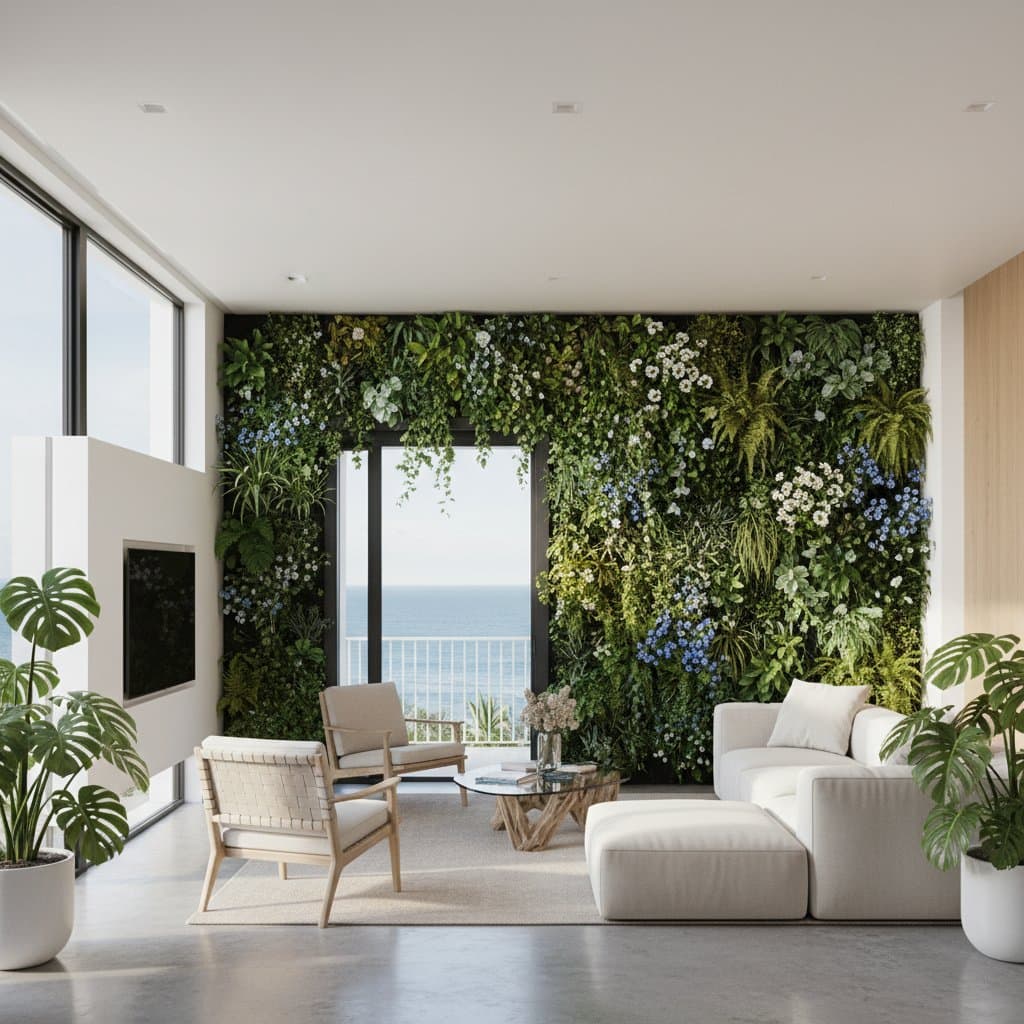
- Plants and growing medium: 20 to 50 dollars per square foot for salt-tolerant species.
- Labor: 30 to 70 dollars per square foot for mounting and waterproofing.
- Maintenance setup: 10 to 30 dollars per square foot for sensors and access.
A 100-square-foot wall costs 10000 to 18000 dollars yet cuts annual cooling expenses by 25 to 35 percent. Payback occurs in three to five years depending on local energy rates.
Mechanisms That Lower Cooling Expenses
Living walls reduce temperatures through shading, evapotranspiration, and insulation. Foliage blocks sunlight from walls and windows. Plants release moisture that cools surrounding air. The layered structure traps cooler air and reduces temperature swings. In coastal conditions these effects lower exterior wall temperatures by 10 to 15 degrees and indoor temperatures by 3 to 5 degrees.
Labor and Installation Factors
Labor represents 30 to 40 percent of total project cost. Installers charge 50 to 100 dollars per hour. Work includes waterproofing, frame attachment, irrigation setup, and planting. Multi-story or large exterior projects add 10 to 15 percent for scaffolding and safety measures.
Variables Affecting Final Price
Wall orientation determines plant and irrigation needs. South- and west-facing surfaces require stronger materials. Native plant choices reduce ongoing water and care expenses. Automated irrigation raises initial cost but limits waste. Taller walls need extra structure. Coastal salt exposure demands corrosion-resistant components. Custom designs increase overall expense.
Strategies to Control Expenses
Homeowners control costs through several approaches. Begin with a small section before expanding. Select native species that need less water. Install a gravity-fed drip system to cut setup costs by 20 percent. Use prefabricated panels to shorten labor time. Combine maintenance visits with other seasonal tasks. Position walls near existing shade sources. Add solar pumps for irrigation power.
DIY Installation Compared with Professional Service
DIY projects cost 60 to 120 dollars per square foot and require moderate to high skill. Completion takes two to four weekends. Professional work costs 120 to 250 dollars per square foot and finishes in two to five days. Professionals provide warranties of one to three years. DIY suits small indoor walls. Professional service fits large exterior installations.
Questions for Potential Contractors
Ask about recommended irrigation for humid coastal air. Inquire about pruning and replacement frequency. Confirm inclusion of waterproofing and corrosion protection. Request warranty and maintenance details. Seek projected energy savings estimates. Identify plant varieties suited to salt and wind. Discuss options for future expansion.
Errors That Shorten System Life
Overwatering leads to mold and wall damage. Missing drainage allows water to pool. Non-coastal plants fail under salt and sun stress. Skipping waterproofing permits moisture intrusion. Inconsistent care reduces plant longevity. Careful planning and regular attention produce reliable results.
Expected Lifespan and Plant Choices
A maintained living wall lasts 10 to 15 years before major refurbishment. Individual plants need replacement every two to three years. Most residential installations do not require permits unless structural changes occur. Suitable plants include succulents, ferns, salt-tolerant grasses, seaside daisy, and creeping fig.
Long-Term Value for Coastal Homes
Living walls deliver consistent cooling, lower utility bills, and improved air quality. They create visual interest while connecting homes to the seaside setting. Proper selection and care turn the feature into a durable asset that pays for itself through energy savings and comfort gains.