
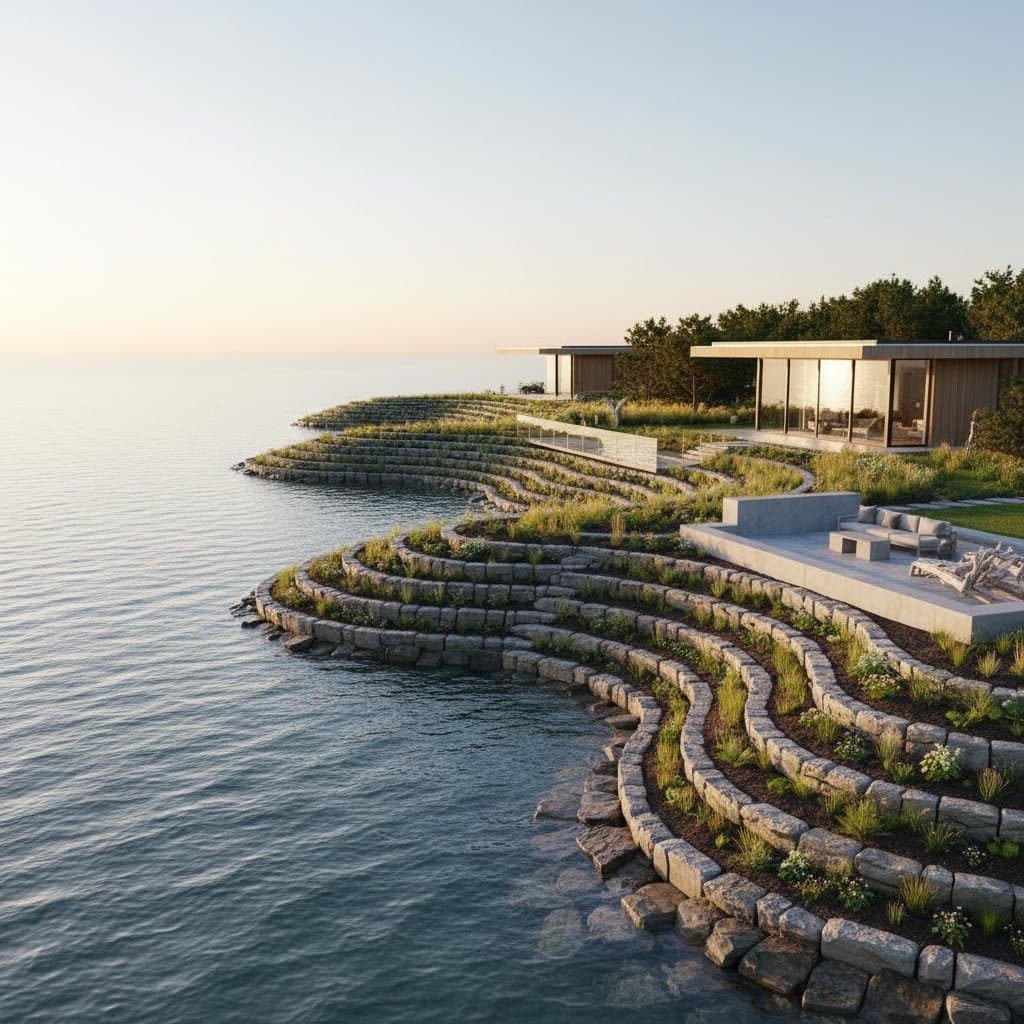
Understanding Seawall Gardens as Living Barriers Against Erosion
Visualize a coastal bluff facing the Pacific Ocean, where waves steadily erode the land over time. This erosion threatens property lines and natural habitats for homeowners along the shore. Seawall gardens, referred to as living shorelines, present a bioengineered solution that merges aesthetic appeal with effective erosion management. These systems incorporate native vegetation, stabilized soil layers, and occasional rock reinforcements to safeguard coastlines, avoiding the environmental drawbacks and stark appearance of concrete seawalls.
This article details the mechanics of seawall gardens, associated expenses, and distinctions from conventional methods. It includes practical maintenance advice, strategies for expense reduction, and indicators for professional involvement. Typical expenditures for residential living shorelines fall between $50 and $250 per linear foot, influenced by material selections and project scale. Although larger initiatives may total thousands of dollars, benefits encompass minimized erosion rates, enhanced water filtration, and bolstered ecosystems for marine species.
For expert assistance, consider obtaining estimates from specialists in bioengineered coastal designs and regulatory approvals.
Key Factors Influencing Costs
Establishing a seawall garden generally requires $50 to $250 per linear foot, with intricate bioengineered versions potentially exceeding $500 per linear foot. A standard residential project averages approximately $7,800, though variables significantly affect the final figure.
Essential elements driving expenses include:
- Design and Permitting Processes: Allocate 10 to 20 percent of the budget for engineering drawings and ecological permits. Regulatory bodies in coastal regions mandate assessments to preserve local habitats.
- Material Selections: Components such as biodegradable erosion mats, coir fiber logs, salt-resistant native plants, and gravel riprap contribute variably, depending on regional sourcing and quality.
- Labor Requirements: Installation on challenging terrains or expansive sites can constitute up to 50 percent of costs, involving skilled teams for precise placement.
- Site-Specific Challenges: Areas with steep inclines or prior degradation demand additional groundwork and structural supports, elevating both labor and supply outlays.
- Ongoing Maintenance: Yearly tasks like vegetation renewal, pruning, and debris clearance might incur $200 to $800 annually.
In comparison, concrete seawalls begin at about $1,000 per linear foot but often impede tidal movements and necessitate expensive upkeep. Living shorelines evolve and fortify naturally through root growth, offering a more adaptive defense.
Comparing DIY and Professional Installation Options
Homeowners with stable shorelines and permissive regulations may undertake small-scale seawall garden projects independently. Professionals remain advisable for most scenarios, given the intricacies of approvals and potential hazards.
Assessing DIY Viability:
- Complexity Level: Moderate, suitable for those with basic landscaping experience.
- Time Commitment: Typically spans 3 to 5 weekends.
- Essential Equipment: Shovels, wheelbarrows, permeable landscape fabrics, erosion-control mats, salt-tolerant plants, and anchoring stakes.
Step-by-Step DIY Installation Guide:
- Evaluate Terrain: Determine slope angles and measure existing erosion extents to plan material quantities.
- Obtain Necessary Approvals: Consult regional environmental departments to secure permissions for shoreline alterations.
- Position Coir Logs: Align these cylindrical barriers along the water interface to dissipate incoming wave forces.
- Incorporate Soil and Vegetation: Fill areas behind the logs with a blend of local soils enriched for drainage, then introduce appropriate native species.
- Stabilize and Irrigate: Secure fabrics and plants with stakes, followed by consistent watering to promote initial root development.
Opt for professional services on inclined or actively eroding sites. Experts assess water dynamics, integrate tailored drainage solutions, and guarantee adherence to environmental statutes. Initial investments prove higher, yet such installations endure longer with reduced follow-up care.
Strategies for Cost Reduction
Smart planning enables economical living shoreline development without compromising efficacy. Implement these approaches to optimize budgets.
- Source Materials Locally: Procure coir logs, aggregates, and indigenous plants from nearby suppliers to minimize shipping fees.
- Phase the Project: Begin with foundational stabilization measures, deferring aesthetic plantings and enhancements to subsequent stages.
- Collaborate with Adjacent Properties: Joint efforts among neighbors can distribute labor, permitting expenses, and equipment rentals.
- Handle Maintenance In-House: Acquire skills for routine trimming, replanting, and sediment redistribution to avoid service charges.
- Seek Financial Incentives: Investigate municipal or state grants designated for sustainable coastal protection initiatives.
Such tactics can subtract thousands from totals, advancing broader environmental stewardship.
Frequently Asked Questions
How Well Do Seawall Gardens Mitigate Erosion?
They substantially decelerate erosion rather than eliminate it completely. Root networks from plants secure soil particles, while foliage and structures attenuate wave impacts, thereby lessening scour and land retreat progressively.
Are Permits Required for Seawall Gardens?
Yes, jurisdictions in coastal areas typically demand evaluations by local or state authorities. These reviews confirm that installations enhance biodiversity and maintain hydrological balances.
Which Plants Suit Seawall Gardens?
Select only species adapted to saline environments and indigenous to the region. Effective options encompass smooth cordgrass for tidal zones, alkali saltgrass for upper banks, beach morning glory for trailing coverage, and black sage for elevated stability.
When Do Stabilization Effects Become Evident?
Tangible improvements generally manifest after one to two vegetation cycles, contingent on species growth rates and exposure to tidal forces.
Do Living Shorelines Work on Steep Cliffs?
They perform optimally on mild to moderate gradients. Vertical or severely compromised cliffs often necessitate preliminary engineered walls or terraces prior to vegetative integration.
Building a Resilient Coastal Edge
Seawall gardens extend beyond mere defense, cultivating vibrant ecosystems that attract avian and aquatic life while purifying stormwater. As tides interact with the structure, it naturally refines water and reinforces its base through organic processes. Pursue meticulous site preparation, prioritize durable native selections, and commit to regular upkeep. Soon, your coastal boundary will embody a secure, ecologically rich frontier.