
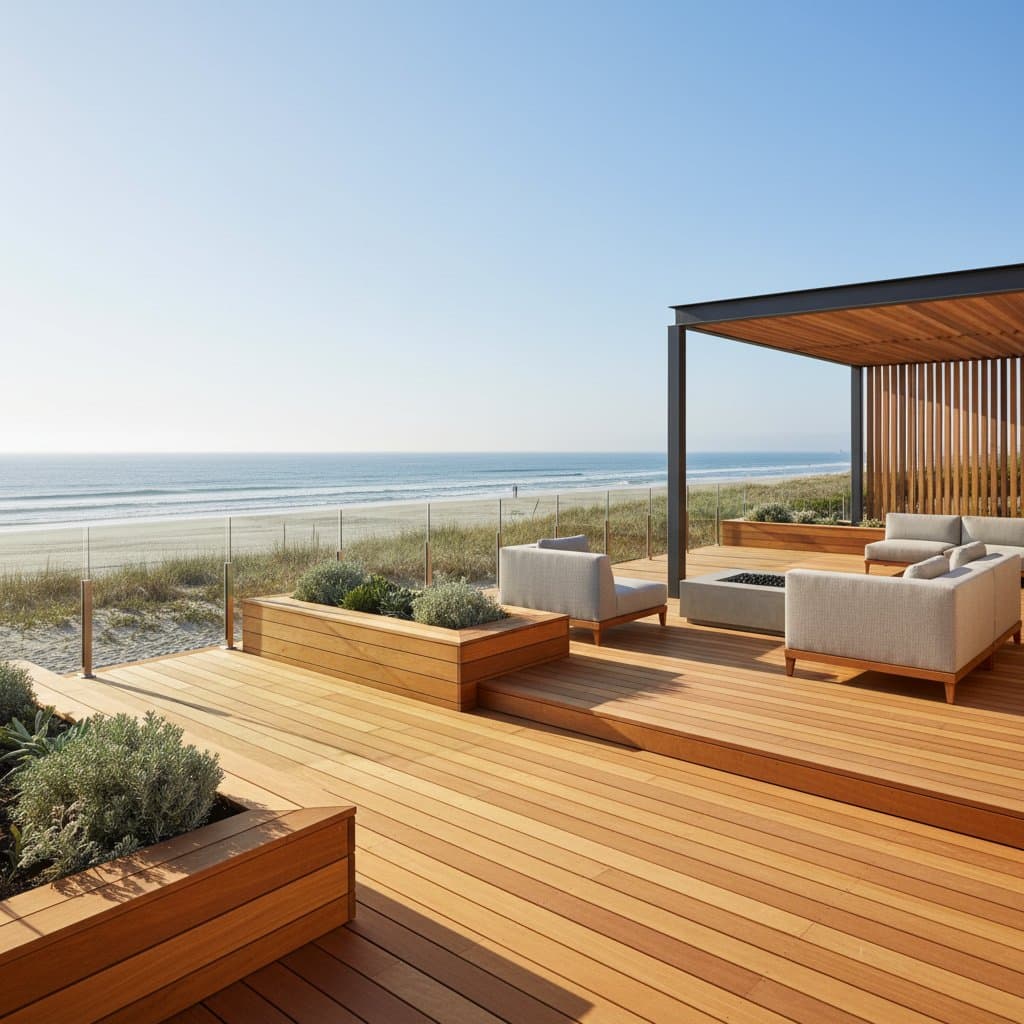
Why Heat-Treated Woods Outperform Teak in Coastal Environments
Coastal homeowners traditionally favor teak for its aesthetic appeal and resistance to weather. However, heat-treated woods now provide a superior option. Materials like Thermory and Accoya deliver exceptional durability, dimensional stability, and sustainability that exceed those of many tropical hardwoods. These alternatives achieve teak-like results without the elevated expenses or ecological drawbacks associated with exotic timbers.
In areas such as San Diego, where saline air, high humidity, and strong sunlight challenge outdoor materials, heat-treated woods emerge as a reliable choice. They demonstrate superior resistance to rot, swelling, and color loss compared to untreated woods. With appropriate maintenance, heat-treated decking or siding typically endures 25 to 40 years, rivaling or surpassing teak's service life.
How Heat-Treated Woods Achieve Their Performance
Thermory: Thermal Modification with Heat and Steam
Thermory wood receives treatment through a process that applies heat and steam exclusively. This method eliminates organic elements that draw in moisture and foster decay. The resulting material darkens, gains stability, and resists fungal growth effectively.
Suitable base species for Thermory include ash, pine, and spruce. Post-treatment, these softwoods exhibit characteristics akin to tropical hardwoods. Property owners can install Thermory decking or cladding in damp conditions secure in the knowledge that it will resist swelling or shrinking.
Image placeholder: Thermory ash deck overlooking a coastal view, showing smooth grain and even color.
Accoya: Acetylation for Enhanced Stability
Accoya wood undergoes acetylation, a chemical modification that alters the cell walls to block water absorption. This process ensures remarkable stability, suitable even for submerged applications. The material remains non-toxic and derives from forests managed for sustainability.
Accoya decking and siding maintain smoothness and consistency with limited dimensional changes. Such properties suit installations requiring precise fits and enduring structural integrity.
Image placeholder: Accoya cladding on a modern coastal home, blending natural tones with white trim.
Analyzing Costs and Return on Investment
Property owners frequently inquire about the financial advantages of modified woods over time. Although the upfront price for Accoya or Thermory decking exceeds that of basic softwoods, it amounts to approximately half the expense of high-grade teak.
| Material Type | Cost per Square Foot Installed | Average Lifespan | Maintenance Cost per Year | Estimated ROI |
|---|---|---|---|---|
| Teak | $15 to $30 | 20 to 35 years | $1.50 to $3.00 | 70% |
| Thermory | $8 to $15 | 25 to 40 years | $0.50 to $1.00 | 80% |
| Accoya | $10 to $16 | 30 to 45 years | $0.50 to $1.00 | 85% |
Savings accrue through decreased need for refinishing, reduced repairs, and extended durability. In coastal locales like La Jolla or Coronado, where exposure to salt persists, these advantages prove particularly beneficial.
Incorporating Heat-Treated Woods in Coastal Design
Heat-treated woods suit various applications, including decks, siding, pergolas, and outdoor furniture. Their uniform patterns and warm hues adapt well to modern and classic styles alike.
Key Applications
- Decking and docks: Suitable for pool surrounds, seaside patios, or dock pathways.
- Siding and cladding: Provides organic texture to sleek coastal structures.
- Outdoor furniture: Fits benches, recliners, and table sets.
- Ceiling elements: Enhances covered patios or exterior kitchens with a luxurious touch.
Image placeholder: Thermory pine siding on a beach house with large windows and minimalist lines.
Environmental Advantages of Heat-Treated Woods
A primary appeal of heat-treated woods lies in their sustainable manufacturing. Thermory and Accoya utilize softwoods harvested responsibly, typically from northern regions with controlled growth.
Key Environmental Impacts
- Lower deforestation rates: Diminishes demand for tropical hardwoods.
- Chemical-free processes: Treatments avoid release of toxic substances.
- Extended service life: Reduces frequency of replacements and associated waste.
- End-of-life options: The wood remains recyclable and decomposes naturally.
Selecting these materials advances environmentally conscious construction while preserving wood's visual charm.
Maximizing Value in Coastal Properties
For residents in seaside areas, heat-treated woods ensure enduring elegance with minimal maintenance demands. These products endure saline sprays and intense solar exposure while retaining form, finish, and robustness. They integrate seamlessly with both quaint coastal dwellings and refined modern residences.
Thermory and Accoya equip architects and builders with viable, green alternatives. These woods merge the inviting quality of natural timber with the toughness previously exclusive to exotic varieties. For renovations of ocean-view decks or facades of contemporary homes, heat-treated options provide reliability that exceeds teak's capabilities.
Image placeholder: Coastal deck made of Accoya wood overlooking the ocean, showing weathered silver tones and smooth texture.
Maintaining and Extending Outdoor Enjoyment
After installation, decks or siding constructed from heat-treated woods require little ongoing care, allowing more focus on leisure activities. Regular cleaning and selective sealing preserve their appearance over years.
For upcoming renovations or constructions near the shore, prioritize Thermory or Accoya as core materials. These selections guarantee the desired style, necessary resilience, and assurance that the project withstands marine challenges indefinitely.