
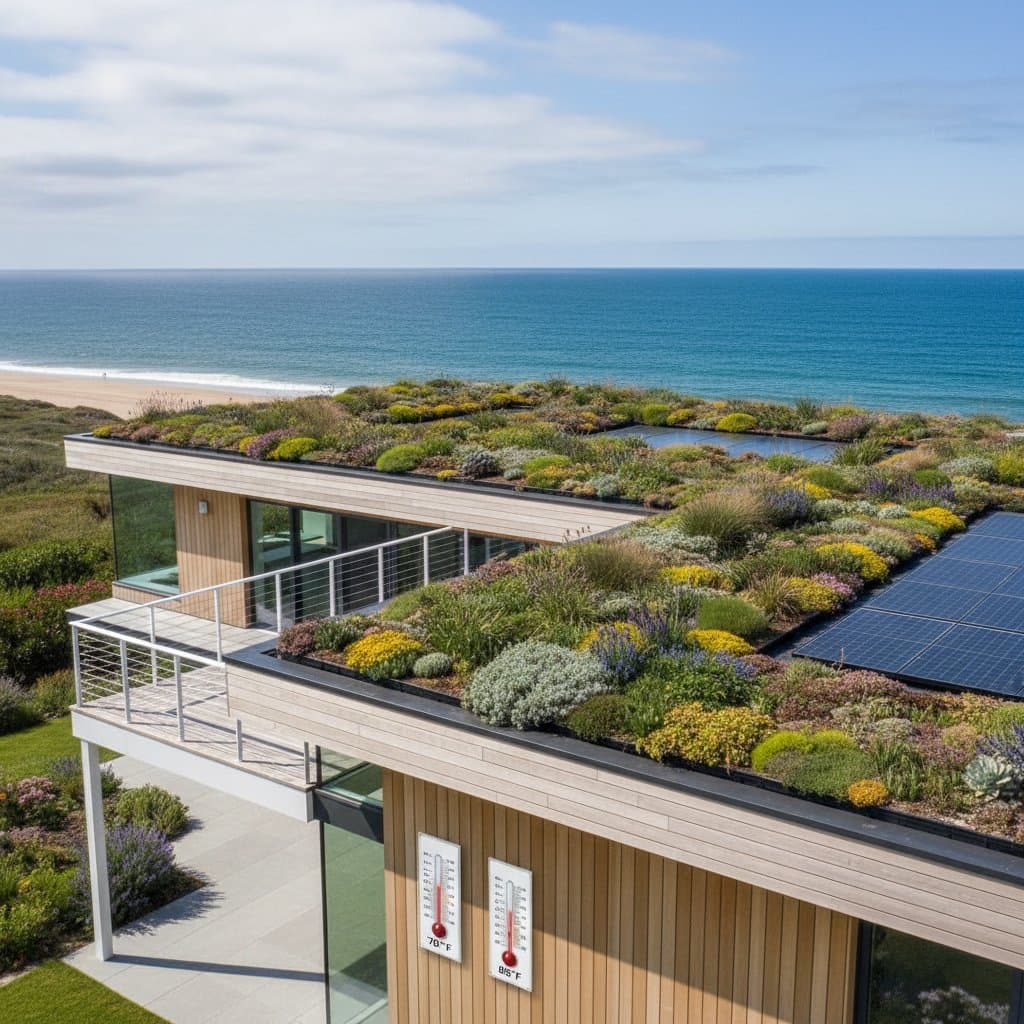
Green Roofs Cool Coastal Homes 15° Sans AC Bills
Coastal homeowners discover an energy-smart solution overhead. Green roofs, also known as living roofs, transform heat management in coastal residences. These systems employ layers of soil and vegetation to insulate and cool structures naturally. In coastal climates, a well-designed green roof reduces indoor temperatures by up to 15 degrees Fahrenheit, often eliminating the need for air conditioning. For locations such as San Diego, this sustainable roofing approach delivers comfort, aesthetic appeal, and enduring financial benefits.
What Is a Green Roof?
A green roof consists of a roofing system that sustains vegetation atop a waterproof membrane. Components include drainage layers, root barriers, lightweight soil, and drought-resistant plants. This integration of landscaping and building science forms a compact ecosystem that enhances energy efficiency and air quality.
Types of Green Roofs
Extensive Green Roofs
- Feature a shallow soil layer, typically 3 to 6 inches deep
- Remain lightweight and suit most residential buildings
- Rely on resilient, low-maintenance plants like succulents or native grasses
Intensive Green Roofs
- Incorporate deeper soil, at least 6 inches
- Accommodate shrubs, small trees, and garden areas
- Demand more weight support and complexity, suiting larger or commercial structures
Hybrid Green Roofs
- Merge lightweight zones with deeper planting areas
- Balance visual appeal and functionality for residential use
Image: Coastal home with a lush green roof overlooking the ocean, blending with surrounding vegetation.
Average Cost of a Green Roof
Installation costs for green roofs depend on materials, design intricacy, and roof dimensions. The following table presents standard ranges:
| Type of Green Roof | Cost per Square Foot | Maintenance Level | Cooling Benefit |
|---|---|---|---|
| Extensive | $10 - $25 | Low | Up to 10-15°F cooler |
| Intensive | $25 - $40 | Moderate to High | Up to 20°F cooler |
| Hybrid | $18 - $30 | Moderate | 12-18°F cooler |
For a 1,000-square-foot coastal residence, expect expenses from $15,000 to $30,000, influenced by design and structural requirements. Although higher than traditional roofing, energy reductions and prolonged durability frequently offset the upfront outlay.
Image: Rooftop garden with native succulents and solar panels integrated into a modern home design.
How Green Roofs Keep Coastal Homes Cooler
Green roofs substantially lower roof surface temperatures through shade, evapotranspiration, and insulation. Sunlight that typically warms roofing materials instead promotes plant growth. Moisture from plants and soil evaporates, chilling the air over the roof and interiors beneath.
Coastal areas benefit from moderate humidity and steady breezes, which enhance this cooling. Residents report indoor drops of 10 to 15 degrees during intense sunlight. Such reductions enable comfortable conditions without air conditioning dependence.
The Science of Natural Cooling
- Thermal Mass: Soil captures and retains heat, averting sudden spikes
- Evapotranspiration: Plants emit moisture to cool nearby air
- Reflectivity: Vegetation absorbs heat more effectively than asphalt, curbing urban warming
- Insulation: Layers retain interior coolness and repel external heat
Image: Cross-section of a green roof showing layers of vegetation, soil, drainage, and waterproof membrane.
Energy Savings and Long-Term Value
The upfront cost of a green roof yields returns via lower utility expenses and extended roof life. Homeowners typically achieve 25 to 40 percent reductions in cooling expenditures. In coastal settings, these roofs endure twice as long as standard ones, as vegetation shields waterproofing from ultraviolet exposure and thermal shifts.
Estimated Annual Savings Overview
| Home Size | Cooling Savings | Roof Lifespan Extension | Estimated ROI |
|---|---|---|---|
| 800 sq ft | $200 - $400 | +15 years | 60-75% over lifetime |
| 1,000 sq ft | $250 - $500 | +20 years | 70-85% over lifetime |
| 1,500 sq ft | $400 - $700 | +25 years | 80-90% over lifetime |
Pairing green roofs with upgrades like reflective windows or solar panels amplifies savings. These roofs also manage stormwater by capturing rain, minimizing runoff, and easing municipal drainage loads.
Factors Influencing Cost and Performance
Multiple elements shape the expense and efficacy of green roofs.
1. Structural Support
Older structures might need reinforcement to bear the weight of soil and vegetation.
2. Plant Selection
Coastal-adapted, drought-tolerant natives demand minimal watering.
3. Roof Slope
Flat or low-pitch roofs suit installations best; modular options handle slight inclines.
4. Climate Conditions
Ocean breezes, humidity, and temperate weather optimize performance in coastal zones.
5. Maintenance Practices
Routine checks, debris clearance, and pruning sustain efficiency and appearance.
Image: Rooftop technician maintaining a green roof with native drought-tolerant plants.
Budgeting and Planning Your Green Roof
Thorough preparation ensures a durable green roof with limited ongoing care.
Step-by-Step Planning Guide
- Evaluate Structure
Engage an engineer to assess load-bearing and drainage capacities. - Choose Roof Type
Select extensive, intensive, or hybrid according to weight limits, budget, and upkeep tolerance. - Select Plant Species
Prioritize native succulents, grasses, or herbs suited to low water needs. - Work with Experienced Installers
Specialists handle waterproofing and root safeguards. - Plan for Irrigation
Incorporate drip lines or rainwater harvesting for arid periods. - Set a Maintenance Schedule
Establish routines for inspections and care to preserve functionality.
Allocate 10 to 15 percent above the base budget for unforeseen adjustments or bespoke elements.
DIY and Cost-Saving Options
DIY green roofs suit small-scale applications like sheds or compact homes. Modular trays with lightweight soil and ground-cover plants simplify setup. These prefabricated units range from $8 to $15 per square foot, undercutting custom installations.
DIY Tips:
- Employ recycled waterproof liners to minimize environmental impact.
- Integrate salt- and wind-resistant native flora.
- Deploy timer-controlled drip irrigation for water conservation.
- Install borders or low walls to secure soil against erosion.
Limit DIY efforts to areas below 300 square feet with straightforward load considerations.
Return on Investment and Environmental Benefits
Green roofs elevate property values through sustainable attributes and contemporary design. Appraisals reflect premiums for such features.
Environmental Advantages:
- Enhance air purity via carbon sequestration.
- Mitigate stormwater flow and soil loss.
- Foster habitats for avian and insect species.
- Dampen external noise with organic buffering.
Widespread adoption cools entire communities by diminishing collective heat islands.
FAQs About Green Roofs for Coastal Homes
| Question | Answer |
|---|---|
| Do green roofs leak? | Proper installation with waterproof membranes and root barriers minimizes leaks. Routine inspections maintain integrity. |
| Can I walk on a green roof? | Extensive types discourage foot traffic, while intensive designs permit paths or lounging if engineered accordingly. |
| How much maintenance is needed? | Systems require periodic reviews, weeding, and watering in dry spells. |
| Will a green roof attract pests? | Native selections repel insects; effective drainage avoids water pooling. |
| Can solar panels be installed on a green roof? | Integration works well, boosting efficiency as cooler surfaces optimize panel output. |
Integrating Green Roofs for Coastal Comfort
A green roof evolves a residence into an extension of its natural surroundings. In areas like San Diego, it maintains pleasant interiors amid sunny days without escalating energy demands. The approach yields financial gains, aesthetic enhancements, ecosystem support, and harmonious integration with seaside environs.
Begin with modular setups for modest commitments or pursue full rooftop landscapes for comprehensive impact. The outcome delivers a resilient, energy-efficient home that prioritizes comfort and sustainability.