
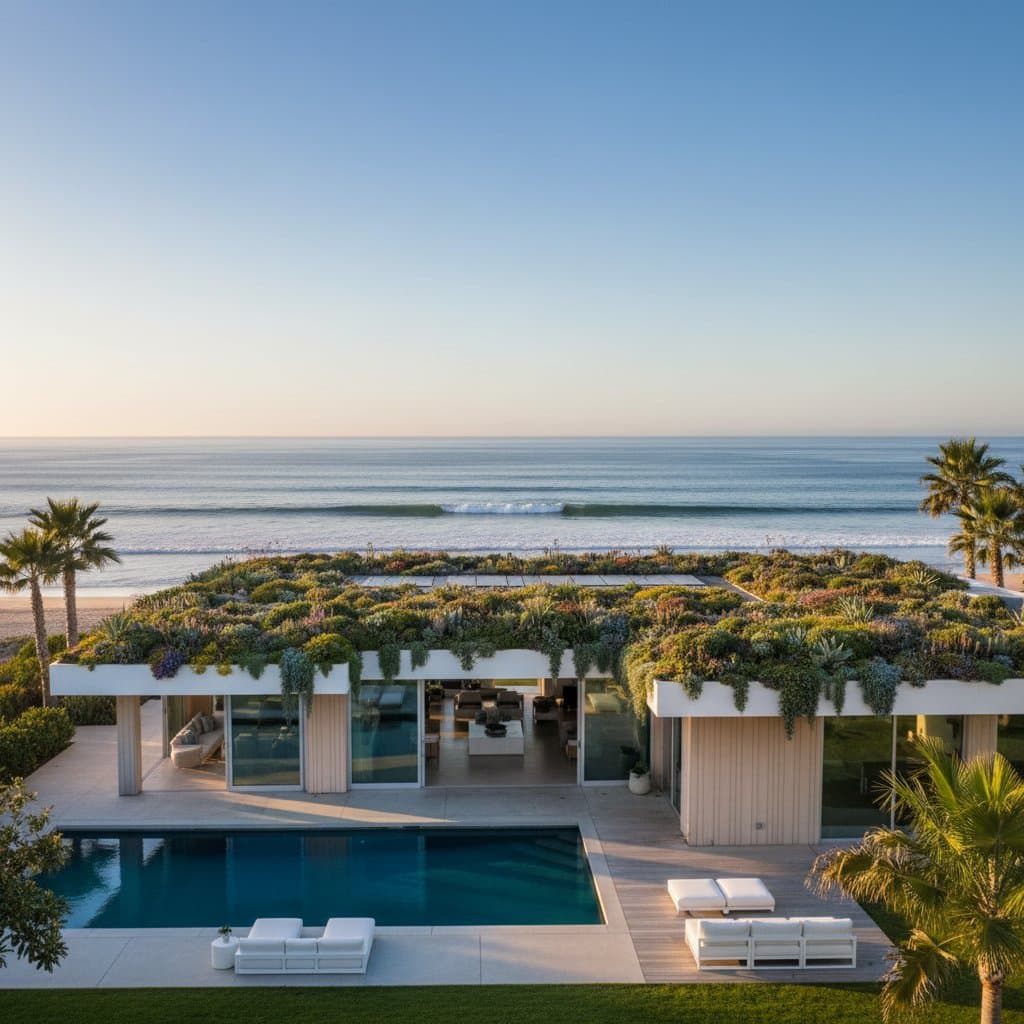
Green Roofs Reduce Air Conditioning Costs by 30 Percent in Beach House Remodels
Imagine stepping onto the deck of your coastal home, where the ocean breeze meets a vibrant layer of greenery covering the roof. This living roof enhances the aesthetic appeal of the property. More importantly, it lowers air conditioning expenses by up to 30 percent for homeowners in Southern California, fostering energy-efficient spaces that harmonize with the seaside setting.
This guide details the mechanisms behind these energy savings, the elements involved in installing a green roof on a beach house, and strategies for choosing between self-installation and professional services. Readers gain insights into cost estimates, design variations, and methods to optimize returns on investment.
Key takeaway: Budget between 15 and 40 dollars per square foot for a green roof suited to coastal conditions. Benefits include reduced utility bills, extended roof durability, and improved interior comfort through natural cooling. For professional assistance, obtain estimates from specialists in sustainable roofing solutions.
In this article
- Cost factors
- Types and options
- DIY versus professional installation
- Ways to save
- Maintenance and longevity
- FAQs
Cost Factors
Installing a green roof involves several expense categories that influence the total investment. Understanding these components allows homeowners to plan effectively and identify potential savings.
The primary costs stem from materials, which include waterproofing membranes, drainage layers, soil substrates, and vegetation. For a typical 1,000-square-foot roof, expect to allocate 10,000 to 25,000 dollars for these essentials. Labor adds another 5,000 to 15,000 dollars, depending on complexity and location.
Structural assessments represent a critical upfront expense, often ranging from 500 to 2,000 dollars. Engineers evaluate the roof's capacity to support added weight, particularly important in older beach houses exposed to salty air and high winds. Permits and inspections contribute 200 to 1,000 dollars, varying by municipality.
Ongoing costs encompass irrigation systems and maintenance supplies. A basic drip irrigation setup costs 1,000 to 3,000 dollars, while annual upkeep averages 500 to 1,000 dollars. Over time, these investments yield returns through energy savings; a 30 percent reduction in cooling costs can recoup the initial outlay in 7 to 10 years.
Homeowners should factor in regional variables, such as higher material prices in coastal areas due to corrosion-resistant options. Consulting local suppliers provides accurate quotes tailored to Southern California conditions.
Types and Options
Green roofs divide into two main categories: extensive and intensive systems. Each suits different needs based on roof structure, maintenance preferences, and desired functionality.
Extensive Green Roofs
These systems feature lightweight construction and minimal upkeep, ideal for sloped roofs or structures with load limitations common in beach houses. Soil depth measures 2 to 6 inches, supporting resilient plants such as sedums, wildflowers, or drought-resistant grasses.
Best for: Property owners prioritizing thermal benefits and subtle enhancement without intensive care.
Pros: Lower initial costs, ease of maintenance, and reliable insulation that mitigates heat gain from intense coastal sun.
Cons: Restricted biodiversity and inability to accommodate walkways or heavy features.
Extensive roofs excel in passive cooling, absorbing sunlight and releasing moisture to lower ambient temperatures. In Southern California, they integrate well with native flora, reducing water demands in arid climates.
Intensive Green Roofs
Deeper profiles define intensive systems, with soil layers from 6 to 18 inches enabling diverse plantings like perennials, shrubs, or dwarf trees. These require robust support and automated watering.
Best for: Spacious coastal residences or luxury renovations where the roof serves as an extension of living areas.
Pros: Versatile landscaping opportunities, superior thermal regulation, and potential for recreational use.
Cons: Elevated expenses, increased upkeep, and necessity for engineering upgrades to handle loads up to 150 pounds per square foot when saturated.
Intensive designs transform roofs into verdant retreats, offering privacy and habitat for local wildlife. They demand careful planning to ensure compatibility with beachfront exposure to salt and storms.
DIY Versus Professional Installation
Deciding between handling the project personally or engaging experts hinges on skill level, project scale, and risk tolerance. Each approach presents distinct advantages and challenges.
DIY installation appeals to handy homeowners tackling smaller extensive systems. Start with a structural evaluation using online tools or basic kits. Assemble layers sequentially: apply waterproofing, add drainage mats, spread lightweight soil, and plant pre-grown modules. This method saves 30 to 50 percent on labor but requires 20 to 40 hours of work for a 500-square-foot area.
Challenges include ensuring proper sealing against leaks and adhering to building codes. In coastal zones, wind-resistant anchoring becomes essential. Beginners benefit from instructional videos and starter kits priced at 200 to 500 dollars.
Professional installation guarantees compliance and durability, particularly for intensive roofs or complex geometries. Certified contractors manage permits, sourcing, and warranties lasting 20 to 30 years. Expect timelines of 1 to 3 weeks, with costs reflecting expertise in eco-materials.
For beach houses, professionals address corrosion from ocean proximity, using galvanized fasteners and UV-protected liners. They also integrate smart monitoring for moisture levels. Homeowners opting for pros should verify credentials through associations like the Green Roof Industry Association.
Ways to Save
Reducing expenses while upholding performance involves strategic choices throughout the process. Implement these tactics to optimize value.
-
Select native vegetation. Plants adapted to coastal ecosystems, such as California fescue or seaside daisy, endure salt exposure and demand minimal watering.
-
Incorporate efficient irrigation. Drip systems deliver precise hydration, cutting water use by 50 percent compared to traditional methods and qualifying for utility rebates.
-
Opt for modular components. Pre-assembled trays snap together quickly, minimizing on-site labor and waste.
-
Pair with renewable energy. Solar arrays on green roofs benefit from reduced temperatures, boosting output by 10 to 15 percent.
-
Pursue financial incentives. Explore grants from environmental programs or tax credits for green building initiatives in California.
These measures not only curb initial spending but also enhance long-term efficiency, amplifying the 30 percent cooling advantage.
Maintenance and Longevity
Proper upkeep extends the service life of a green roof to 40 to 50 years, surpassing traditional asphalt shingles by twofold. Regular attention preserves integrity and performance.
Conduct biannual inspections of waterproofing layers, drainage channels, and plant health. Clear debris from ocean winds to prevent clogs. In spring and fall, prune overgrown foliage and test soil pH for optimal growth.
Weed control targets non-native invaders that compete with desired species. Apply organic, slow-release nutrients annually to sustain vitality without chemical runoff into coastal waters.
Irrigation adjustments account for seasonal rainfall patterns; sensors automate responses to dry spells. Professional audits every five years detect subtle issues like root penetration.
Beyond durability, maintenance yields ancillary benefits: enhanced biodiversity, stormwater management, and noise reduction from wave crashes. This holistic care aligns with sustainable living in fragile beach environments.
FAQs
How much weight does a green roof add?
Saturated extensive systems weigh 15 to 25 pounds per square foot, while intensive ones reach 40 to 150 pounds. Engage a structural engineer for a site-specific analysis to confirm load-bearing capacity.
Can it withstand salty ocean air?
Absolutely, provided salt-resistant selections like ice plant or buffalo grass form the planting palette. These endure spray and humidity, with protective barriers shielding underlying components.
What energy savings can homeowners expect?
Cooling demands drop by 25 to 30 percent in summer months, translating to annual savings of 500 to 1,500 dollars on utility bills for a standard beach house.
Is insurance affected by green roofs?
Most policies accommodate them with minor premium adjustments; notify providers early to secure coverage for vegetation and potential liabilities.
Realizing Coastal Sustainability
Embracing a green roof elevates a beach house into a resilient, eco-conscious haven. It delivers tangible efficiencies in cooling and maintenance while enriching the connection to the natural surroundings. Take the first step by assessing your roof's potential and exploring tailored designs to unlock these enduring advantages.