
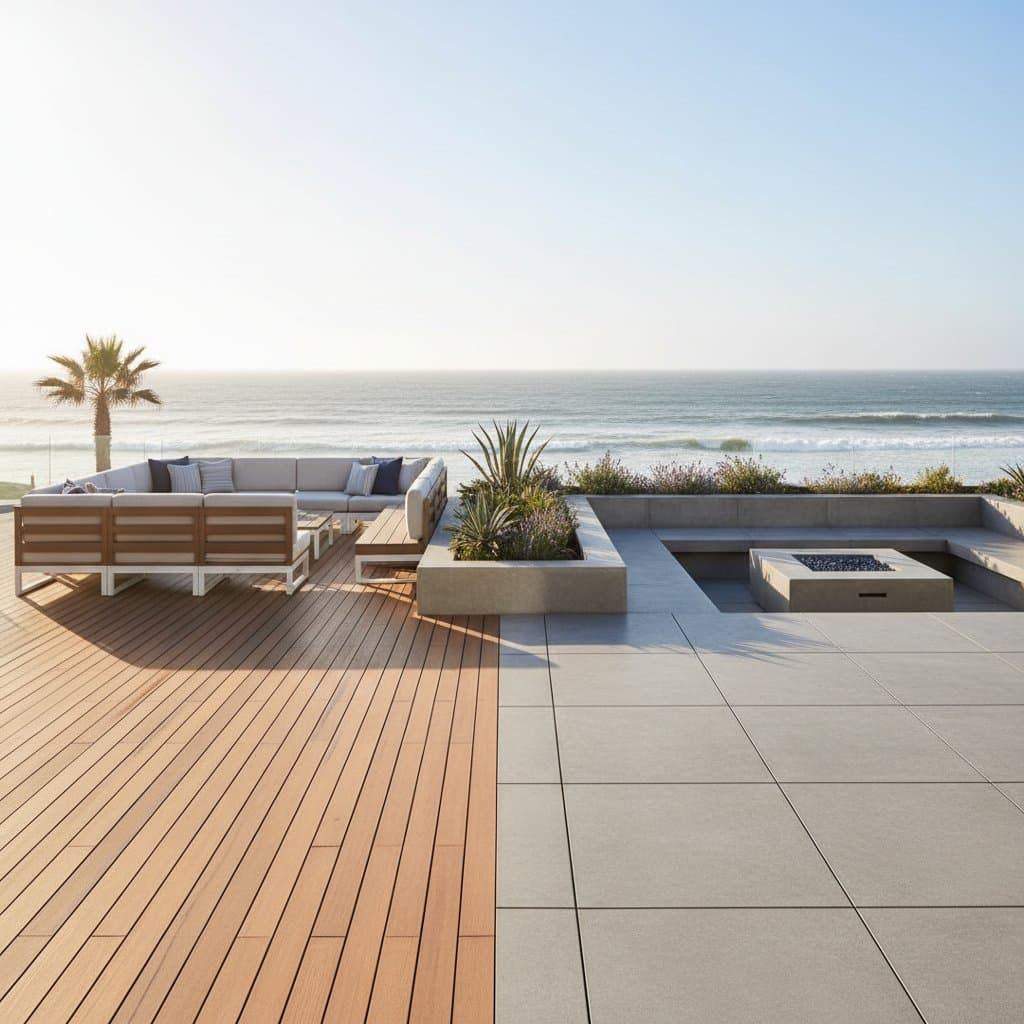
Coastal Patio Costs 2026: Composite vs Concrete Breakdown
Homeowners near the coast often face unique challenges when upgrading outdoor spaces. Salt-laden air, high humidity, and intense sunlight demand materials that withstand these elements while enhancing enjoyment. Selecting between composite decking and concrete patios requires careful consideration of initial expenses, ongoing care, and performance over time.
This analysis examines coastal patio costs for 2026, with a direct comparison of composite and concrete options. Readers gain insights into budgeting strategies, material resilience in seaside environments, and factors that determine the most suitable choice for individual properties.
Highlights
- Composite patios involve higher initial expenses yet demand minimal upkeep and endure coastal degradation effectively.
- Concrete patios offer economical installation yet require periodic sealing and repairs.
- Elements such as salt exposure, humidity, and ultraviolet radiation shape enduring expenses.
- Options for design, surface comfort, and aesthetic preferences influence the final selection.
- Explore cost estimates, advantages and disadvantages, plus guidance tailored to coastal residences.
Composite Patio Costs: Long-Term Value for Coastal Living
Composite decking replicates the appearance of wood while eliminating associated maintenance demands. Manufacturers blend recycled plastics with wood fibers to create boards that resist rot, mold, and color loss. In coastal settings, these properties provide significant benefits.
Average Cost of Composite Patios
| Project Type | Approximate Cost per Square Foot | Total Range for 300 sq. ft. Patio |
|---|---|---|
| Basic composite decking | $25 - $35 | $7,500 - $10,500 |
| Mid-range with trim and railing | $35 - $50 | $10,500 - $15,000 |
| Premium composite with lighting or custom details | $50 - $65 | $15,000 - $19,500 |
These figures encompass materials and professional labor. Homeowners undertaking installation independently may lower labor fees, although composite requires specific tools and accurate spacing to avoid distortion from environmental shifts.
Why Coastal Homeowners Choose Composite
- Low maintenance: Owners avoid sealing or staining; simple rinsing with soap and water suffices periodically.
- Durability: Materials withstand salt spray, ultraviolet rays, and moisture without degradation.
- Comfort: Surfaces remain cooler than concrete or dark wood during warm weather.
- Longevity: Quality boards endure 25 years or longer under routine conditions.
Photo: A sleek composite patio overlooking the ocean with built-in seating and cable railing.
Drawbacks to Consider
| Pros | Cons |
|---|---|
| Fade and moisture resistant | Higher initial cost |
| Slip-resistant options available | Can feel slightly plastic to the touch |
| Variety of colors and textures | Limited refinishing options |
| Eco-friendly materials | May expand or contract slightly with temperature changes |
Tip: Select lighter-colored boards to minimize heat buildup in regions with abundant sunlight.
Composite vs Concrete: Coastal Performance Comparison
Durability rivals aesthetics in importance for ocean-adjacent properties. Salt corrodes fasteners, moisture induces cracks, and ultraviolet light diminishes vibrancy. The following table contrasts composite and concrete responses to these stressors.
| Feature | Composite Decking | Concrete Patio |
|---|---|---|
| Moisture resistance | Excellent, repels water and resists mold | Moderate, needs sealing to prevent absorption |
| UV resistance | Very good, though darker colors may fade slightly | Fair to good, depends on sealant and finish |
| Maintenance | Minimal, occasional cleaning only | Moderate, regular resealing and crack repair |
| Temperature comfort | Cooler surface underfoot | Can become very hot in direct sun |
| Longevity | 25 years or more | 15 to 25 years with maintenance |
| Aesthetic flexibility | Wide range of colors and patterns | Highly customizable with stamping and stains |
| Environmental impact | Often made from recycled materials | Energy-intensive production but recyclable |
Design Ideas for Coastal-Style Patios
Both materials support captivating coastal designs when practicality informs aesthetics.
Composite Patio Design Ideas
- Two-tone decking: Employ contrasting shades to delineate dining from lounge zones.
- Built-in benches: Integrate seating to optimize space and utility.
- Cable railings: Preserve panoramic views with contemporary accents.
- Lighting accents: Install recessed LED fixtures along edges for an inviting ambiance.
Concrete Patio Design Ideas
- Stamped coastal patterns: Imitate driftwood, coral, or wave motifs for texture.
- Colored borders: Introduce definition and visual appeal at boundaries.
- Fire features: Incorporate pits or tables to counter evening chills.
- Integrated planters: Merge vegetation with surfaces for organic integration.
Photo: A coastal concrete patio with stamped wave design and soft blue accent lighting.
Choosing the Right Material for Your Coastal Home
No universal solution exists when evaluating composite against concrete for seaside patios. Decisions hinge on daily routines, financial parameters, and intended uses.
Quick Decision Guide
| Priority | Best Choice |
|---|---|
| Lowest upfront cost | Concrete |
| Lowest lifetime cost | Composite |
| Minimal maintenance | Composite |
| Maximum design flexibility | Concrete |
| Eco-friendly materials | Composite |
| Heat resistance | Composite |
| Custom finishes | Concrete |
Composite decking often prevails for enduring reliability, particularly among those prioritizing ease and uniformity. Concrete suits expansive areas or projects emphasizing personalization.
Frequently Asked Questions
How much does a coastal composite patio cost?
Professional installation for a composite patio generally spans $25 to $65 per square foot, varying by brand, configuration, and regional factors. Premium elements like lighting or bespoke arrangements increase totals.
Is concrete or composite better for coastal weather?
Composite outperforms in saline, humid climates by resisting corrosion, decay, and discoloration. Concrete manages these conditions adequately with proactive sealing and upkeep.
Maximizing Value in Your Coastal Patio Investment
Investing in a resilient patio elevates coastal living. By aligning material selection with environmental realities and personal needs, homeowners secure spaces that endure and delight for decades. Consult local experts to tailor plans and ensure compliance with regional codes.