
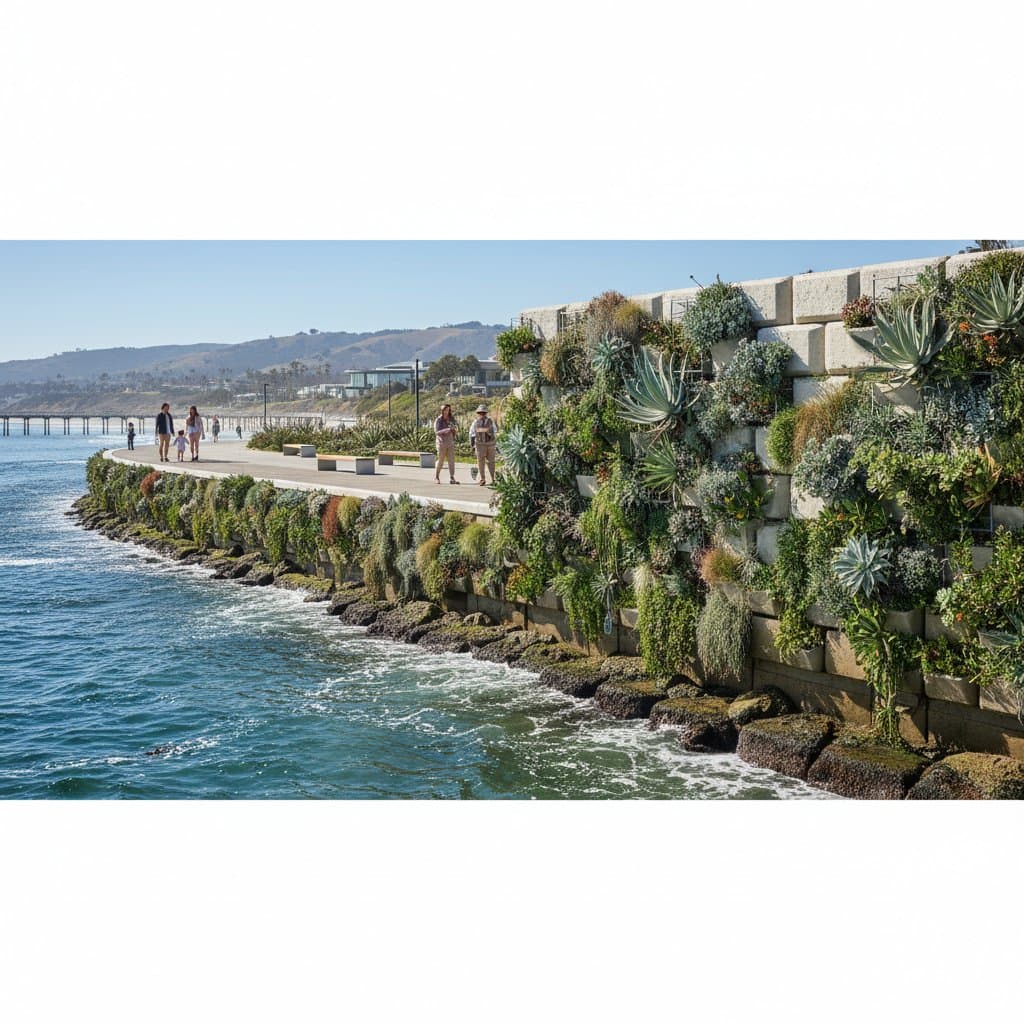
Vertical Gardens Shielding Seawalls from Erosion
Coastal cities confront persistent threats from erosion, rising sea levels, and severe weather. Seawalls provide vital protection for shorelines, yet conventional concrete structures often deteriorate and disrupt marine habitats. Vertical gardens emerge as an innovative remedy for these seawalls. These installations integrate vegetation directly onto the barriers, boosting visual appeal while stabilizing soil, mitigating wave forces, and cultivating habitats for marine species. In regions such as San Diego, vertical gardens elevate seawalls from mere defenses to dynamic ecological assets.
How Vertical Gardens Protect Seawalls from Erosion
Seawalls endure relentless battering from saltwater and tidal movements, leading to cracks and material breakdown. Vertical gardens serve as a resilient overlay, dissipating wave energy and anchoring the underlying surface. Plant roots bind soil and sediment, minimizing runoff and structural compromise.
Key Protective Functions
- Wave energy absorption: Dense foliage scatters incoming waves, lessening direct impacts on the wall.
- Soil stabilization: Extensive root networks lock particles in place, curbing erosion at the base and sides.
- Moisture regulation: Plants manage water retention and dispersal, averting fissures from salt accumulation or desiccation.
- Temperature balance: Greenery buffers against thermal shifts that induce concrete expansion and contraction.
- Biodiversity support: The textured surfaces promote attachment of algae, shellfish, and crustaceans, enhancing overall stability.
These mechanisms collectively prolong seawall durability and nurture surrounding ecosystems.
Types of Vertical Gardens for Coastal Applications
Various vertical garden configurations suit marine settings, tailored to site conditions, wall composition, and upkeep demands.
| Type of Vertical Garden | Description | Typical Plant Options | Maintenance Level |
|---|---|---|---|
| Modular Panels | Prefabricated modules with integrated soil pockets or hydroponic setups for straightforward installation and renewal. | Salt-tolerant succulents, native grasses | Moderate |
| Pocket Planters | Durable fabric or mesh containers secured to the wall and filled with growing medium. | Salt-resistant herbs, trailing vines | High |
| Hydroponic Systems | Soil-free cultivation in nutrient solutions, suited to constrained areas. | Sea lavender, resilient ferns | Low |
| Climbing Vegetation | Self-adhering vines guided across the wall for organic coverage. | Morning glory, creeping fig | Low |
| Hybrid Living Walls | Blended modular and climbing elements for comprehensive plant diversity. | Assorted native coastal flora | Moderate |
Customization accounts for wave intensity, light availability, and water supply.
Image Reference
Image 1: Modular vertical garden adorning a seaside retaining wall with hardy, salt-tolerant vegetation.
Factors Influencing Performance and Durability
Vertical gardens deliver robust results when aligned with site-specific conditions.
1. Plant Selection
Selecting appropriate species proves essential for enduring saline, gusty, and exposed coastal conditions. Vegetation requires resistance to salt mist, sparse soil, and variable hydration.
Recommended options encompass:
- Sea thrift (Armeria maritima)
- Beach morning glory (Ipomoea imperati)
- Ice plants (Delosperma species)
- Creeping juniper (Juniperus horizontalis)
- Coastal sage (Artemisia californica)
2. Irrigation and Drainage
Reliable watering sustains plant vitality without compromising the wall. Drip irrigation or nutrient feeds maintain equilibrium, while integrated drainage prevents pooling that erodes foundations.
3. Wall Material Compatibility
Interactions vary across concrete, stone, and synthetic seawalls. Textured surfaces facilitate root grip, whereas slick ones demand mesh reinforcements or anchoring frames.
4. Maintenance and Access
Regular tasks involve pruning, replenishing plants, and inspecting water lines. Easy reach facilitates post-storm debris clearance and filter servicing.
Image 2: Detailed view of drip irrigation embedded within a vertical seawall garden.
Environmental and Aesthetic Benefits
Beyond erosion control, vertical gardens enrich coastal vitality and allure.
Ecological Advantages
- Improved water quality: Foliage traps sediments and neutralizes contaminants, safeguarding marine waters.
- Habitat creation: Layered structures host juvenile fish, invertebrates, and pollinators.
- Temperature regulation: Shade lowers ambient heat, benefiting adjacent fauna.
- Carbon absorption: Plants sequester CO2, bolstering regional climate adaptation.
Visual and Social Benefits
Greenery tempers stark coastal infrastructure, fostering inviting landscapes. Visitors and locals gain from scenic enhancements, while property values rise alongside communal green spaces that merge ecology and urban planning.
Image 3: Lush vertical garden bordering a coastal walkway, drawing crowds for its vibrant display.
Cost and Long-Term Value
Initial outlays for vertical gardens yield substantial returns through durability and sustainability.
| Project Type | Average Cost per Square Foot | Maintenance Frequency | Estimated Lifespan | ROI Estimate |
|---|---|---|---|---|
| Modular Vertical Garden | $35 - $60 | Biannual inspections and adjustments | 15-20 years | 70% - 80% |
| Climbing Vegetation Wall | $20 - $40 | Annual checks and support | 10-15 years | 60% - 70% |
| Hydroponic Living Wall | $50 - $75 | Quarterly nutrient and system reviews | 20+ years | 75% - 85% |
Expenses fluctuate with scale and locale, but diminished repairs and ecological gains recoup investments swiftly.
Tips for Planning a Coastal Vertical Garden
Strategic preparation guarantees effective, enduring installations.
Key Planning Tips
- Conduct a site assessment: Analyze wave patterns, salinity levels, and wall integrity prior to proceeding.
- Select native species: Indigenous plants exhibit superior adaptation and minimal care needs.
- Incorporate modular design: Prefab components ease updates and withstand seasonal changes.
- Plan for drainage: Embed conduits or permeable barriers to avert saturation.
- Engage professionals: Collaborate with landscape experts and coastal engineers for integrated solutions.
Image 4: Crew securing modular panels onto a rugged coastal seawall.
Common Challenges and Solutions
Proactive measures address typical hurdles in coastal deployments.
| Challenge | Cause | Solution |
|---|---|---|
| Salt buildup | Aerosol deposition and drying | Deploy tolerant varieties and periodic freshwater flushing |
| Wind damage | High-velocity onshore winds | Secure fastenings and opt for flexible, resilient plants |
| Root intrusion | Expansive growth into fissures | Barrier membranes or non-invasive root profiles |
| Nutrient deficiency | Shallow media constraints | Scheduled foliar feeds via automated lines |
FAQs About Vertical Gardens and Seawall Protection
How do vertical gardens reduce erosion?
Plant roots anchor sediments, foliage buffers waves, and coverage limits sediment loss from tides.
Can any seawall support a vertical garden?
Most structures accommodate them, provided engineers verify load-bearing capacity and waterproofing.
Are vertical gardens expensive to maintain?
Costs remain manageable, with routine tasks like trimming and monitoring occurring seasonally.
Do they attract pests or marine growth?
They foster beneficial biodiversity; balanced designs minimize nuisances while enhancing ecology.
How long do vertical seawall gardens last?
Proper management extends viability to 15-25 years, with modular elements renewable as needed.
Sustaining Coastal Resilience Through Living Seawalls
Ongoing vigilance preserves the protective and aesthetic roles of vertical gardens. Post-event evaluations, targeted pruning, and selective replanting maintain vigor. As these systems mature, they self-regulate, forming adaptive shields that safeguard assets and nurture biodiversity. Communities embracing this approach secure enduring shorelines that harmonize human needs with marine health.