
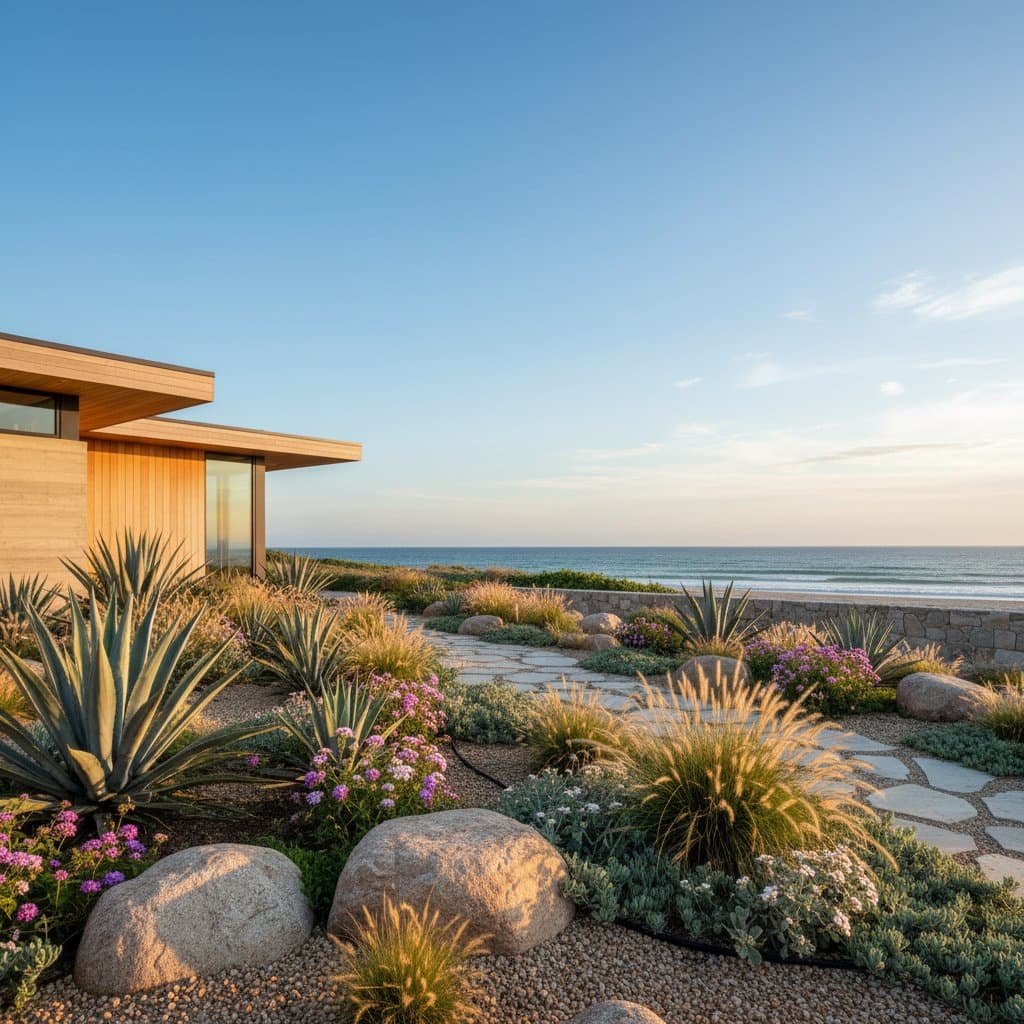
Why Coastal Homes Choose Drought Proof Xeriscaping
Ocean breezes move through yards filled with native coastal grasses. These landscapes remain vibrant during dry periods without frequent irrigation. Coastal homeowners select drought proof xeriscaping because it reduces water consumption, lowers upkeep demands, and matches the natural character of beachside properties.
This guide explains the advantages for coastal sites, outlines typical expenses, and details effective plant choices along with design steps. Readers will find concrete information on costs, suitable species, and methods to build a resilient water wise landscape.
Xeriscaping an average coastal property usually requires an investment between 6000 and 18000 dollars. The approach can lower outdoor water use by as much as 70 percent while improving visual appeal throughout the year. Larger or intricate projects benefit from consultation with specialists experienced in seaside conditions.
Cost Factors
Expenses depend on project size, chosen materials, and plant selections. An average coastal yard requires 6000 to 18000 dollars. Smaller front areas may start near 3000 dollars, while extensive or custom designs can surpass 25000 dollars.
Primary expenses include the following items.
- Site preparation such as grading, turf removal, and drainage improvements costs 1 to 3 dollars per square foot.
- Hardscaping elements like gravel paths, stone borders, and patios add 2000 to 8000 dollars based on materials selected.
- Plants suited to coastal settings range from 5 to 50 dollars each according to size and type.
- Drip irrigation systems run between 1500 and 3500 dollars and deliver ongoing water savings.
- Professional labor charges 45 to 75 dollars per hour depending on crew expertise.
Permits are seldom necessary except when retaining walls or major drainage changes are involved. Local rules should be verified before work begins.
Succulent and Rock Gardens
Succulent plantings provide texture and form. Species such as agave, aloe, and sedum pair well with decorative gravel to create a modern appearance.
These gardens suit contemporary coastal homes and compact spaces. They require minimal watering and simple care while delivering a clean aesthetic. Some varieties have sharp foliage and limited tolerance for shade.
DIY Versus Professional Installation
Small xeriscape projects can serve as satisfying weekend tasks. Larger plans often gain from expert involvement.
A front yard under 500 square feet can be completed with basic tools and careful planning. Required items include a shovel, rake, landscape fabric, drip tubing, mulch, and drought tolerant plants. The work typically spans two to three weekends.
Licensed landscapers supply design knowledge, soil testing, and precise irrigation layouts. Professional grading and plant positioning reduce future issues and support long term performance.
Maintenance and Longevity
Established xeriscapes demand little attention. New plants receive weekly water until roots develop, after which monthly or seasonal watering suffices. Mulch is replaced once each year and dead growth is removed in late spring. Compost or organic materials support soil health without chemical fertilizers.
Salt spray and wind require selection of resilient species such as California fuchsia, sea lavender, and blue chalksticks. Irrigation lines should be cleared after storms that carry sand.
Environmental Benefits
Xeriscaping protects the coastal environment beyond reduced water costs. Native plants stabilize soil on slopes and shorelines. Their roots enhance soil structure and manage runoff more effectively than turf grass. Reduced fertilizer and pesticide use limits chemical entry into nearby waters.
The plantings also soften hard surfaces to lessen noise and glare. They provide shelter for butterflies, hummingbirds, and helpful insects that maintain balance without additional treatments.
Common Questions
How much water does xeriscaping conserve?
Homeowners commonly achieve up to a 70 percent drop in outdoor water use compared with traditional lawns. Mature plantings often rely only on rainfall.
Is special soil necessary for coastal xeriscaping?
Sandy or rocky ground performs well when compost and mulch are added to hold moisture. Effective drainage remains essential.
Can xeriscaping appear green and full?
A combination of foliage textures and greens such as sedge, manzanita, and dwarf olive creates depth. Layered heights maintain visual interest without turf.
Is drip irrigation necessary?
Drip systems are not required yet they supply water directly to roots and reduce evaporation. They work effectively in dry coastal settings.
Planning Your Coastal Xeriscape
Observe sunlight patterns, wind exposure, and drainage in the yard. Select regionally appropriate plants and arrange varied textures for continuous interest. Install efficient irrigation to support establishment and long term success.