
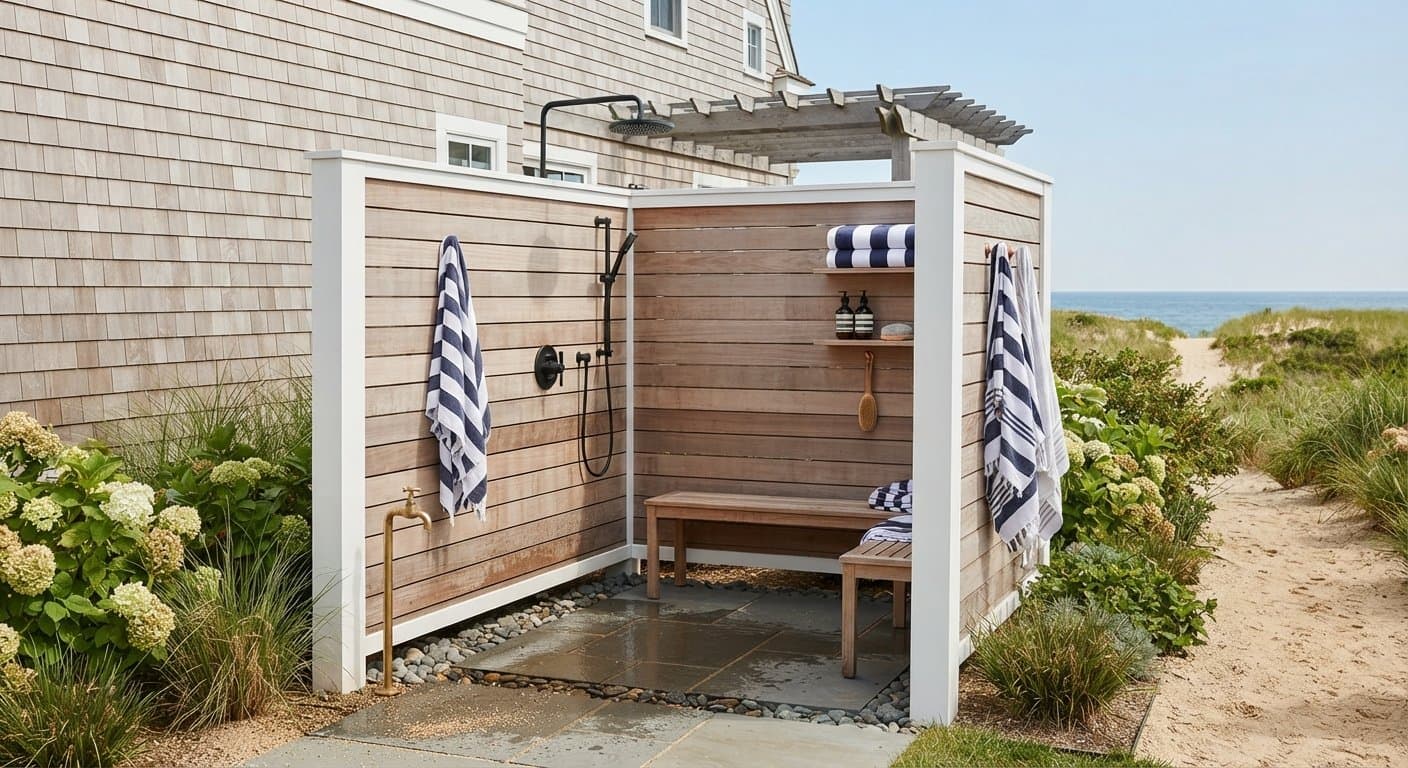
7 Coastal Outdoor Shower Ideas for Better Beach House Living
Sand, saltwater, and sunscreen tend to follow you home after a beach day. An outdoor shower gives you a convenient place to rinse off before stepping inside, helping keep floors cleaner and indoor bathrooms less crowded. For many beach homes, this simple upgrade can make everyday routines easier and outdoor living more comfortable.
A well-planned coastal outdoor shower can also feel like a natural extension of your home. Whether you have a compact patio, a private garden, or a spacious deck, you can choose a design that suits your space, privacy needs, and budget. What should you consider before adding one? Start with location and drainage, then choose the materials and details that make the shower practical.
Plan a Coastal Outdoor Shower That Works
1. Place the Shower Near Your Beach Entry
Choose a spot that makes rinsing easy after swimming or a walk along the shore. A location near a side door, outdoor walkway, or gate can reduce the chance of tracking sand through the house. Check that the path to the shower is comfortable to use with bare feet.
Think about access to plumbing before settling on a design. A shower near an existing bathroom or laundry room may be simpler to connect than one across the yard. A plumber can assess the route for water lines and drainage before construction starts.
[Image: A practical outdoor shower beside a beach house entry]
2. Choose an Open-Air or Enclosed Layout
An open-air shower can feel airy and relaxed, especially when positioned beside a privacy fence or tall landscaping. An enclosed design offers more privacy and can provide space to change clothes. Your household needs, the property layout, and local requirements can guide the choice.
A simple enclosure might use a gate and slatted panels, while a more substantial setup could include full-height walls and a door. Leave enough room to move comfortably, and make sure the entry does not open directly toward a busy walkway or neighboring property.
3. Plan Privacy Before Construction
Privacy is easier to build in from the start than to add later. Walk around the proposed shower area and consider sightlines from windows, decks, paths, and neighboring homes. You can use a fence, a screen, or plants to block views without making the space feel closed in.
Good options include:
- A slatted wood screen that allows airflow
- A masonry wall that matches the house
- Dense, salt-tolerant plants suited to the local climate
- A combination of fencing and greenery
Pro Tip: Check plant growth habits before planting. Choose varieties that tolerate coastal conditions and can be maintained without crowding the shower.
Select Durable, Comfortable Materials
4. Use Finishes That Handle Coastal Conditions
Salt air and moisture can wear down some outdoor materials more quickly. Select fixtures and hardware rated for exterior use, and ask a qualified supplier which finishes perform well in coastal settings. Stainless steel and other corrosion-resistant options are often suitable, but proper care still matters.
For walls and screens, consider materials that can handle regular wetting and dry efficiently. Sealed wood, masonry, and exterior-rated panels can each work when installed correctly. Follow manufacturer guidance for sealing, cleaning, and upkeep.
5. Install a Safe, Fast-Draining Floor
The shower floor should provide traction under wet, sandy feet. Textured tile, suitable stone, or a purpose-built outdoor shower base can help reduce slipping. Avoid smooth finishes that become slick when wet.
Drainage deserves equal attention. Water should flow away from the home and nearby walkways, without pooling or washing soil out of the yard. Local plumbing and building rules may specify how outdoor shower water must be handled, so confirm requirements before installation.
6. Add a Foot Rinse and Useful Storage
A foot rinse near the shower entrance lets you remove sand before stepping onto the main floor. It can be a low-mounted faucet or a dedicated rinse fixture, depending on the layout. This small feature is especially useful when children or guests use the space.
Add a few practical storage details to keep towels and toiletries close at hand. A weather-resistant hook, shelf, or bench can make the shower more comfortable. Choose pieces that drain easily and avoid placing storage where it blocks movement.
[Image: Textured shower flooring with a foot rinse and towel hooks]
Make the Shower Comfortable and Easy to Use
7. Choose the Right Water Setup
A cold-water shower may be enough for quick rinses, while a hot-and-cold connection can make the space more comfortable after a cool swim. The right setup depends on how often the shower will be used and how much plumbing work the property can support.
Ask a licensed plumber to review the water supply, controls, and drainage plan. Place handles where users can reach them without stepping into the spray, and choose fixtures that are straightforward to operate. If the shower will be used by people with different mobility needs, discuss accessible controls and entry details early.
8. Add Shade Without Blocking Airflow
Direct sun can make shower surfaces uncomfortable and can speed wear on some finishes. A pergola, roof extension, or shade sail may improve comfort while preserving an open-air feel. Consider how shade moves across the property before fixing the structure in place.
Good airflow helps surfaces dry and can reduce lingering dampness. Avoid enclosing the shower so tightly that moisture becomes trapped. If you add a roof, make sure it is suitable for the site and doesn’t interfere with ventilation or drainage.
9. Include Simple Lighting for Safe Use
Outdoor lighting can make the shower easier to use when daylight is low. Choose fixtures rated for the location and install them according to electrical safety requirements. Keep lighting positioned to illuminate the floor and controls without shining directly into nearby windows.
A subtle wall light or protected ceiling fixture may be enough. A licensed electrician can advise on placement, wiring, and weather protection, especially where electricity will be close to water.
Planning Advice for Beach House Outdoor Living
Before construction, set a realistic budget that accounts for plumbing, drainage, surfaces, privacy features, and labor. A basic rinse station may require less work than a fully enclosed shower with hot water and custom finishes. Ask contractors to explain what is included in their estimates, and keep a reserve for site conditions that only become clear during installation.
Review local rules before buying materials. Requirements can cover plumbing connections, drainage, structures, and property boundaries. If your home is part of a community with design guidelines, check those as well.
For easier maintenance, rinse away salt and sand regularly, clean the floor with a product suited to its material, and inspect fixtures for corrosion or leaks. Keep drains clear, and repair loose screens or worn sealant promptly.
Frequently Asked Questions
Does an outdoor shower add value to a beach house?
It can improve convenience and appeal, especially for households that spend time at the beach. Value depends on the property, workmanship, and local buyer preferences.
Is a cold-water outdoor shower enough?
For quick sand rinses, cold water may be sufficient. Hot water can make regular use more comfortable, but it usually requires additional plumbing work.
What is the best flooring for an outdoor shower?
Choose a durable, textured surface designed for wet conditions. Proper slope and drainage are just as important as the finish.
How do I create privacy in a small yard?
Use a compact screen, a strategically placed fence panel, or a small group of suitable plants. Check sightlines from neighboring windows before installation.
Can outdoor shower water drain into the yard?
Drainage rules differ by location and plumbing setup. Confirm local requirements with the appropriate building department or a licensed plumber before connecting the shower.
Make the Upgrade Fit Your Home
Start with the simplest question: where will sandy feet naturally stop before entering the house? From there, plan privacy, safe flooring, and compliant drainage before choosing decorative finishes. A thoughtful coastal outdoor shower can keep beach routines tidy and make your outdoor space more useful, with details tailored to the way you live.