
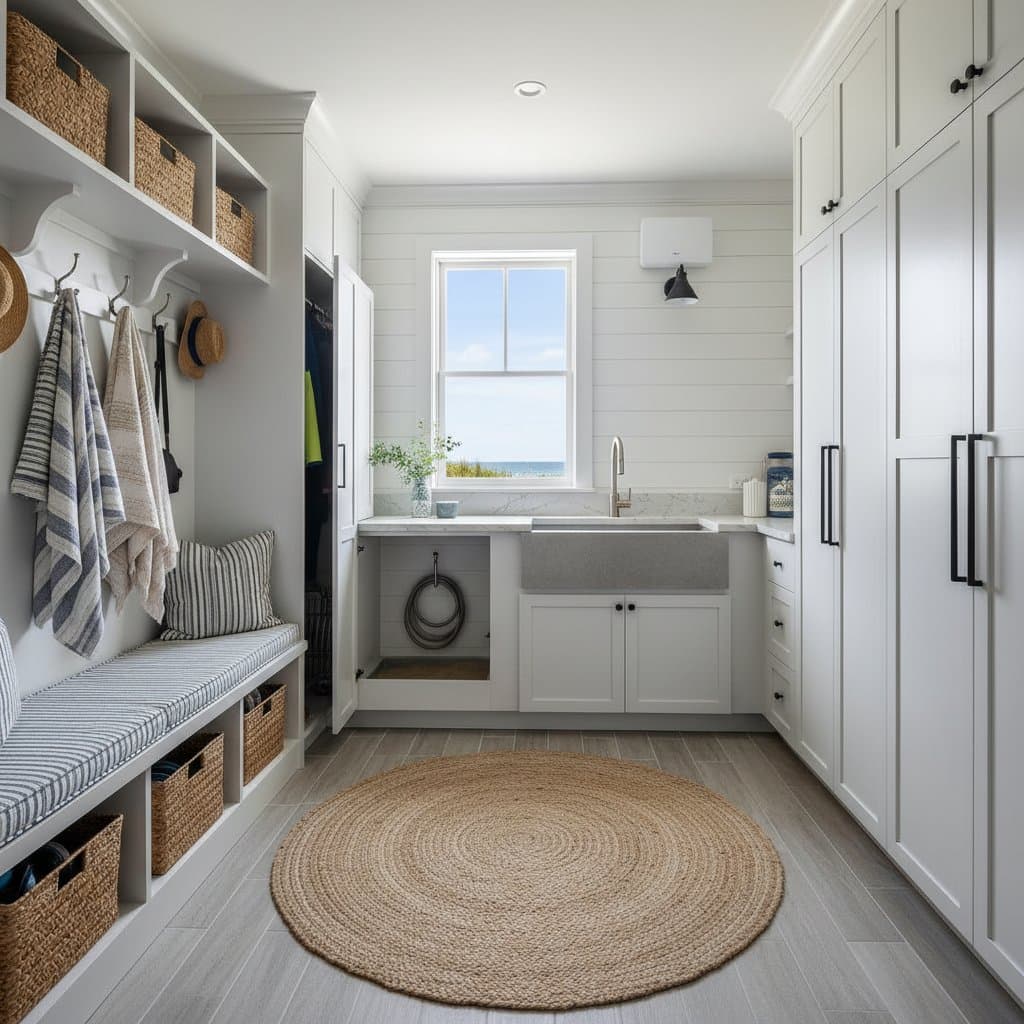
Coastal Mudrooms: Battling Beach Sand and Salt in 2025
Coastal residences deliver stunning views and relaxed lifestyles, yet they face ongoing threats from sand, salt, and humidity. A thoughtfully constructed coastal mudroom serves as an essential buffer, preserving the cleanliness and integrity of your living spaces against these environmental factors.
For those undertaking a renovation or building anew, grasping the costs, material options, layouts, and upkeep requirements proves vital. This approach not only safeguards your property but also enhances daily convenience.
Average Cost of a Coastal Mudroom
The typical expense for a coastal mudroom falls between $8,000 and $20,000, influenced by dimensions, selected materials, and incorporated elements. Basic transformations of entry areas with simple storage and flooring begin at approximately $4,000. In contrast, expansive custom installations featuring integrated benches, cabinetry, and robust surfaces often surpass $25,000.
Consider this overview of project scales:
| Project Scope | Typical Size | Average Cost Range | Key Features |
|---|---|---|---|
| Small Conversion | 30-50 sq. ft. | $4,000 - $8,000 | Waterproof flooring, wall hooks, compact bench |
| Mid-Range Remodel | 60-100 sq. ft. | $9,000 - $15,000 | Built-in cabinets, utility sink, coastal-themed finishes |
| High-End Custom | 100+ sq. ft. | $16,000 - $25,000+ | Custom millwork, specialized storage, high-end materials |
Cost by Material
Selecting appropriate materials ensures longevity while minimizing future repairs in harsh coastal settings. Materials that falter under salt exposure lead to premature failure and added expenses.
| Material | Average Cost per Sq. Ft. | Durability in Coastal Conditions | Maintenance Level |
|---|---|---|---|
| Porcelain Tile | $5 - $12 | Excellent | Low |
| Vinyl Plank | $3 - $7 | Good | Low |
| Natural Stone (Slate or Travertine) | $7 - $15 | Very Good | Moderate |
| Marine-Grade Wood | $8 - $18 | Good | Moderate |
| Composite Trim and Cabinetry | $6 - $10 | Excellent | Low |
Porcelain tile stands out for flooring applications, providing exceptional defense against water and abrasion from sand particles. Composite options for cabinets prevent issues like expansion or flaking due to saline atmospheres.
Labor Costs
Labor constitutes 40 to 60 percent of the overall budget for most projects. Rates for experienced carpenters, tilers, and finish specialists range from $50 to $100 per hour. Fabricating custom cabinetry or benches may contribute an additional $2,000 to $5,000, based on design intricacy.
Incorporating plumbing for a utility sink incurs $1,000 to $2,500. Similarly, outfitting built-in storage and shelving spans $1,500 to $4,000.
Factors That Influence the Total Cost
Multiple elements shape the ultimate price tag of your coastal mudroom:
- Location: Proximity to the ocean elevates labor fees and material surcharges in many regions.
- Size: Expanded areas demand more resources yet offer superior utility.
- Material Quality: Opting for top-tier, ocean-resistant products boosts resilience at a higher initial outlay.
- Plumbing and Electrical: Integrating sinks, laundry appliances, or outlets substantially increases expenditures.
- Ventilation and Lighting: Systems that promote air circulation deter mold growth, while corrosion-proof lights endure the elements.
- Custom Storage: Tailored solutions for items like surfboards, beach towels, or pet rinse areas combine practicality with aesthetic enhancement.
How to Save Money on a Coastal Mudroom
Achieve an effective mudroom design while controlling expenses through strategic choices.
- Repurpose Existing Space: Transform sections of a laundry area or rear entrance rather than constructing anew.
- Select Affordable Durable Materials: Employ vinyl plank that replicates wood grain at a fraction of the price.
- Choose Prefabricated Cabinets: Modify standard units with added trim and coatings for personalization.
- Handle Painting In-House: Tackle straightforward finishing tasks to cut several hundred dollars.
- Optimize Layout Planning: Position plumbing near current lines to sidestep expensive modifications.
DIY vs. Hiring a Professional
Balancing self-directed efforts with expert involvement depends on the project's demands, particularly in a moisture-prone coastal context.
| Task | DIY Feasibility | Professional Recommended |
|---|---|---|
| Painting and Trim | Yes | No |
| Flooring Installation | Yes (Vinyl or Tile) | Recommended for Stone |
| Cabinet Installation | Possible with Experience | Yes for Custom Builds |
| Plumbing and Electrical | No | Yes |
| Waterproofing and Ventilation | Partial | Yes |
Professional assistance becomes essential for elements involving plumbing, bespoke cabinetry, or advanced sealing to guarantee reliability and compliance. Simpler tasks, such as applying paint or laying basic flooring, allow DIY participation that trims costs by 10 to 20 percent.
Common Mistakes to Avoid
Steer clear of these frequent errors to prevent costly corrections and ensure enduring results:
- Selecting untreated wood, which succumbs to swelling and distortion from persistent dampness.
- Omitting waterproof underlayment, resulting in subfloor deterioration from infiltrating moisture.
- Overlooking drainage features and airflow systems, fostering mold proliferation.
- Failing to plan adequate storage, creating clutter from wet or sandy items.
- Underestimating illumination needs, complicating thorough cleaning routines.
Design and Functionality Tips
Integrate utility with coastal charm in your mudroom design. Prioritize these elements for optimal performance:
- Waterproof Flooring: Install textured, non-slip options to manage wet feet securely.
- Open Storage Solutions: Use baskets and shelving that allow air circulation for drying gear.
- Bench Seating: Provide a spot for shoe removal, with underlying compartments for organization.
- Utility Sink or Rinse Station: Facilitate immediate washing of sandy equipment before it tracks indoors.
- Marine-Grade Hardware: Equip with rust-proof hooks and fixtures to withstand salty corrosion.
- Cleanable Surfaces: Apply semi-gloss wall paints and tiled accents for effortless wiping.
Frequently Asked Questions About Coastal Mudrooms
Do I need a permit for a mudroom remodel?
Permits apply when introducing plumbing, electrical components, or structural alterations. Surface-level changes like flooring replacement or cosmetic updates generally bypass this requirement. Consult your local building authority for confirmation.
How long does a coastal mudroom remodel take?
Modest renovations span two to three weeks. Comprehensive custom projects extend to six to eight weeks, factoring in material procurement and contractor availability.
What materials hold up best to salt air?
Porcelain tile, composite cabinetry, marine-grade stainless steel, and vinyl trim excel in resisting corrosion and excess humidity. Steer away from untreated wood or standard metal fittings.
Should a mudroom have ventilation?
Ventilation remains crucial to expel humid air and prevent mold buildup. Incorporate exhaust fans or operable windows, especially in enclosed designs, to maintain a dry environment.
What adds the most value to a coastal mudroom?
Customized storage for beach essentials and integrated utility features, such as sinks or drying zones, elevate functionality and appeal. These enhancements boost home resale potential by demonstrating thoughtful adaptation to coastal challenges.
How do I keep sand out of the rest of the house?
Position multiple doormats at entry points and enforce a shoe-removal policy. Combine with sealed flooring transitions and regular vacuuming to contain granules effectively.
Sustaining Your Coastal Mudroom
Regular upkeep preserves the mudroom's effectiveness and appearance over time. Sweep floors daily to remove sand buildup, and wipe surfaces weekly with mild, non-abrasive cleaners to counter salt residue.
Inspect seals and hardware quarterly for wear, reapplying waterproof coatings as needed. Deep clean seasonal items like storage bins before stowing them, ensuring no trapped moisture leads to mildew. These habits extend material life, reducing replacement needs and maintaining a welcoming entryway that withstands the coast's demands.