
Beach Homes Slash A/C Costs 35% with Fiberglass Windows
Coastal living brings salty air, high humidity, and relentless sunshine that challenge home maintenance and energy use. These elements can damage traditional windows and drive up air conditioning expenses. Homeowners in beach communities find relief through fiberglass windows, which lower cooling costs by up to 35 percent while standing up to marine conditions.
Fiberglass windows deliver comfort, strength, and efficiency tailored to seaside properties. They seal out heat and moisture effectively, reducing the need for constant air conditioning. This upgrade supports both daily living and long-term property value.
Key Benefits
- Fiberglass windows cut air conditioning use by up to 35 percent through advanced insulation and heat resistance.
- They thrive in coastal settings by resisting salt corrosion, warping, and thermal expansion.
- Maintenance remains minimal when compared to wood, aluminum, or vinyl options.
- Designs enhance exterior appeal with options for contemporary or traditional styles.
- Energy performance improvements elevate home resale potential.
This article details the mechanisms behind these advantages, the suitability of fiberglass for coastal homes, and selection strategies for replacement projects.
Comparing Fiberglass to Other Window Materials
| Material | Durability in Coastal Conditions | Energy Efficiency | Maintenance Needs | Cost Range (per window installed) |
|---|---|---|---|---|
| Fiberglass | Excellent; resists salt and moisture fully | High | Very Low | Moderate to High |
| Vinyl | Fair; warps or cracks in intense heat | Moderate | Low | Low |
| Wood | Poor; susceptible to rot and swelling | High (if sealed) | High | High |
| Aluminum | Poor; corrodes rapidly in salt air | Low | Moderate | Low |
Summary: Fiberglass provides optimal strength, efficiency, and aesthetics for oceanfront locations. Initial expenses exceed those of cheaper materials, yet savings from lower upkeep and utility bills recover the investment swiftly.
Advantages for Coastal Properties
Seaside residences face amplified demands for temperature control due to humidity, salt spray, and solar exposure. Standard window types degrade under these pressures: aluminum frames pit and weaken, wood absorbs moisture leading to decay, and vinyl distorts in elevated temperatures.
Fiberglass overcomes these issues with its non-porous composition, which blocks water penetration. The material maintains structural integrity despite direct sun exposure, preventing gaps that allow conditioned air to escape.
In practice, this reliability minimizes cooling demands. A typical beach house might run air conditioning intermittently rather than continuously during summer peaks, yielding noticeable reductions in monthly bills.
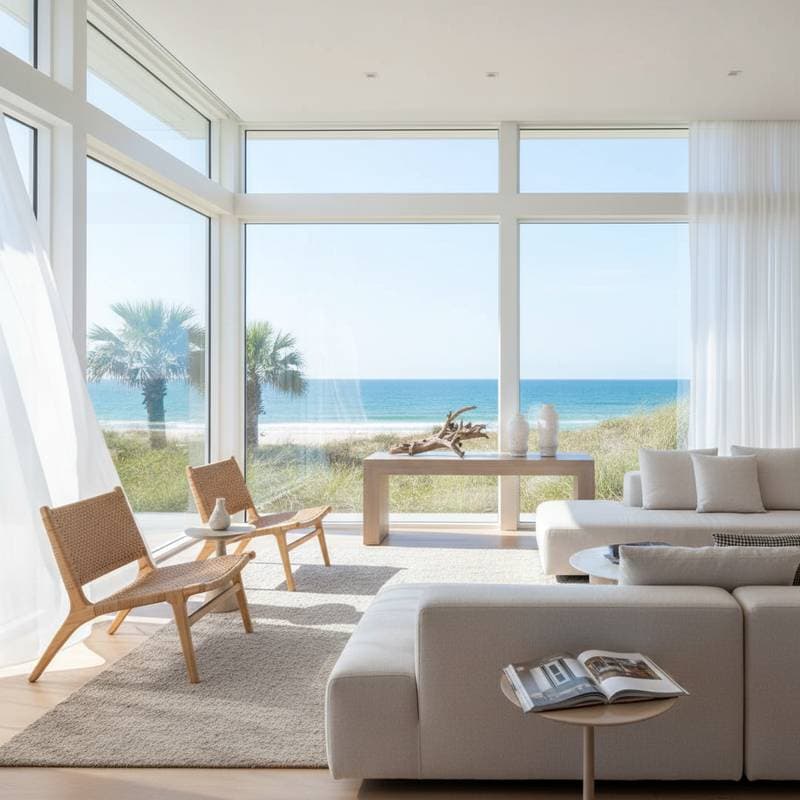
Photo: A contemporary beach residence featuring expansive fiberglass windows with ocean views, highlighting natural light and thermal performance.
Installation Guidelines for Seaside Environments
Proper setup ensures fiberglass windows achieve maximum effectiveness against coastal elements. Humidity and salt demand precise techniques for sealing and protection.
Consider these steps for a successful replacement:
- Select Experienced Installers: Engage professionals familiar with marine installations. They apply sealants and hardware that withstand corrosion.
- Verify Product Specifications: Seek windows with coastal certifications, including rust-proof mechanisms and durable finishes.
- Evaluate Adjacent Structures: Confirm that exterior siding, trim, and barriers remain sound prior to fitting new units.
- Apply Appropriate Sealants: Opt for silicone formulations rated for saltwater exposure to create airtight barriers.
- Incorporate Airflow Strategies: While fiberglass limits heat entry, integrate vents or operable panes to promote circulation.
Tip: Request warranty details that address ocean proximity. Certain brands extend protection for such installations, safeguarding your investment.
Photo: An installer applying sealant to a fiberglass window in a waterfront property during replacement.
Frequently Asked Questions
What is the cost of fiberglass windows in a beach house?
Installed rates typically fall between $600 and $1,200 per window, varying by dimensions, glass type, and features. Panoramic or custom designs increase expenses, though energy reductions provide rapid payback.
Do fiberglass windows outperform vinyl in salty environments?
Yes. Vinyl risks deformation from heat and sun, plus greater salt vulnerability. Fiberglass retains form, color, and seals under severe weather.
Can fiberglass frames develop rust like metal?
No. As a composite, fiberglass avoids rust and corrosion entirely. It endures salty atmospheres without surface deterioration.
Is painting possible on fiberglass windows?
Yes. The surface accepts paint adhesion securely, preserving hues over decades without flaking.
What is the lifespan of fiberglass windows?
Quality units endure up to 50 years with basic care, positioning them among the longest-lasting choices.
Securing Enduring Efficiency in Coastal Living
Fiberglass windows represent a strategic enhancement for beach properties, fostering sustained comfort, curbing energy loss, and shielding against environmental damage. Picture cooler interiors on sweltering days, gentle sea air through hinged openings, and streamlined utility statements.
For upcoming renovations or window updates, prioritize fiberglass by consulting certified specialists in coastal work. Review efficiency labels and align designs with your home's aesthetic. The result brings enhanced livability, cost control, and resilience for prolonged shoreline enjoyment.