
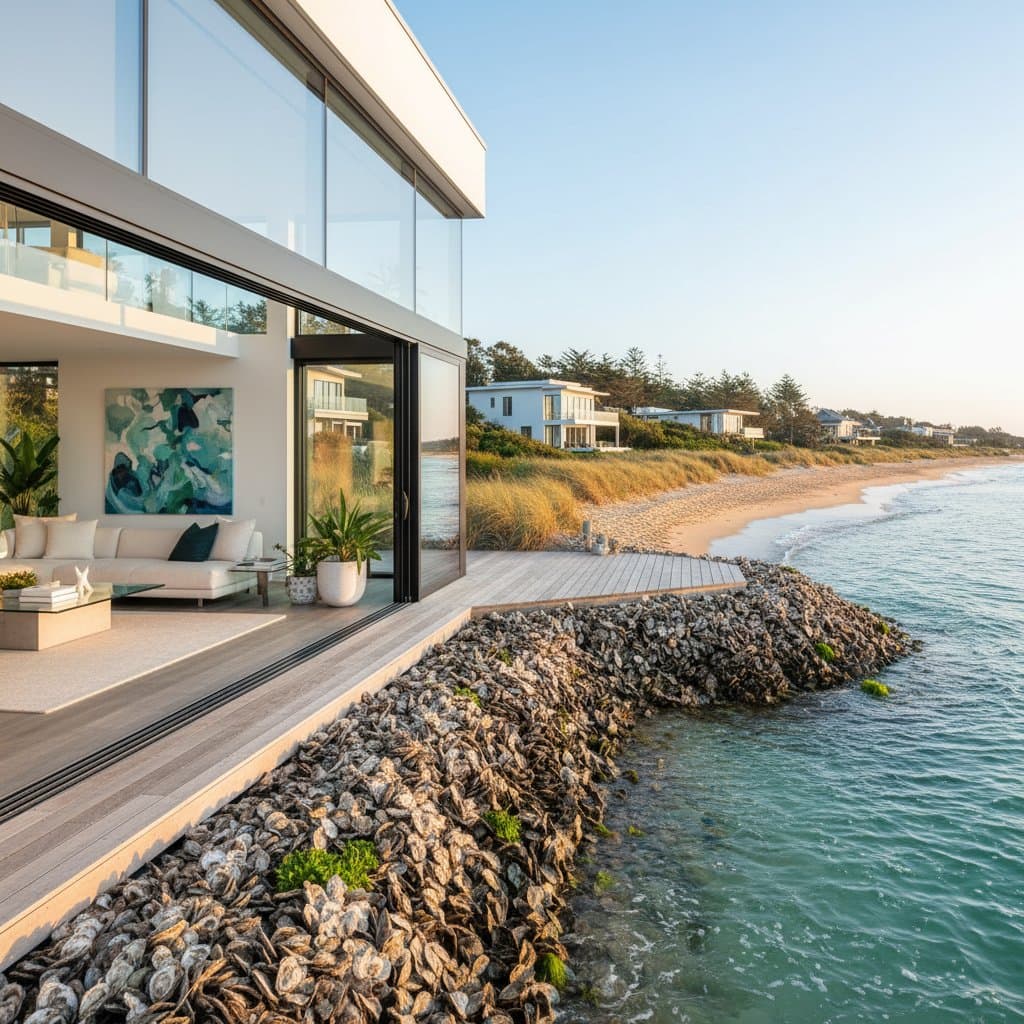
9 Ways Oyster Reefs Protect Coastal Homes and Strengthen Shorelines
Coastal living offers beauty and serenity, but it also brings ongoing challenges. Rising tides, stronger storms, and relentless erosion can all threaten homes near the shore. Traditional seawalls and barriers often create as many problems as they solve. They can disrupt ecosystems, reflect wave energy that accelerates erosion elsewhere, and require ongoing maintenance. So what if there were a natural, self-sustaining defense system that not only protected your property but also improved the surrounding environment?
That is exactly what oyster reefs provide. These living structures are nature’s version of coastal armor. They absorb wave energy, stabilize sediment, and create thriving habitats for marine life. Homeowners and communities across coastal regions are discovering that oyster reefs can serve as both environmental restoration projects and practical coastal erosion solutions.
If you live near the water or are considering ways to protect your shoreline, understanding oyster reefs is essential. Below are nine ways these natural systems protect coastal homes, enhance ecosystems, and offer a sustainable alternative to hard seawalls.
Natural Protection Features
1. Wave Energy Reduction
Oyster reefs act as natural breakwaters, reducing the power of incoming waves before they reach the shore. Each shell and cluster of oysters creates a rough, uneven surface that disperses wave energy across a wide area. This lessens the force that strikes the coastline and helps prevent erosion.
For homeowners, this means fewer worries about losing land or seeing seawalls undermined. Over time, areas behind oyster reefs often experience calmer waters and increased sediment buildup, which can restore beaches and marshes.
Pro Tip: Combine oyster reefs with salt marsh plantings for added protection. The plants trap sediment that the reef slows down, building a stronger shoreline over time.
[Image: Calm waves breaking gently behind an oyster reef barrier]
2. Sediment Stabilization
When waves lose energy around an oyster reef, the suspended sand and organic material settle to the bottom. This creates a natural buffer zone that strengthens the coastline. Sediment stabilization helps maintain property boundaries and supports native vegetation growth along the shore.
Oyster reefs can even rebuild lost land by encouraging sediment accumulation. This natural rebuilding reduces the need for costly dredging or beach nourishment projects.
3. Flood Mitigation
During high tides or storm surges, oyster reefs act like natural levees. They slow water movement and decrease the volume that reaches the shore at once. This can reduce flooding intensity and protect nearby homes, gardens, and infrastructure.
While no system can completely stop flooding, integrating oyster reefs with other natural defenses like dunes and wetlands provides layered protection that is far more resilient than a single hard structure.
Environmental and Ecological Benefits
4. Habitat Creation for Marine Life
Oyster reefs are bustling ecosystems that support fish, crabs, shrimp, and countless microorganisms. The nooks and crannies between shells provide perfect shelter for juvenile species, helping to replenish local fish populations.
For coastal homeowners, this means better fishing, richer biodiversity, and a healthier nearshore environment. The presence of thriving oyster reefs can turn once-murky waters into lively, self-sustaining ecosystems full of energy and color.
Pro Tip: If you are involved in a reef restoration project, consider adding recycled shell material from local restaurants. These shells encourage new oysters to attach and grow.
[Image: Close-up of fish and crabs living around oyster clusters]
5. Water Filtration and Quality Improvement
Each oyster filters large volumes of water daily by feeding on plankton and suspended particles. A healthy reef with thousands of oysters can significantly improve water clarity and quality in bays and estuaries.
Cleaner water benefits homeowners who value scenic views and recreational use of nearby waters. It also supports seagrass growth, which further stabilizes sediment and enhances local ecosystems. This natural filtration process is one of the most overlooked but valuable services oyster reefs provide.
6. Biodiversity Enhancement
Oyster reefs function as underwater cities for marine organisms. From small mollusks to large fish, many species rely on these structures for food and shelter. The result is an interconnected web of marine life that strengthens the entire coastal environment.
More biodiversity means greater resilience against disease, temperature shifts, and pollution. When oyster reefs thrive, the entire coastal ecosystem becomes more balanced and self-sustaining, reducing the need for human intervention.
Sustainable Coastal Engineering
7. Living Shorelines as an Alternative to Seawalls
Hard seawalls reflect wave energy rather than absorb it, often worsening erosion nearby. Living shorelines, which incorporate oyster reefs, marsh plants, and other natural elements, offer a more flexible and sustainable solution.
Living shorelines grow stronger with time rather than deteriorating. Oysters reproduce and expand their reefs naturally, while vegetation adds root systems that bind the soil. This combination creates a dynamic defense that adjusts to changing conditions without expensive reconstruction.
Pro Tip: Consult with local coastal restoration groups to determine the best balance between oyster reef placement and plant species for your area.
[Image: Diagram showing living shoreline with oyster reef, marsh plants, and gentle slope]
8. Cost-Effective Maintenance and Longevity
Building a traditional seawall can cost tens of thousands of dollars, and maintenance expenses often continue for decades. Oyster reefs, on the other hand, have relatively low installation costs and minimal upkeep once established.
After the initial setup, oysters reproduce naturally, expanding the reef’s size and strength. This self-repairing quality means that the system becomes more effective each year. Many communities are adopting oyster reefs as a long-term cost-saving measure that also supports local fisheries and tourism.
9. Climate Resilience and Adaptability
As sea levels shift and storms grow stronger, coastal defenses must adapt. Oyster reefs have the unique ability to grow vertically as oysters continue to attach and build upward. This natural growth helps reefs keep pace with rising water levels, maintaining their protective function over time.
While hard structures eventually fail under pressure, living reefs evolve. Their natural flexibility allows them to absorb shocks without catastrophic failure, making them one of the most future-ready coastal defense systems available.
Planning and Implementation Advice
Creating or restoring oyster reefs near residential shorelines requires planning and collaboration. Here are some general steps to guide homeowners and communities considering this approach.
- Assess Site Conditions
Identify water depth, salinity, and tidal flow. Oysters thrive in estuarine environments where saltwater and freshwater mix. - Consult Local Experts
Partner with marine biologists, coastal engineers, and restoration groups. They can help design reef structures suited to specific conditions. - Use Sustainable Materials
Recycled shells, limestone, or specially designed reef structures provide ideal surfaces for oyster attachment. - Secure Necessary Permits
Coastal projects often require environmental permits. Working with local agencies ensures compliance and long-term success. - Monitor and Maintain
Once established, reefs need occasional monitoring to track growth and ensure they remain healthy. Over time, they may expand naturally and require little human assistance.
Pro Tip: Start small with pilot sections before expanding the project. This helps gauge how oysters respond to local conditions and can guide larger-scale restoration.
[Image: Volunteers installing oyster shells along a coastal site]
Extra Tips for Homeowners Near Oyster Reefs
- Encourage community participation. Many successful reef projects rely on local volunteers who collect shells, monitor growth, or plant marsh vegetation.
- Avoid harmful runoff. Fertilizers and chemicals can affect oyster health. Use eco-friendly landscaping practices to protect nearby waters.
- Support local conservation programs. Donating shells from backyard barbecues or restaurants can directly contribute to new reef construction.
- Promote education. Hosting neighborhood workshops about living shorelines increases awareness and long-term commitment to coastal sustainability.
Frequently Asked Questions
How do oyster reefs compare to seawalls for coastal protection?
Oyster reefs absorb wave energy, while seawalls reflect it. This means reefs protect both the shoreline and nearby habitats more effectively. They also improve water quality and expand over time instead of deteriorating.
Can oyster reefs form naturally near residential areas?
Yes. If conditions are suitable, oysters can naturally attach to hard surfaces along the shore. However, planned projects accelerate the process and ensure stability in strategic locations.
Are oyster reefs expensive to build?
Costs vary based on materials and scale, but small community-led projects are often affordable. Using recycled shells and volunteer labor can significantly reduce expenses.
Do oyster reefs require maintenance?
Once established, oyster reefs are largely self-sustaining. Occasional monitoring helps track health and growth, but they rarely need extensive upkeep.
Will oyster reefs affect boating or swimming areas?
Reef placement is carefully planned to avoid navigation channels and swimming zones. In most cases, reefs are built in shallow, low-traffic areas where they will not interfere with recreation.
Can homeowners participate in local reef restoration projects?
Absolutely. Many coastal organizations welcome community involvement. Collecting oyster shells, planting marsh grasses, or assisting with monitoring are ways to contribute.
Living with a Natural Coastal Defense
Oyster reefs represent a shift toward working with nature rather than against it. They provide an elegant solution for homeowners who value both environmental health and practical shoreline protection. By encouraging sediment buildup, filtering water, and supporting marine life, they transform vulnerable coastlines into thriving, resilient ecosystems.
If you live near the coast, consider exploring how oyster reefs could strengthen your property’s defenses. Partnering with restoration groups or local agencies can bring this natural shield to life near your home. Over time, you can enjoy calmer waters, clearer views, and a stronger connection to the living systems that make coastal living so special.
Building with nature is more than a trend. It is a sustainable path toward protecting both homes and habitats for generations of coastal residents to come.