
3. PVC and Vinyl Decking
PVC decking provides superior moisture repulsion, positioning it as a prime selection for beach-adjacent installations. Pricing spans $8 to $14 per square foot. Such boards avoid water uptake, thereby averting expansion or fungal growth. On bright days, they may retain heat, so opting for pale shades helps mitigate surface warmth.
[Image: Close-up of PVC decking boards with hidden fasteners used in a coastal environment]
Labor and Installation Elements
4. Demolition and Debris Removal Expenses
Resurfacing commences with the extraction of the existing surface. Demolition labor generally amounts to $1 to $3 per square foot. Should the underlying framework remain intact, reuse becomes feasible and trims expenses significantly. Rot in support beams or deteriorated fittings, however, may require replacements that elevate labor outlays substantially.
5. Structural Fixes and Fortification
Ocean-side dampness frequently undermines joists and joints. Substituting rusted hardware or bolstering beams incurs $300 to $1,200, scaled to deck dimensions. Stainless steel components justify their premium, as they outperform galvanized alternatives in corrosion resistance.
Pro Tip: Engage your contractor to evaluate all foundational elements prior to resurfacing. Addressing issues proactively averts larger future expenditures.
6. Expert Installation Versus Self-Directed Efforts
Professional services guarantee accuracy and sustained performance, though they increase project totals. Full professional resurfacing, inclusive of materials, averages $10 to $25 per square foot. Self-directed projects can halve these figures but demand appropriate equipment, protective attire, and familiarity with deck assembly.
For self-directed work, target compact zones or ground-level decks. Structures at height or with intricate risers suit skilled professionals best.
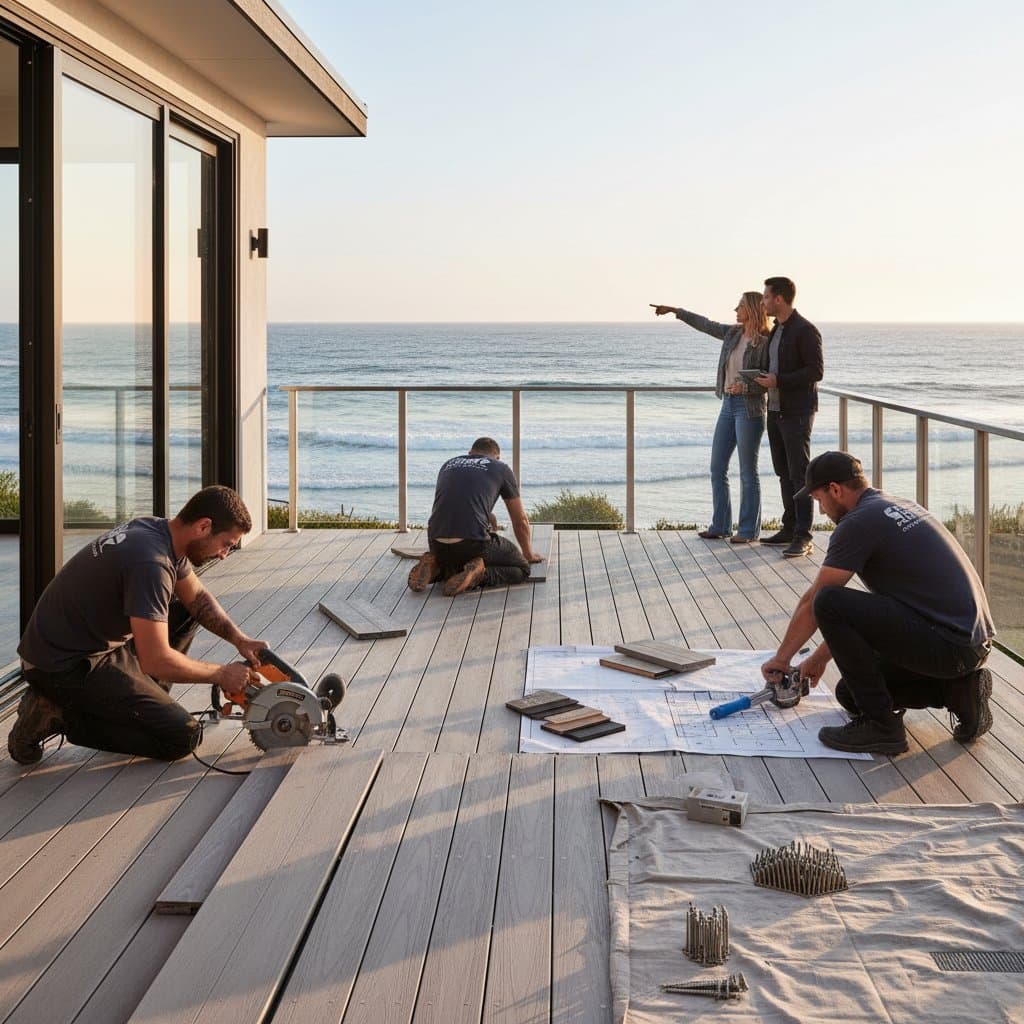
[Image: Contractor resurfacing a coastal deck using composite boards and stainless steel screws]
Environmental and Upkeep Aspects
7. Protective Coatings and Sealants
Durable materials alone insufficiently shield against coastal rigors; additional barriers prove essential. Marine-grade sealants or UV-blocking finishes add $1 to $2 per square foot. These applications deter discoloration, distortion, and saline accumulation. Wood variants benefit from annual to biennial reapplication based on site exposure.
Pro Tip: Employ oil-based penetrating treatments that accentuate grain patterns and repel water effectively.
8. Recurring Maintenance Expenditures
Upkeep demands differ by material type. Traditional wood surfaces require periodic scrubbing, smoothing, and sealing, totaling $200 to $500 yearly. Composite and PVC options involve simple rinsing with mild detergent solutions. Initial investments in resilient products often yield savings through reduced long-term interventions.
Routine cleansing extends durability. Salt deposits draw in humidity, so flushing the deck post-storms or tidal surges minimizes accumulation risks.
9. Durability and Renewal Intervals
Assess expenses with longevity in mind. Pressure-treated wood endures 10 to 15 years under diligent care. Composite and PVC variants persist for decades with basic attention. Over extended periods, diminished maintenance and repair needs can balance the steeper entry costs of advanced options.
[Image: Before and after comparison of a coastal deck resurfacing project showing improved color and texture]
Practical Strategies for Coastal Deck Preparation
- Prioritize stainless or protective-coated fasteners to withstand rapid corrosion from salty atmospheres.
- Ensure sufficient airflow beneath the deck to avoid moisture entrapment.
- Favor lighter hues in materials to lessen thermal buildup.
- Conduct yearly examinations for unsecured planks, oxidized joints, or initial deterioration signs.
- Design drainage systems to direct precipitation clear of the framework.
Common Inquiries
What is the typical total cost for coastal deck resurfacing?
Projects for most coastal properties range from $8,000 to $18,000, influenced by area, material choices, and framework integrity. Compact layouts incur lower fees, whereas expansive or tiered designs surpass these estimates.
Is resurfacing viable over full reconstruction?
Affirmative, provided the skeleton retains solidity. Contractors evaluate joists and supports for viability. Sound conditions permit board and hardware renewals as an economical alternative.
What material endures best ocean proximity?
PVC and premium composites excel in saline, wet, and radiant conditions, surpassing wood in resilience.
Does composite decking pose slip hazards when damp?
Contemporary composites incorporate grooved surfaces for enhanced grip. Confirm traction specifications prior to acquisition.
What steps prolong a resurfaced deck's lifespan?
Perform consistent cleanings, eliminate salt residues, reapply wood sealants, and secure fittings seasonally. Such practices maintain safety and allure across years.
Maximizing Value from Your Coastal Deck Investment
With resurfacing finished, the deck evolves into a versatile haven for dawn rituals, social events, and serene seaside gazes. Selections balancing charm and robustness ensure year-round enjoyment. Thoughtful planning, superior components, and vigilant care position your deck to thrive enduringly against marine influences.