
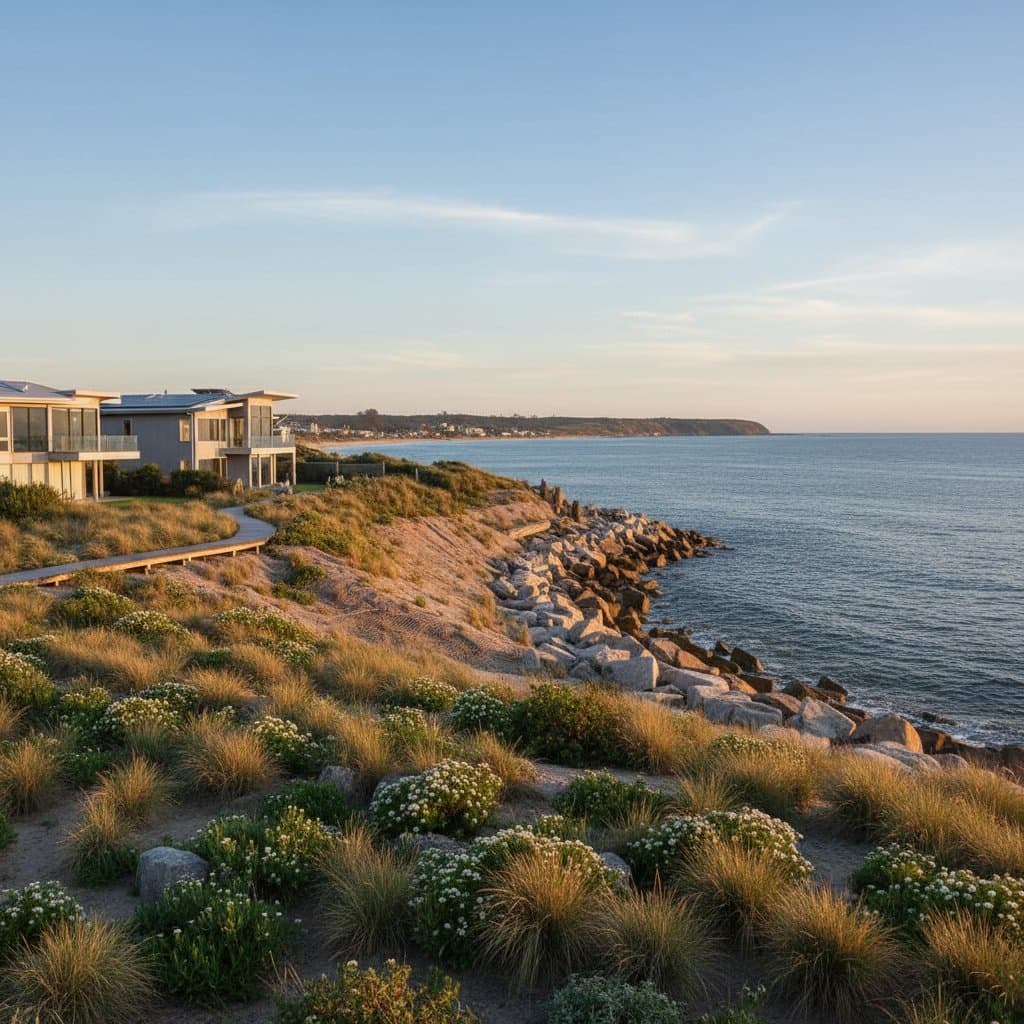
2026 Codes Swap Seawalls for Living Shorelines
Coastal homeowners have long relied on concrete seawalls to hold back the ocean and protect property from erosion. These hard barriers often cause more harm than good by accelerating beach loss, damaging marine habitats, and directing wave energy onto neighboring properties. A growing shift in coastal management now promotes living shorelines, eco-friendly systems that stabilize coasts with natural materials such as plants, sand, and rock rather than solid concrete walls.
This change goes beyond a design trend. It signals a fundamental rethinking of coastal resilience for the future. Property owners with coastal land or those planning waterfront remodels must understand these new regulations. This guide covers living shorelines, their mechanics, and compliance steps to safeguard investments and the environment.
Understanding Living Shorelines
Living shorelines integrate engineering with natural processes to collaborate with the environment. They absorb and dissipate wave energy instead of reflecting it. These systems also create habitats for fish, birds, and shellfish while filtering runoff to enhance water quality.
What Makes a Shoreline "Living"
A living shoreline incorporates multiple natural elements, including:
- Native vegetation such as marsh grasses, sea oats, and dune plants that anchor soil against erosion
- Oyster reefs or shell beds that dampen wave action and foster marine ecosystems
- Sand fill or coir logs made from biodegradable coconut fibers to bolster vulnerable zones
- Strategically placed rocks or natural barriers that shield vegetation during intense storms
These components interact to capture wave energy, restore eroded areas, and facilitate natural sediment flow. As root networks develop and marine organisms thrive, the shoreline gains strength over time.
Why Codes Are Changing
Studies demonstrate that traditional seawalls exacerbate beach erosion. They force water downward and laterally, stripping sand from the wall base and adjacent lands. Living shorelines, however, adapt to dynamic conditions. They rebound from storms, elevate with rising seas, and preserve public access to beaches and habitats.
Emerging regulations now mandate or incentivize living shoreline approaches for select coastal sites. The objective balances development with ecological preservation. For property owners, this evolution prompts reevaluation of coastal landscapes and potential modifications to existing structures to align with environmental benchmarks.
Planning a Living Shoreline Project
Constructing a living shoreline demands meticulous planning akin to major home improvements or landscaping efforts. It additionally requires environmental permits and expert ecological evaluations.
Step 1: Assess Your Site
Every shoreline presents distinct challenges. Prior to any construction, examine site-specific factors:
- Identify erosion patterns. Track sand displacement or inundation during high tides and storms.
- Evaluate elevation and slope. Gradual inclines better accommodate vegetation than abrupt declines.
- Observe adjacent habitats. Proximity to wetlands, oyster beds, or seagrass influences design options.
- Analyze water dynamics. Consider tidal currents, wave orientations, and vessel-generated wakes for stability projections.
Record findings through photographs and precise measurements. Such data enables contractors or marine biologists to tailor designs effectively.
Step 2: Consult Professionals
Effective living shoreline design merges engineering precision with ecological insight. Engage certified coastal engineers, marine biologists, or landscape architects experienced in restoration. Request:
- Verification of licensing and insurance to confirm regulatory adherence
- Client references from comparable projects to assess track record
- Comprehensive blueprints and material specifications detailing natural erosion mitigation strategies
Permitting bodies typically mandate professional endorsements for stabilization initiatives, making specialist collaboration indispensable.
Step 3: Secure Permits
Coastal endeavors necessitate approvals from municipal and state authorities. Applications often entail environmental impact reviews and public notifications. Although seawalls encounter stringent scrutiny, living shorelines benefit from expedited processes owing to their ecological advantages. Allocate sufficient time for evaluations and adjustments prior to commencing work.
Step 4: Choose Materials and Vegetation
Material selection dictates project durability. Proven options encompass:
- Coir fiber logs for interim support as vegetation establishes
- Native salt-tolerant grasses including smooth cordgrass or saltmeadow cordgrass
- Rock sills positioned offshore to attenuate wave intensity
- Oyster shell bags that draw in larvae to form organic reefs
Opt for indigenous species matched to regional climate and tides. These choices demand little upkeep and bolster indigenous biodiversity.
Step 5: Oversee Installation
Execution precision ensures longevity. Plant vegetation in optimal seasons to secure root systems before severe weather arrives. Position rock or shell features at appropriate elevations and distances to permit tidal circulation without stagnation. Post-installation, conduct routine checks to verify integrity and performance.
Maintaining Your Living Shoreline
Living shorelines represent ongoing investments that mature dynamically. Consistent upkeep sustains their protective and ecological roles.
Routine Maintenance Tasks
- Track vegetation progress. Substitute perished or impaired plants swiftly to preserve density.
- Examine post-storm conditions. Survey for shifted stones, fresh erosion, or accumulated debris.
- Manage invasive species. Eliminate foreign flora that outcompetes natives.
- Supplement sediment as required. Occasional sand additions maintain adequate heights.
Collaborate with installers to devise a monitoring schedule that identifies concerns proactively.
Expected Costs and Benefits
Expenses for living shorelines fluctuate with site dimensions, complexity, and selections. Typical ranges span $50 to $150 per linear foot, influenced by locale and workforce costs. Initial outlays may parallel or exceed those of seawalls, yet enduring advantages include reduced repairs, elevated property appraisals via scenic enhancements, and eligibility for green incentives or rebates.
Disclaimer: These figures offer general guidance. Quotes depend on site variables, selections, and scale.
Environmental and Community Benefits
Living shorelines extend protection beyond private lots to fortify broader coastal networks.
Restoring Natural Habitats
Incorporating indigenous flora and organics yields nurseries for fish, crustaceans, and avian species. They reinstate the vital land-water boundary essential for myriad aquatic lives.
Improving Water Quality
Plants intercept contaminants from surface flows prior to oceanic entry. Root structures detain particulates and uptake excess nutrients, curbing algal proliferation and preserving clarity for leisure and fauna.
Supporting Climate Resilience
With escalating sea levels, living shorelines evolve organically. Foliage ascends alongside sediment deposits, obviating frequent overhauls. This adaptability positions them as viable long-term safeguards.
Enhancing Community Aesthetics
In contrast to imposing seawalls, living shorelines harmonize with surroundings. They cultivate lush, inviting edges that boost communal allure and promote active lifestyles. Such integrations fulfill demands for utility and visual harmony.
Frequently Asked Questions
What is the main difference between a seawall and a living shoreline?
A seawall constitutes a rigid concrete or steel structure that repels waves outright. A living shoreline employs organics like flora and stone to gradually mitigate energy. The latter nurtures ecosystems and permits shoreline evolution.
Do living shorelines work in high-energy environments?
They perform effectively with reinforced configurations. In vigorous wave zones or wake-prone waters, incorporate submerged rock sills or oyster structures to temper forces impacting plants.
How long does it take for a living shoreline to become effective?
Stabilization commences in the initial growth period. Complete establishment, with robust foliage and balanced sediment dynamics, spans two to five years based on environmental factors.
Can an existing seawall be converted into a living shoreline?
Conversion proves feasible through hybrid retrofits. Professionals can layer native plants and softer elements atop or adjacent to walls, gradually transitioning while retaining core protection. Consult experts to evaluate structural compatibility and permitting needs.
Will I still need a permit for a living shoreline?
Permits remain mandatory for most installations. Local agencies oversee compliance with zoning and environmental statutes. Streamlined approvals often apply due to sustainability merits, but submit detailed plans for review.
Are living shorelines more expensive than traditional seawalls?
Upfront costs align closely, with living shorelines at $50 to $150 per foot versus $200 to $500 for seawalls. Long-term economies arise from minimal maintenance and resilience, plus potential funding offsets.
What types of plants are best for coastal stabilization?
Prioritize natives like black needlerush, switchgrass, or beachgrass for erosion control. These tolerate salinity, bind soils, and resist storms. Select based on tidal exposure and soil via local extension services.
Embracing Resilient Coastal Design
As 2026 codes prioritize living shorelines over seawalls, property owners gain opportunities to adopt enduring practices. Integrate expert input, site analysis, and native integrations to secure assets and ecosystems. These approaches not only counter erosion but also revive waterfront vitality and equilibrium.