
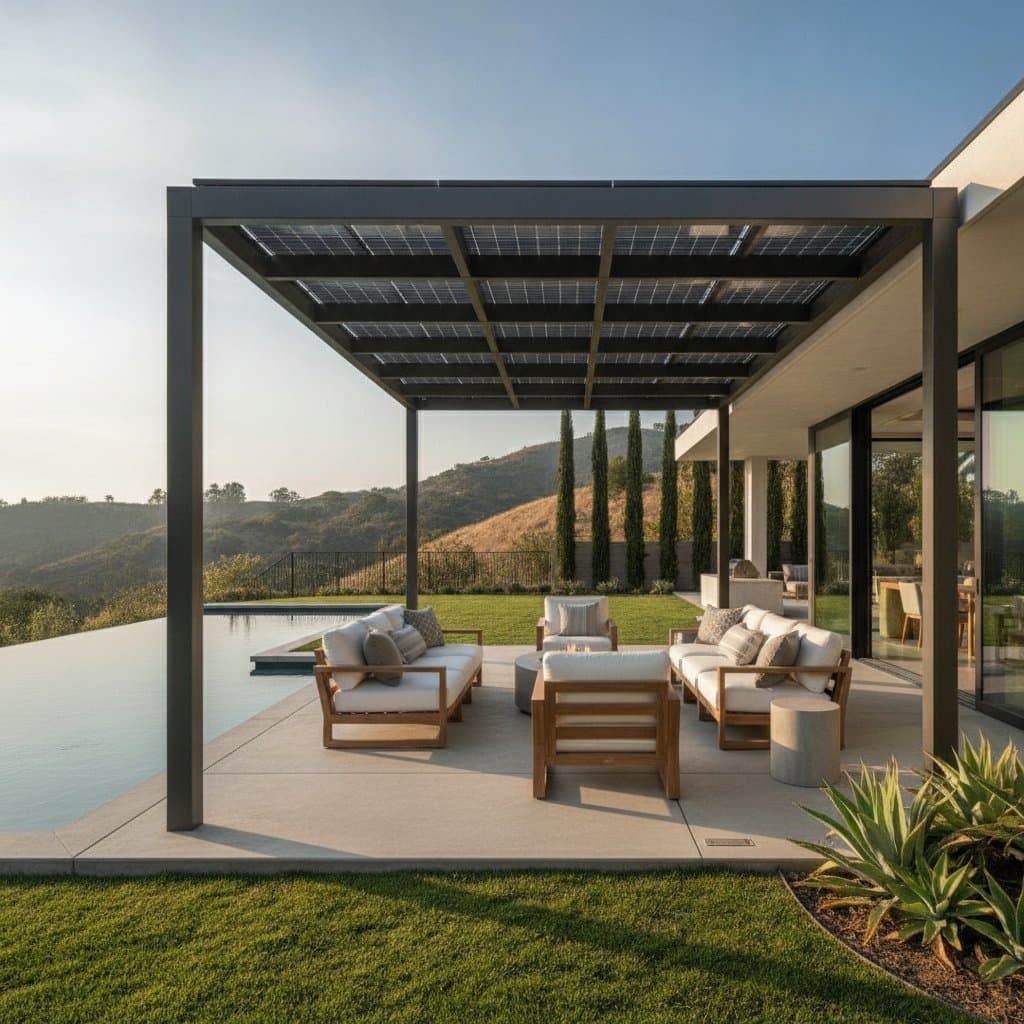
Understanding Solar Pergolas
Solar pergolas combine shade structures with photovoltaic panels to generate electricity while protecting outdoor spaces from the sun. Homeowners in sunny regions install these systems to reduce reliance on grid power. The design integrates durable frames with solar modules that capture sunlight throughout the day.
These structures stand independently or attach to existing buildings. They suit patios, decks, and garden areas where traditional roofs would block views. Materials range from aluminum and steel to wood composites that resist weather damage.
Key Benefits for Homeowners
Solar pergolas lower monthly electricity expenses by converting sunlight into usable power. Excess energy can feed back into the grid in many areas, creating credits on utility bills. Property values often increase because buyers recognize the dual function of shade and energy production.
The systems operate quietly and require minimal upkeep. Panels shed debris during rain, and frames need only occasional cleaning. Tax incentives at federal and state levels reduce initial investment costs for qualifying installations.
Planning and Installation Steps
Assess the available sunlight on the intended site before selecting panel capacity. South facing orientations maximize output in the northern hemisphere. Consult local building codes to confirm permit requirements and height restrictions.
Work with certified installers who handle structural engineering and electrical connections. Foundation options include concrete footings or ground anchors depending on soil conditions. Customization includes panel tilt angles, integrated lighting, and retractable shade screens.
Cost Considerations
Basic models start around several thousand dollars, while larger custom designs reach higher price points. Incentives such as the federal investment tax credit can offset a significant portion of expenses. Financing programs spread payments over time and align with energy savings.
Return on investment depends on local electricity rates and sunlight hours. Most systems recover costs within seven to twelve years. After that period, generated power provides ongoing savings with low maintenance demands.
Design Options for Different Spaces
Choose louvered roofs that adjust for ventilation or fixed panels for maximum coverage. Color matched frames blend with home exteriors, while contrasting tones create visual interest. Add ceiling fans, outlets, or heaters to extend usability into cooler evenings.
Incorporate planters or privacy screens along the sides to define the space. Wood accents provide warmth, and metal finishes offer a modern appearance. Scale the structure to match patio dimensions and seating arrangements.
Maintenance Practices
Inspect connections and wiring annually to ensure continued performance. Trim nearby trees that cast shadows on the panels. Use mild soap and water for surface cleaning rather than abrasive tools.
Monitor output through inverter displays or connected apps. Address any drops in production promptly with professional service. Proper care extends system lifespan beyond twenty five years.
Selecting the Right System
Compare warranties on panels, frames, and inverters from multiple suppliers. Review efficiency ratings and degradation guarantees. Request site specific production estimates based on historical weather data.
Verify installer credentials and completed projects in the local area. Discuss future expansion possibilities such as battery storage integration. Final selections should balance upfront costs with long term energy output and aesthetic fit.