
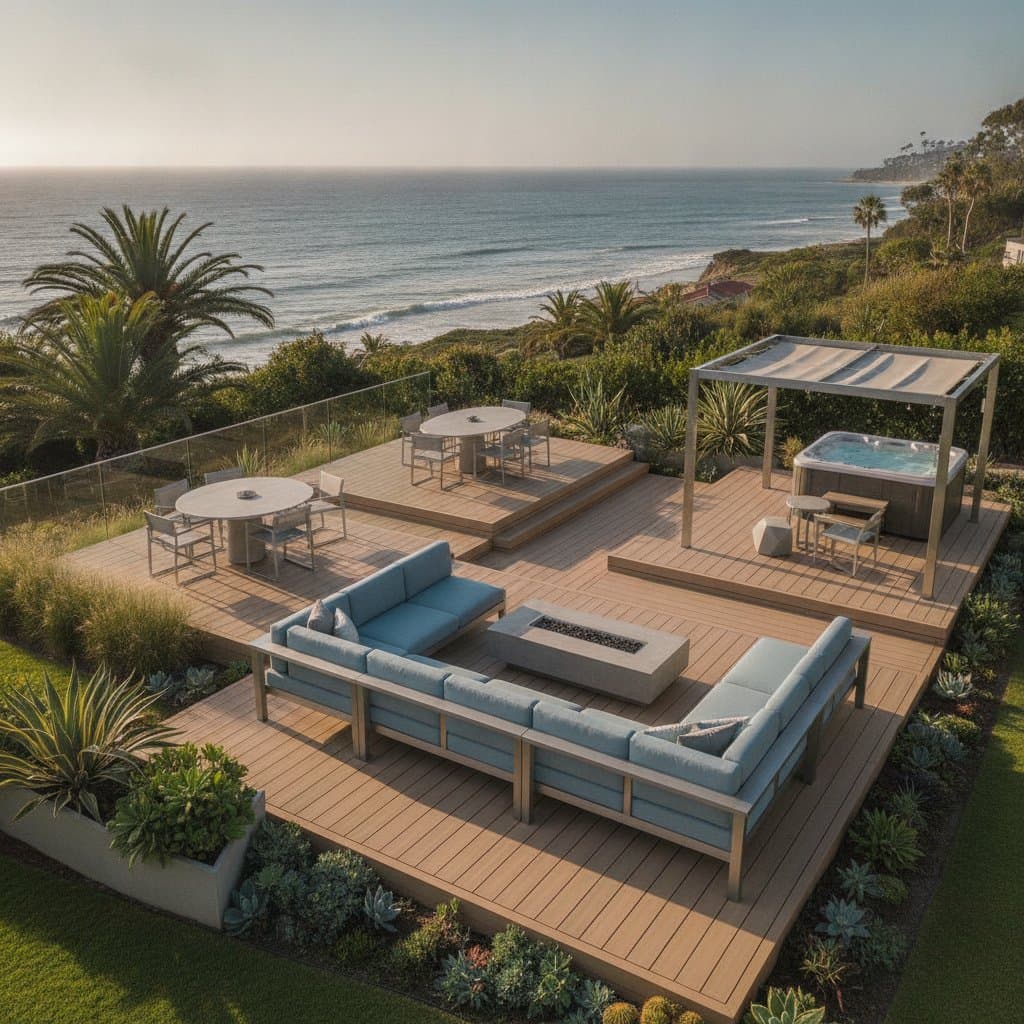
Modular Patios Expand Coastal Outdoor Living Options
Ever wish your backyard could grow with your lifestyle? Modular patios make that possible through flexible systems that start small and add features over time. Coastal homeowners gain outdoor spaces that adapt to new needs without requiring a complete rebuild.
Highlights
- Modular patios consist of interlocking panels or sections made from composite, resin, or aluminum.
- Homeowners can expand layouts by adding modules for kitchens, fire pits, or shade structures.
- These systems resist salt air, humidity, and intense sun common along the San Diego coast.
- Installation typically takes days rather than weeks and costs less than custom masonry.
- Adjustable bases accommodate uneven terrain and slopes found in many coastal lots.
Coastal homes benefit when outdoor areas function as extensions of indoor living spaces. Modular designs deliver that connection through durable materials and simple reconfiguration options.
Why Modular Patios Suit Coastal Conditions
Salt air and constant moisture shorten the lifespan of many outdoor materials. Modular systems address these issues with corrosion-resistant components and built-in ventilation features.
Weather Resistance
Composite decking and powder-coated aluminum frames resist fading and rust. Raised paver systems prevent water absorption that leads to cracking in freeze-thaw cycles.
Drainage and Airflow Features
Integrated channels direct rainwater away from living surfaces. Elevated bases promote airflow that reduces mold growth beneath the structure.
Expansion Options
Start with a basic seating platform. Later additions include:
- Grilling stations with integrated utility connections.
- Fire pit modules set on heat-resistant bases.
- Pergola sections that attach directly to existing frames.
- Raised viewing platforms for ocean sightlines.
Each addition locks into the original layout to maintain a uniform appearance.
Design Approaches for San Diego Coastal Sites
Modular systems adapt to oceanfront decks, canyon lots, and compact yards alike.
Oceanview Lounge Setup
Install cool-toned composite boards with glass railings. Position low-profile seating to preserve sightlines and add under-edge LED strips for evening use.
Entertainer Configuration
Connect a central platform to a grilling module and separate dining area. Add a retractable shade sail anchored to the frame for midday comfort.
Compact Courtyard Layout
Arrange resin pavers in a geometric pattern on smaller lots. Border the surface with drought-tolerant succulents and low-voltage path lights.
Family Growth Plan
Begin with a ground-level patio. Add play surfaces or elevated decks as children grow and space needs increase.
Spa Integration
Pair water-resistant decking with privacy screens and a hot tub module. Include a small fire bowl and soft lighting to create a contained relaxation zone.
Comparison of Modular Patio Attributes
| Advantages | Limitations |
|---|---|
| Installation completed in one to three days | Fewer organic curved shapes than poured concrete |
| Sections added or rearranged later | Initial material costs exceed basic gravel options |
| Minimal annual upkeep required | Some surfaces retain heat during peak afternoon sun |
| Works on sloped or irregular ground | Requires accurate base leveling for stability |
| Performs well in salt and moisture exposure | Color selections narrower than custom masonry |
Most coastal homeowners find the flexibility outweighs these constraints when long-term adaptability matters.
Care Practices for Extended Performance
Simple routines keep surfaces clean and connections secure.
Regular Upkeep Steps
Rinse salt residue with fresh water every two weeks. Clean spills immediately with mild soap on composite surfaces. Check and tighten connectors quarterly.
Seasonal Reconfiguration
Shift module positions to create windbreaks during winter or open gathering areas in summer. Store removable accessories indoors during heavy storm periods.
Planning Your First Modular Patio Addition
Select a starter module sized for current use, then map future connections on paper before purchase. This approach lets coastal homeowners build outdoor capacity gradually while maintaining design consistency throughout each phase.