
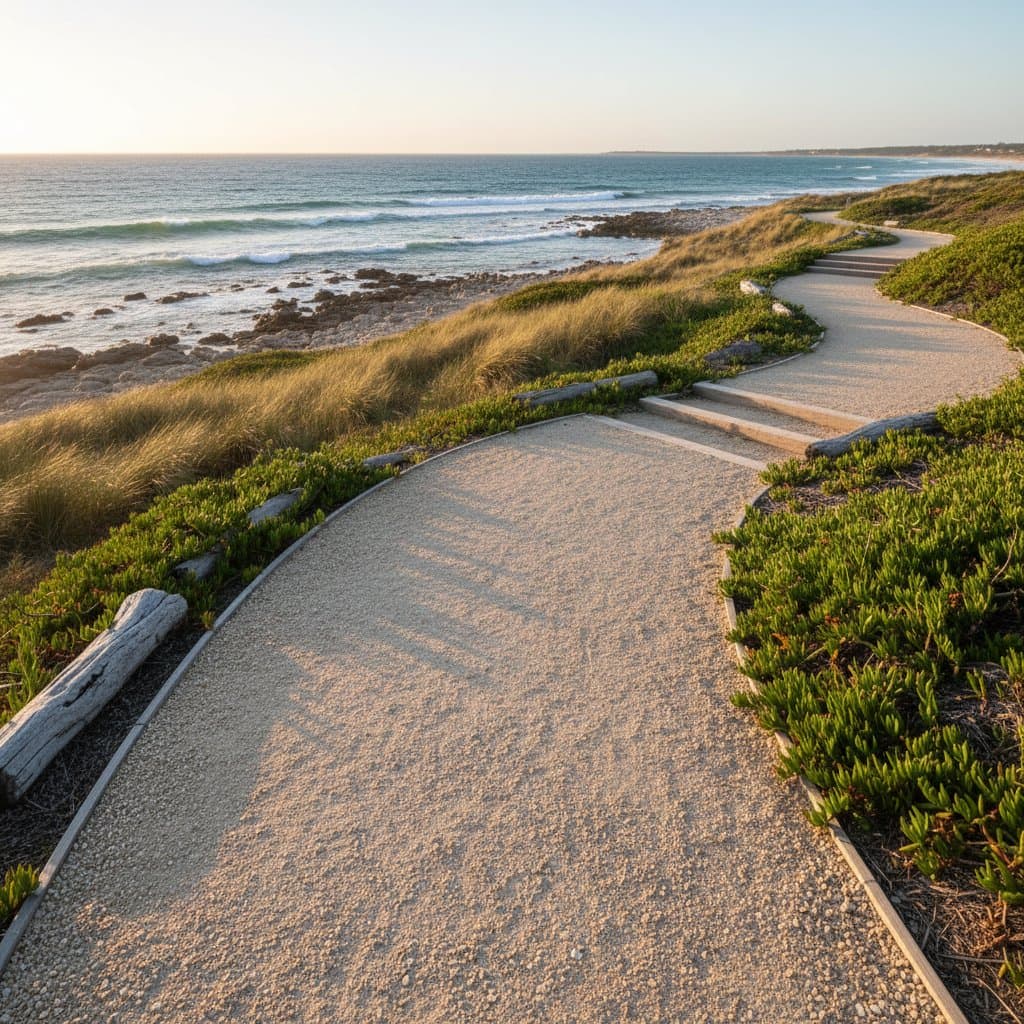
How Micro-Gravel Reduces Coastal Path Costs by 60 Percent
Picture a coastal path that provides a stable surface underfoot, allows rainwater to drain seamlessly, and requires minimal upkeep over time. Micro-gravel emerges as a prime choice for such pathways, blending affordability with sustainability in seaside landscapes. Property owners along the coast increasingly select this material for its aesthetic appeal, resilience against moisture, and substantial savings compared to standard paving methods.
This guide delves into the reasons micro-gravel lowers expenses so significantly, examines its advantages in coastal environments over alternatives, and outlines practical steps for implementation. Readers gain knowledge on key cost elements, available material varieties, installation methods for DIY or professional efforts, and strategies to optimize budgets. Typical installations range from $2 to $4 per square foot, far below the $5 to $10 range for pavers or concrete pours. For expert results, consider obtaining estimates from specialists in permeable surfaces suited to coastal regions.
In this guide
- Cost factors
- Types and options
- DIY versus professional installation
- Ways to save
- Frequently asked questions
Cost Factors
Several elements influence the overall expense of a micro-gravel coastal path, making it essential to evaluate them early in planning. Material selection stands as the primary driver, with prices varying based on type, quantity, and sourcing. For instance, basic pea gravel often costs less per ton than specialized shell mixes, yet both deliver value through longevity.
Labor represents another major component, particularly for site preparation and compaction. In coastal zones, additional considerations arise from soil conditions and erosion risks, which may necessitate deeper bases or geotextile fabrics to ensure stability. These reinforcements add to upfront costs but prevent expensive repairs from water damage or shifting substrates.
Delivery and accessibility also play roles. Paths in remote seaside locations incur higher transport fees, while bulk purchases mitigate per-unit expenses. Environmental factors, such as compliance with local drainage regulations, might require permeable designs that align naturally with micro-gravel's properties, avoiding penalties or redesigns. By addressing these factors, projects stay within budget while meeting performance standards.
Types and Options
Micro-gravel encompasses diverse options tailored to specific path needs, influenced by texture, color, and particle shape. Selection hinges on traffic levels, aesthetic preferences, and integration with the local environment. Each type offers unique benefits for coastal applications, ensuring both functionality and visual harmony.
Crushed Granite
Best for: High-traffic walkways and sloped terrains
Crushed granite features sharp, angular particles that interlock effectively, forming a solid yet permeable layer. This design enhances traction on wet surfaces, crucial for safety near beaches. In coastal settings, it withstands salt exposure and wave splash without degrading quickly. Neutral gray hues blend seamlessly with dune grasses and rocky shores, maintaining a natural appearance year-round.
Installation involves spreading a 2- to 4-inch layer over a compacted base, followed by rolling for density. Durability extends up to 20 years with occasional re-compaction, making it a reliable choice for frequently used paths. Availability in various grain sizes allows customization for finer finishes or coarser stability.
Pea Gravel
Best for: Garden trails and informal seaside layouts
Pea gravel consists of smooth, rounded stones typically 1/4 to 3/8 inch in diameter, providing a soft, inviting texture ideal for barefoot walks. Its gentle movement underfoot creates an organic feel, though it demands borders to contain migration. In humid coastal climates, this material excels at shedding water, minimizing mud accumulation during rains.
Colors range from whites and beiges to subtle earth tones, evoking beach sands. Pair it with low-growing plants for defined edges that reduce scattering. While initial settling may occur, proper edging with metal or wood strips ensures longevity, often exceeding 15 years with light maintenance.
Decomposed Granite
Best for: Contemporary or understated exterior areas
Decomposed granite breaks down into a fine, dust-like consistency that compacts into a hard, dust-free surface resembling natural soil. This permeability suits paths adjacent to shorelines, where rapid drainage prevents pooling. It supports wheeled traffic, such as garden carts, without rutting.
Apply in layers of 3 to 6 inches, wetting and tamping for a firm bond. Rustic browns and reds add warmth to minimalist designs, contrasting nicely with ocean blues. Resistance to freeze-thaw cycles benefits variable coastal weather, with lifespans reaching 25 years under moderate use.
Shell Gravel Mix
Best for: Authentic beachfront aesthetics
Shell gravel combines crushed oyster or clam shells with finer gravel, yielding a bright, luminous pathway that reflects sunlight. This mix remains cooler under summer rays, enhancing comfort in sunny exposures. Its coarse texture grips well, reducing slip hazards on inclines.
Ideal for properties mimicking nautical themes, the pale tones illuminate shaded spots. Spread evenly over stabilized subsoil, it requires minimal binding agents due to natural adhesion. Upkeep involves occasional raking, preserving its charm for decades in saline environments.
DIY Versus Professional Installation
Deciding between self-installation and hiring experts depends on project scale, skill level, and desired outcomes. DIY approaches suit smaller paths under 200 square feet, offering hands-on control and cost reductions. Gather tools like shovels, rakes, and plate compactors, then follow steps: excavate 4 to 6 inches deep, install geotextile fabric, add a 2-inch gravel base, and top with 2 to 3 inches of micro-gravel. Compact in layers for evenness.
Challenges include achieving proper drainage slopes, especially on uneven coastal terrain. Inaccurate grading leads to water retention, accelerating wear. Time investment spans weekends, with physical demands from digging in sandy soils.
Professional services provide precision, warranties, and efficiency for larger or complex sites. Contractors assess soil stability, incorporate reinforcements against erosion, and ensure regulatory compliance. Expect 20 to 30 percent higher costs, offset by faster completion and superior durability. Consult local experts familiar with seaside challenges for tailored advice.
Ways to Save
Micro-gravel inherently trims expenses, yet targeted strategies amplify savings without sacrificing quality.
-
Source local materials
Proximity to quarries eliminates long-haul shipping charges, often saving 20 to 30 percent on transport. -
Handle preparation independently
Perform excavation and base layering yourself to slash labor fees by 40 percent, reserving pros for finishing touches. -
Opt for simple borders
Recycled plastic or basic lumber edging suffices for containment, costing half as much as ornate stone variants. -
Purchase in volume
Bulk cubic-yard deliveries drop unit prices by up to 50 percent compared to bagged options. -
Incorporate effective drainage
Strategic base design averts erosion issues, eliminating recurring fixes that inflate long-term budgets. -
Schedule during off-peak seasons
Winter installations often secure discounted rates from contractors facing slower periods.
Frequently Asked Questions
Does micro-gravel work on every type of coastal soil?
It adapts well with adequate preparation. For loose sands, reinforce the sub-base with larger aggregates to avoid subsidence.
How does it perform during intense rainfall?
The porous structure facilitates swift infiltration, mitigating flooding and soil loss common in storms.
Will it heat up excessively in sunlight?
Select light variants like shell mixes to reflect rays, keeping surfaces 10 to 15 degrees cooler than dark alternatives.
What maintenance does it require annually?
Rake periodically and replenish thin spots; full re-compaction every few years suffices for most paths.
Is it environmentally sound for coastal areas?
Yes, its permeability supports groundwater recharge and reduces runoff pollutants into oceans.
Building Your Coastal Path
Implementing a micro-gravel path enhances accessibility and enjoyment of seaside properties while honoring budgets and ecosystems. Start by mapping the route, selecting suited materials, and preparing the site meticulously. Whether tackling it solo or with pros, focus on durable foundations to reap years of low-effort beauty. This investment not only cuts costs but elevates outdoor living with resilient, inviting spaces that withstand coastal demands.