
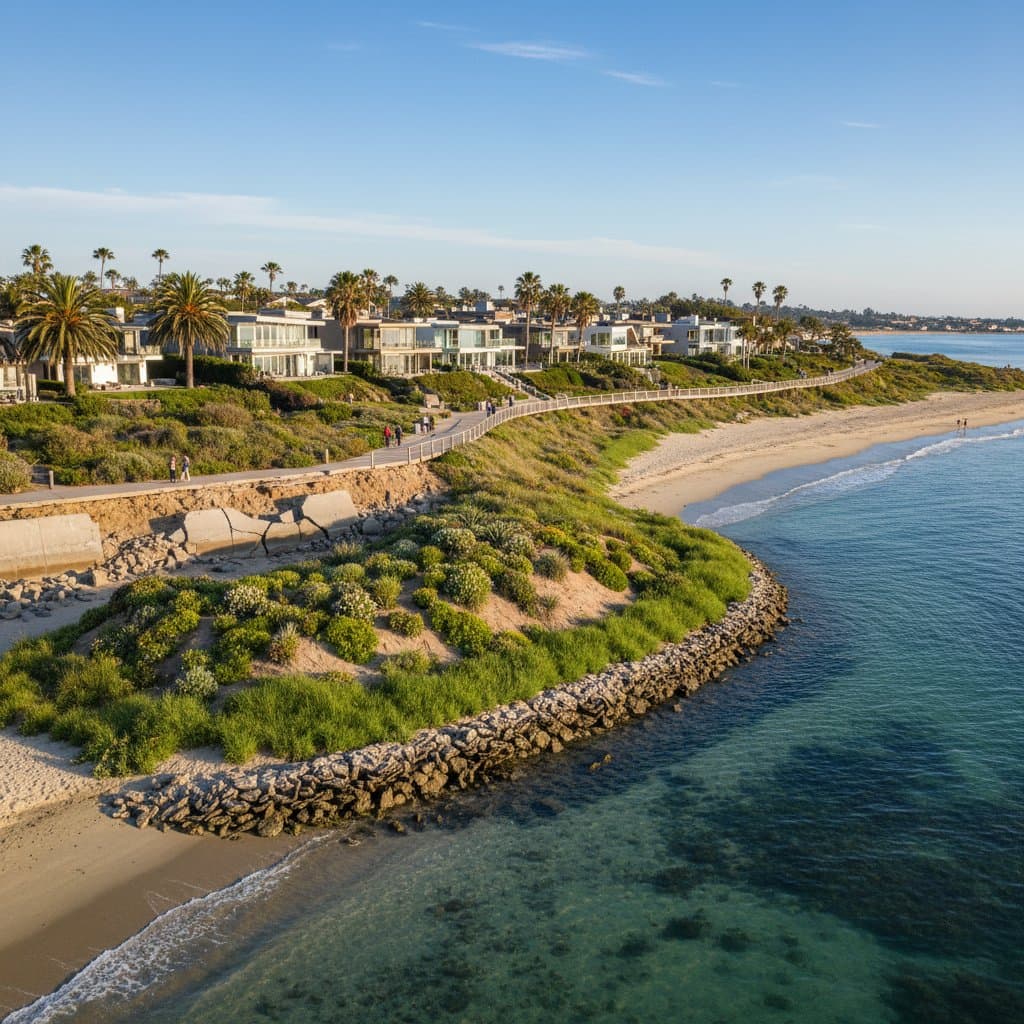
Why Living Shorelines Outperform Concrete Seawalls
Coastal erosion presents ongoing challenges for homeowners, developers, and environmental planners. Traditional seawalls have served as a common solution to shield property from rising tides and storm surges. However, communities increasingly recognize that living shorelines provide a superior, sustainable alternative. These systems mitigate erosion, foster marine life, enhance water quality, and elevate coastal aesthetics.
In areas like San Diego, where land interfaces with the Pacific Ocean, living shorelines safeguard properties while integrating harmoniously with the surroundings. In essence, living shorelines surpass seawalls in resilience, economic efficiency, and environmental contributions.
Key Differences Between Living Shorelines and Seawalls
The distinctions between living shorelines and seawalls emerge clearly in evaluations of performance, expenses, and enduring effects.
| Feature | Living Shoreline | Seawall |
|---|---|---|
| Erosion Control | Absorbs and dissipates wave energy through natural elements | Reflects wave energy, which can lead to adjacent scouring |
| Cost Range (per linear foot) | $50 - $250 | $200 - $600 |
| Maintenance | Low to moderate; vegetation self-repairs over time | High; requires frequent inspections and repairs |
| Ecological Benefit | Enhances habitats for fish, birds, and plants | Diminishes local biodiversity and habitats |
| Aesthetic Appeal | Blends naturally with greenery and water | Appears industrial and obtrusive |
| Longevity | Strengthens as vegetation establishes roots | Deteriorates due to corrosion and storm impacts |
Living shorelines gain robustness as plants mature and roots interconnect, whereas seawalls succumb to relentless wave action and material degradation.
Ecological Advantages of Living Shorelines
Living shorelines deliver benefits that extend well beyond basic erosion prevention. They establish vibrant ecosystems supporting organisms above and below the water surface.
Habitat Development
Structures within living shorelines, such as oyster reefs and plant roots, provide refuge for shrimp, oysters, crabs, and fish. Coastal vegetation attracts birds and pollinators, bolstering overall biodiversity. This richness sustains local food webs, recreational fishing opportunities, and eco-tourism.
Water Quality Enhancement
Vegetation and shellfish reefs function as biological filters. They capture suspended sediments, uptake excess nutrients, and neutralize pollutants before these substances enter open waters. As a result, marine environments thrive, and coastal visibility improves.
Carbon Storage Capabilities
Vegetated components of living shorelines sequester carbon dioxide, storing it in biomass and sediments. This mechanism mitigates atmospheric greenhouse gases while reinforcing soil stability through expanded root networks.
Image: Installation of an oyster reef as an integral element of a living shoreline initiative.
Site-Specific Considerations for Shoreline Projects
Coastlines vary significantly, necessitating customized approaches to protection strategies. Key variables guide the design and implementation of effective living shorelines:
- Wave Exposure Levels: Low-energy environments suit simple plantings on gradual slopes. High-energy sites benefit from reinforced features like rock sills or engineered reefs.
- Soil Composition: Sandy substrates demand species with extensive root systems to anchor against washout; clay-based soils retain water, supporting a broader range of flora.
- Tidal Fluctuations: Greater tidal ranges influence plant choices and structural elevations to accommodate submersion cycles.
- Pre-Existing Flora: Incorporate thriving native species as foundational elements to accelerate establishment.
- Land Utilization Patterns: Residential settings prioritize visual harmony, whereas public or commercial zones emphasize robust, accessible designs.
A thorough site evaluation aligns the project with local conditions, maximizing protective and habitat functions.
Enhancements to Coastal Living and Property Appeal
Living shorelines contribute to lifestyle improvements that transcend mere utility. They supplant stark concrete barriers with lush, dynamic landscapes, fostering serene waterfront areas ideal for family gatherings and wildlife observation. This seamless land-water interface preserves beach access and elevates scenic value, often increasing real estate desirability.
Property owners appreciate how these installations unify outdoor spaces with natural rhythms. Observing native grasses sway with tides or marine life navigate vegetated shallows reinforces a sense of environmental harmony and durability.
Practical Guidance for Implementation
Developing a living shoreline requires deliberate preparation. For individual properties or larger initiatives, follow these structured steps to achieve optimal outcomes:
- Conduct a Comprehensive Site Analysis: Evaluate tidal patterns, soil properties, and wave dynamics to inform material and plant selections.
- Engage Specialized Professionals: Collaborate with coastal engineers, native plant specialists, and regulatory bodies for tailored recommendations.
- Prioritize Indigenous Species: Select plants adapted to regional climates, which demand minimal upkeep and resist pests.
- Establish Protective Buffers: Allocate space between vegetated zones and built structures to permit unrestricted expansion.
- Time Plantings Strategically: Introduce vegetation during low-storm seasons, allowing roots to secure before peak weather events.
- Implement Ongoing Monitoring: Regularly inspect for vulnerabilities and make refinements to enhance stability and effectiveness.
Common Questions on Living Shorelines
| Question | Answer |
|---|---|
| Do living shorelines suit every coastal type? | They excel in low-gradient, moderate-wave areas; hybrid designs accommodate steeper or more exposed terrains. |
| How soon do they achieve self-sufficiency? | Typically one to three growing seasons, influenced by species growth rates and hydrological factors. |
| Can they elevate property values? | Yes, through enhanced visuals, natural integration, and lowered upkeep expenses. |
| What permitting processes apply? | Environmental approvals are standard and generally simpler than those for rigid structures. |
| Are they viable for business applications? | Yes, particularly for resorts, docks, and recreational facilities aiming for eco-conscious operations. |
Advancing Coastal Resilience Through Natural Solutions
Shifting from conventional seawalls to living shorelines represents an investment in enduring protection, fiscal prudence, and ecosystem vitality. Property stewards who adopt these methods cultivate barriers that evolve and fortify over years. They also promote pristine waters, abundant wildlife, and visually captivating shorelines.
Observe natural coastal features like vegetated dunes or offshore sand formations during shoreline visits; living shorelines replicate these mechanisms to defend assets while honoring ecological balance. Along San Diego's vibrant edges, this approach merges contemporary needs with inherent natural strengths.