
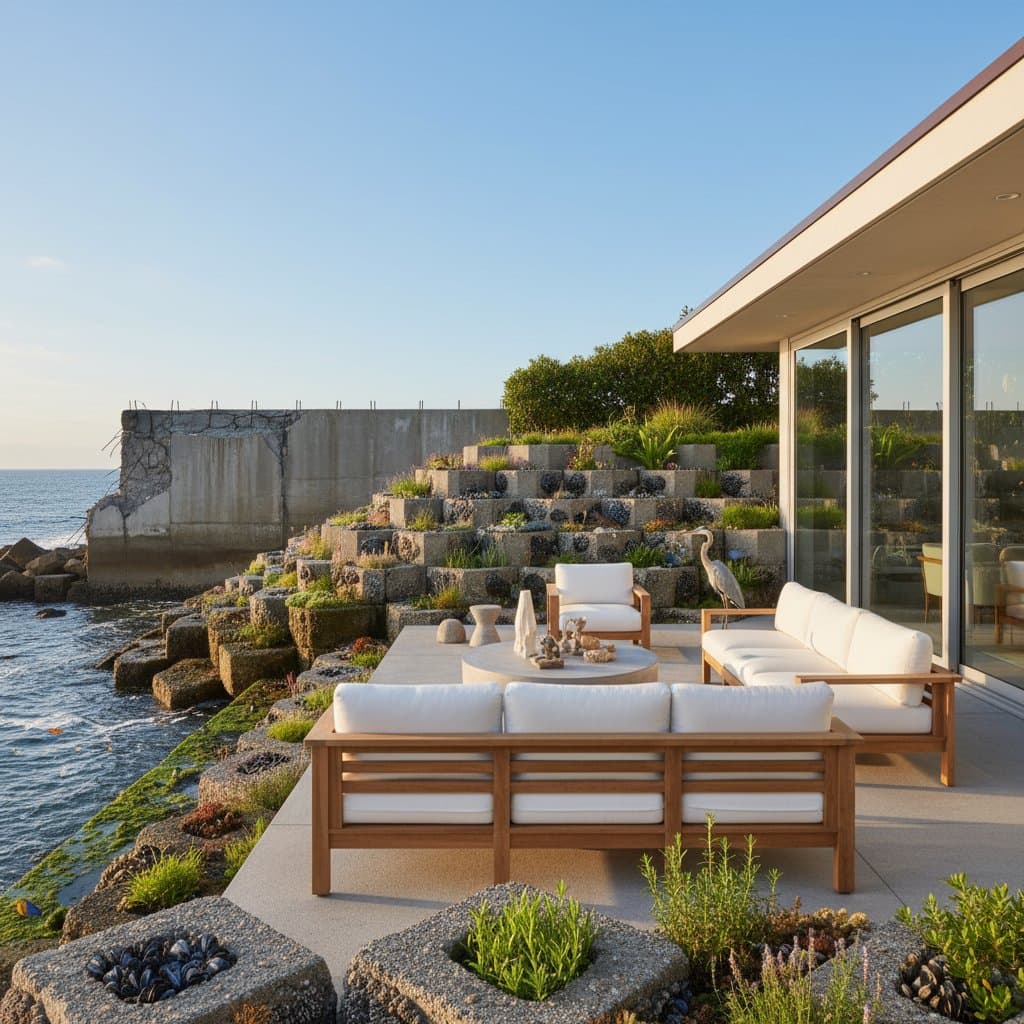
Why Living Seawalls Outperform Concrete Barriers
Coastal property owners and communities traditionally depend on concrete seawalls to shield against erosion and tidal surges. However, a more sustainable and resilient alternative has emerged in recent years. Living seawalls merge natural materials with purposeful engineering to secure shorelines and nurture marine ecosystems rather than harm them. For those residing on waterfronts or considering shoreline defenses, grasping the advantages of living seawalls over conventional concrete options enables informed, eco-conscious decisions.
This guide details the nature of living seawalls, their operational principles, and the reasons they excel in erosion management and enduring value compared to concrete installations. Readers also gain knowledge on upkeep, expense considerations, and initial steps for customizing a design to specific properties.
Understanding Living Seawalls
Living seawalls constitute engineered defenses for shorelines that embed natural components like oysters, seagrasses, mangroves, and indigenous stones. These systems replicate coastal habitats, uniting structural integrity with biological roles.
What Defines a Seawall as Living
A living seawall extends beyond a simple barrier adorned with flora. It forms a deliberate framework that promotes marine colonization while anchoring the shore. Engineers select materials such as eco-concrete or limestone units featuring rough textures and recesses. These attributes draw in species including barnacles, mussels, and oysters, which fortify the assembly progressively.
How Living Seawalls Function
The principle proves straightforward yet potent. Rather than erecting a rigid, upright obstacle that rebounds wave force, living seawalls capture and diffuse it. Vegetation paired with permeable substances moderates water flow, curbing erosion and impact. Gradually, attached organisms occupy voids, evolving the wall into a vibrant niche that self-reinforces.
Environmental and Aesthetic Advantages
Concrete installations present a barren, imposing facade. Living seawalls harmonize with their environment, bolster species diversity, and elevate water purity. Homeowners thus elevate their waterfront's allure while aiding regional ecological recovery.
Why Concrete Barriers Fall Short
Concrete seawalls served as the primary defense for decades, yet they harbor concealed expenses and ecological tolls. Identifying these shortcomings highlights the superiority of living counterparts.
Structural Vulnerabilities Over Time
Concrete seawalls seem impervious initially, but relentless saltwater, winds, and waves erode them. Fissures and rust emerge within years, necessitating costly fixes or full rebuilds. A damaged unit forfeits its erosion-blocking efficacy.
Adverse Ecological Impacts
Rigid concrete disrupts innate coastal dynamics. It halts sediment flow, eradicates living spaces, and redirects waves to scour the foundation, accelerating base erosion. Adjacent beaches suffer accelerated sand depletion, propagating broader harm.
Restricted Adaptability
Concrete designs remain fixed amid fluctuating seas and storms. Rising waters expose properties to overflow and inundation. Living seawalls, by comparison, evolve through organic expansion, naturally fortifying against shifts.
The Advantages of Living Seawalls
Living seawalls surpass concrete in key areas relevant to property owners, including robustness, economic viability, ecological contributions, and visual integration.
1. Superior Erosion Control
Living seawalls moderate water velocity rather than oppose it outright. This method minimizes wave rebound and foundational undercutting. Flora and affixed life forms serve as organic cushions, dispersing energy uniformly to safeguard shores and habitats alike.
2. Long-Term Cost Efficiency
Initial outlays for living seawalls may exceed those for plain concrete by a modest margin, but sustained economies prove substantial. Established systems demand minimal intervention and possess inherent renewal. Organisms like oysters and flora reinforce the build organically, prolonging service far beyond concrete's duration.
Estimated national average costs:
- Concrete seawall: $450 to $900 per linear foot
- Living seawall: $500 to $1,200 per linear foot
Variations arise from site specifics, material selections, and design intricacy. Property owners benefit from soliciting several quotes and confirming regional codes prior to commencing shoreline work.
3. Improved Water Quality
Living seawalls function as biological sieves. Oysters and mussels consume by straining water, extracting surplus nutrients and particles. Enhanced clarity ensues, sustaining equilibrium in coastal realms that aids aquatic species and leisure activities.
4. Enhanced Aesthetic Value
A living seawall integrates seamlessly into the terrain, avoiding obtrusive presence. Designs may incorporate local flora, sculpted stone, or modular eco-panels resembling reefs. As it matures, the feature yields a dynamic, colorful expanse, fostering an appealing waterfront.
5. Habitat Restoration and Biodiversity
Standard seawalls obliterate refuges for fish, crustaceans, and kin. Living versions counteract this by supplying nooks, shelves, and greenery. Such provisions enable species proliferation, bolstering fisheries, avian groups, and ecosystem vitality.
6. Climate Resilience
Living seawalls withstand tempests and elevation changes adeptly. Their adaptable, stratified builds absorb shocks without fracturing. Denser growth over seasons augments fortitude, aligning with evolving climates.
How to Plan and Build a Living Seawall
Prospective builders of living seawalls must adopt a methodical process for optimal outcomes. Strategic foresight and expert input balance form, function, and conservation.
Step 1: Assess Your Shoreline
Commence by analyzing the locale. Consider elements like:
- Tidal fluctuations and depths
- Current erosion pace and ground makeup
- Present flora and fauna
- Governing rules and permissions
This evaluation guides selection among living seawalls, combined approaches, or gentler restorations.
Step 2: Consult Qualified Professionals
Engage coastal engineers, landscape specialists, or aquatic experts versed in living projects. They craft site-specific plans adhering to ecological norms.
Step 3: Choose the Right Materials
Selections hinge on goals and locale. Viable choices encompass:
- Eco-concrete panels textured to spur organism attachment
- Limestone or granite boulders for inherent anchorage
- Salt-enduring native plants like cordgrass, mangroves, or seagrasses
- Oyster reef units to secure and cleanse
Merging firm and pliant components typically optimizes performance.
Step 4: Secure Permits and Approvals
Coastal endeavors mandate official clearances. Authorities scrutinize proposals for compliance with protective criteria. Early initiation, aided by knowledgeable allies, streamlines approvals.
Step 5: Oversee Construction Carefully
Installers adhere strictly to sanctioned blueprints during erection. Misplaced elements or plantings undermine efficacy. Frequent inspections and team dialogue uphold fidelity to intent.
Step 6: Monitor and Maintain
Post-completion vigilance sustains integrity. Scan for wear, wilted growth, or shifts. Prompt adjustments avert escalation. Organic maturation eventually lessens upkeep demands.
Frequently Asked Questions
What is the lifespan of a living seawall compared to a concrete one?
Well-conceived and tended living seawalls endure decades or more. Distinct from concrete's progressive decline, they amplify via biological accrual, yielding enduring autonomy.
Do living seawalls require a lot of maintenance?
Established ecosystems incur less oversight than concrete counterparts. Initial efforts focus on vitality checks and stability. Thereafter, innate mechanisms preserve harmony.
Can a living seawall handle strong storm surges?
Affirmative. Though no barrier defies all gales, living designs dissipate forces flexibly. This trait curtails harm and accelerates rebound from extremes.
Are living seawalls allowed everywhere?
Regimes differ by region. Certain zones promote them; others impose rigorous reviews. Contact local overseers prior to advancing.
What types of plants work best for living seawalls?
Optimal choices feature indigenous, saline-resilient varieties like cordgrass, mangroves, or seagrasses. Their robust roots bind soils and temper waves. Experts tailor recommendations to locales.
Is a living seawall suitable for residential properties?
Yes. Increasing numbers of owners opt for them on private fronts. They deliver steadfast safeguarding alongside amplified charm and worth.
How long does it take for a living seawall to become established?
Timelines depend on conditions and components. Ecological signs appear in months; comprehensive rooting spans years as life integrates.
Implementing Your Living Seawall
Constructing a living seawall transcends mere building. It invests in fortified, regenerative shores that guard assets and revive innate splendor.
Living seawalls eclipse concrete by partnering with natural forces. They secure dwellings, cultivate aquatics, and enrich surroundings concurrently. Waterfront stewards pursuing viable, attractive safeguards find living seawalls the astute path forward.