
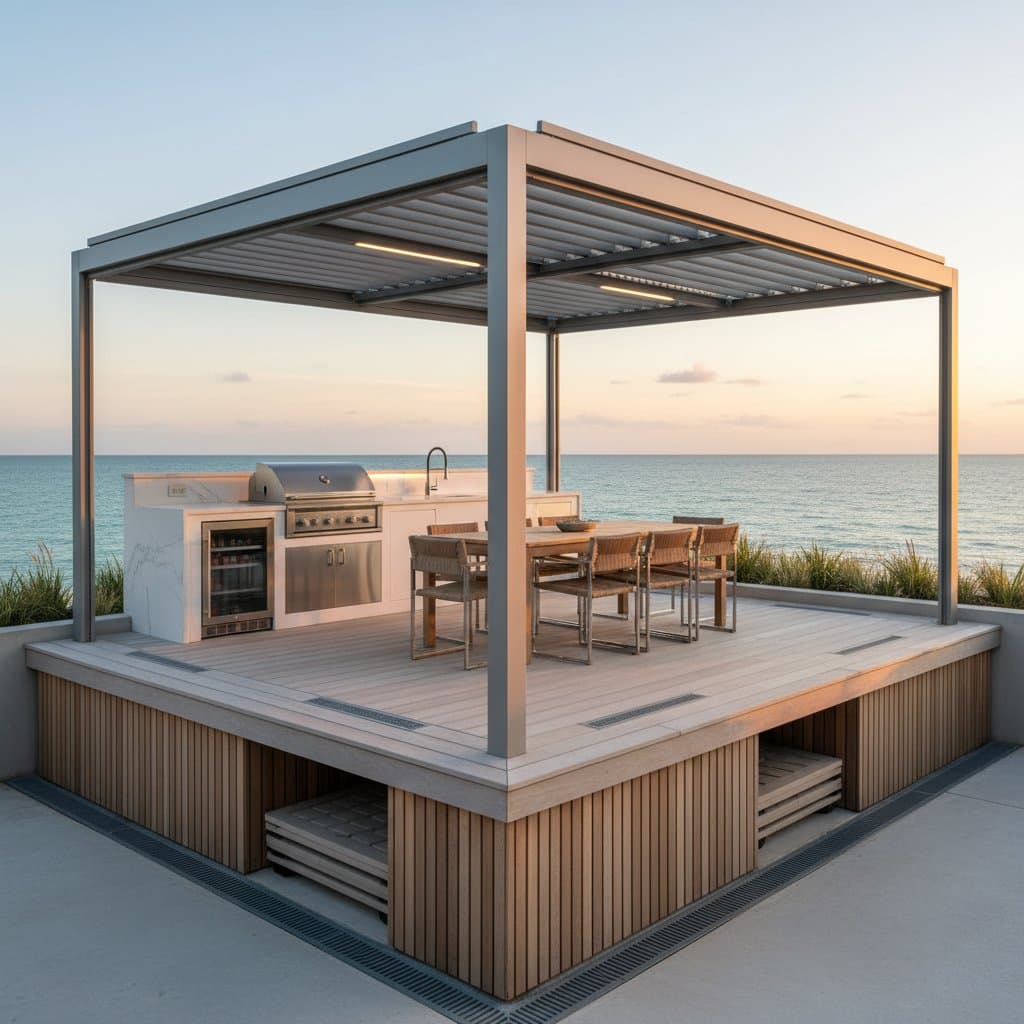
Elevated Kitchens That Defy Coastal Storm Surges
Coastal living delivers stunning ocean vistas, invigorating sea air, and an intimate bond with the environment. However, properties close to the shore face heightened vulnerabilities from storm surges and flooding that can damage residences, patios, and costly upgrades. Homeowners passionate about al fresco dining and gatherings increasingly turn to elevated kitchens as a strategic blend of aesthetics and fortitude.
This resource outlines the process of designing, constructing, and safeguarding an elevated outdoor kitchen against coastal storm surges. Readers gain insights into selecting materials, engineering structures, installing drainage, engaging professionals, and implementing upkeep routines to ensure longevity and reliability amid fluctuating water levels.
Establishing a Safe and Functional Elevation Plan
Determine Your Flood Zone and Base Flood Elevation
Prior to commencing construction, consult flood maps to identify your site's flood zone and base flood elevation (BFE), the projected water level during a 100-year storm event. Positioning the kitchen platform at least one to two feet above the BFE provides a critical buffer for safety and aligns with insurance requirements. Local floodplain administrators or online FEMA tools offer precise data for your address.
Work With a Qualified Structural Engineer
Engage a licensed structural engineer to assess site-specific factors such as soil stability, foundation options, and weight-bearing capacities. These experts calculate reinforcements needed to counter hydrostatic forces from rising water and gale-force winds common in coastal zones. Their input guarantees adherence to stringent building codes, including those from the International Building Code adapted for flood-prone areas.
Choose the Right Elevation Method
Select an elevation approach suited to your terrain and budget:
- Raised decks or piers: These work well for elevations of two to six feet, using helical piles driven deep into stable soil to support the structure in sloped yards or near dunes.
- Rooftop kitchens: Suitable for homes with accessible flat roofs, they demand reinforced roofing systems and parapet walls to handle elevated wind exposure while offering unobstructed sea views.
- Concrete or masonry platforms: These deliver a permanent, erosion-resistant base, often poured with integrated rebar for seismic and flood resilience in sandy coastal soils.
Customize the choice based on your lot's topography, proximity to the waterline, and aesthetic goals to achieve both elevation and seamless integration with the landscape.
Designing for Drainage and Airflow
Incorporate Smart Drainage Solutions
Effective water management prevents erosion and structural compromise. Integrate these elements during planning:
- Channel drains: Install linear grates along edges to capture surface runoff and channel it to storm sewers or swales, reducing slip hazards on walkways.
- French drains: Position perforated pipes wrapped in gravel under the foundation to intercept groundwater, directing it to dispersal points away from the building footprint.
- Gutters and downspouts: Route rooftop precipitation through screened leaders to underground catch basins, avoiding concentrated flow that could undermine supports.
These systems, combined with a minimum two percent slope away from the kitchen, ensure rapid water shedding and foundation integrity.
Prioritize Ventilation and Air Movement
Elevation naturally enhances breeze circulation, accelerating evaporation after showers and mitigating mold growth. Design with spaced railings, lattice screens, or retractable panels to facilitate airflow without sacrificing privacy. This setup not only dries cooking surfaces efficiently but also cools the area during humid summers, improving usability year-round.
Finding and Vetting the Right Contractor
Check Licenses and Insurance
Select contractors holding current licenses for general contracting and specialties like masonry or electrical work in coastal jurisdictions. Verify bonding to cover project completion and comprehensive insurance, including general liability up to $1 million and workers' compensation, to shield against on-site accidents or delays.
Interview Multiple Candidates
Pose targeted inquiries about their portfolio in elevated outdoor kitchens and flood-mitigation techniques. Expect detailed responses on securing appliances against corrosion, integrating waterproof electrical conduits, and sourcing wind-rated hardware. Aim for at least three interviews to compare expertise and communication styles.
Request a Detailed Proposal
Insist on a comprehensive bid covering:
- Elevation specifications, including support spacing and height calculations relative to BFE.
- Material lists with grades, such as 316 stainless steel for fixtures.
- Blueprints for drainage routing and utility placements.
- Project schedule with milestones and a breakdown of costs, including permits and labor.
Scrutinize for specificity; reject proposals lacking line-item pricing or assumptions about site conditions.
Verify References and Past Projects
Examine portfolios featuring similar coastal installations, noting details like post-storm performance. Contact at least three recent clients to discuss timelines, budget adherence, and resolution of unforeseen issues such as shifting sands during construction.
Maintaining Your Investment
Regular Cleaning and Inspections
Coastal elements accelerate wear, so rinse surfaces weekly with fresh water to remove salt residue, followed by gentle scrubbing. Conduct quarterly checks for loose bolts, hairline fractures in concrete, or rust on metals, addressing issues promptly to prevent escalation.
Reapply Protective Coatings
Shield exposed elements with marine-grade sealants every six to twelve months. For instance, apply penetrating oils to hardwoods and epoxy topcoats to counters to block moisture ingress and fading from intense sunlight.
Monitor Drainage Systems
Post-rainfall, flush channels with a hose to clear leaves and sediment. Annually, excavate French drain trenches to inspect pipe integrity and recharge gravel layers for optimal percolation.
Seasonal Preparation
Ahead of hurricane season, anchor loose items with straps, enclose cabinetry in weatherproof tarps, and cap gas and electrical connections. These steps minimize wind-blown debris damage and facilitate swift recovery.
Frequently Asked Questions
How high should an elevated outdoor kitchen be above the ground?
Base the height on your local BFE plus a freeboard margin of one foot for added security. Professionals use site surveys and elevation certificates to recommend precise measurements, ensuring safe entry via steps or ramps without excessive reach.
What materials are best for coastal kitchens?
Opt for corrosion-resistant options like 316-grade stainless steel appliances, fiber-reinforced concrete counters, porcelain pavers, and ipe wood decking treated with UV inhibitors. These endure salt spray, humidity, and temperature swings far better than aluminum or untreated lumber.
Can existing outdoor kitchens be elevated later?
Retrofitting is possible through jacking systems or modular lifts, but it involves dismantling and reinstalling utilities. Assess structural viability with an engineer; costs often exceed new builds due to demolition and reconfiguration.
Do elevated kitchens require special permits?
Yes, coastal areas mandate floodplain development permits alongside standard building approvals. Submit elevation plans, engineering stamps, and drainage calculations to verify compliance with FEMA guidelines and local ordinances.
How can drainage be improved in an elevated kitchen?
Enhance with sloped surfaces, permeable joint fillers in pavers, and sump pumps for low-lying spots. Regular maintenance of catch basins prevents backups, while bioswales planted with native grasses naturally filter and redirect excess water.
Are rooftop kitchens safe during storms?
Properly designed units incorporate tie-downs rated for 150 mph winds and non-slip, drained flooring. Compliance with ASCE 7 standards for seismic and wind loading ensures stability, though evacuation remains advisable during severe events.
What is the average cost of building an elevated outdoor kitchen?
Expect $50,000 to $150,000 for a mid-sized setup, factoring in engineering fees, premium materials, and site prep. Basic pier-supported designs start lower, while rooftop conversions with full plumbing push toward the upper end; include 10-15 percent for flood-proofing extras.
Building Resilience in Your Coastal Haven
An elevated kitchen represents proactive defense against environmental threats, fostering security and serenity where weather patterns shift abruptly. Through meticulous material choices, engineered elevations, and trusted craftsmanship, this space endures while elevating everyday coastal routines.
Secure your shoreline retreat today, crafting a venue for gatherings that thrives beyond passing storms. Thoughtful execution transforms potential vulnerability into enduring pleasure, allowing you to savor the sea without reservation.