
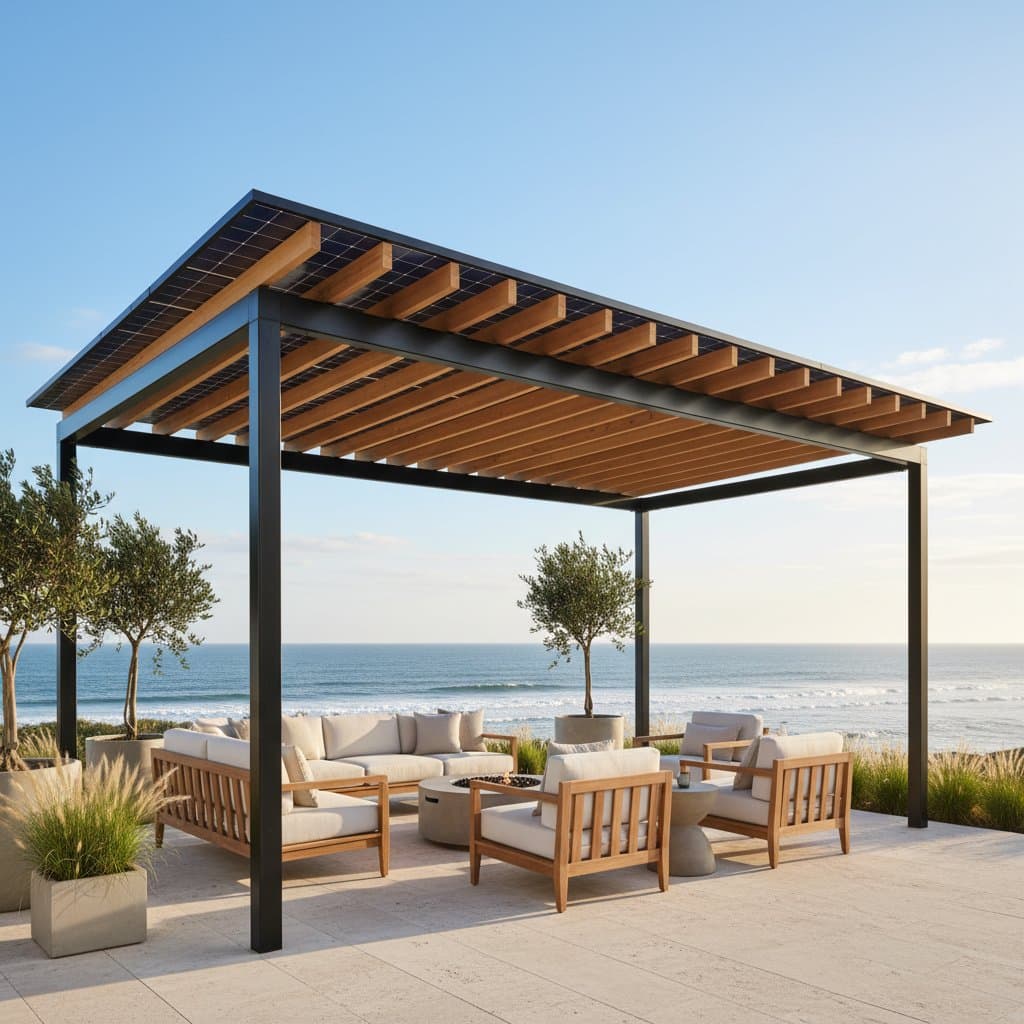
Why Coastal Homeowners Choose Solar Pergolas Over Pools
Coastal living offers unique opportunities to blend indoor comfort with outdoor beauty. Homeowners in these regions face challenges such as intense sunlight, salt air corrosion, and limited space for large installations. Many select solar pergolas as a versatile alternative to traditional pools, providing shade, renewable energy, and aesthetic appeal without the ongoing demands of water maintenance.
Solar pergolas combine structural elegance with photovoltaic technology, creating shaded retreats that generate electricity. This choice aligns with sustainable lifestyles prevalent in coastal areas. The following sections explore the reasons behind this preference, from practical benefits to financial considerations.
Benefits of Solar Pergolas for Coastal Properties
Solar pergolas deliver multiple advantages tailored to coastal environments. They offer reliable shade during peak sun hours, reducing heat buildup in outdoor spaces. Unlike pools, which require constant chemical balancing and filtration, pergolas demand minimal upkeep, freeing time for enjoyment rather than maintenance.
Energy generation represents a key benefit. Integrated solar panels capture sunlight to power home systems, potentially offsetting utility costs by 20 to 30 percent in sunny coastal climates. This feature enhances energy independence, especially valuable where power outages occur due to storms.
Property value increases with such installations. Appraisers recognize solar pergolas as modern upgrades that appeal to eco-conscious buyers. In coastal markets, these structures can add five to ten percent to resale value, according to real estate trends.
Comparing Solar Pergolas to Traditional Pools
Pools provide recreation but come with significant drawbacks in coastal settings. Construction disrupts landscapes and requires permits for excavation, often costing 50,000 dollars or more. Ongoing expenses include heating, cleaning, and repairs against corrosion from salty air, totaling thousands annually.
In contrast, solar pergolas install with less intrusion. They mount on existing patios or lawns, avoiding major earthwork. Initial costs range from 10,000 to 25,000 dollars, depending on size and features, with quicker return on investment through energy savings.
Lifestyle differences stand out as well. Pools limit usability to warmer months and specific activities, while pergolas create year-round gathering spots. Lighting and fans powered by solar energy extend evening use, fostering social connections without the isolation of poolside lounging.
Design Options for Solar Pergolas
Customization ensures solar pergolas fit diverse architectural styles. Materials like powder-coated aluminum resist coastal corrosion better than wood, which warps in humid conditions. Glass or polycarbonate roofs allow light diffusion while protecting panels from debris.
Size variations accommodate different needs. Compact models suit small balconies, spanning 10 by 10 feet, whereas larger versions cover dining areas up to 20 by 20 feet. Retractable louvers add flexibility, opening for ventilation or closing against rain.
Aesthetic integrations enhance appeal. Vine-friendly lattices support climbing plants, blending natural elements with technology. Color choices in frames match home exteriors, from sleek black to warm earth tones, maintaining curb appeal.
Integrating Smart Features
Modern solar pergolas incorporate automation for convenience. App-controlled systems adjust shading based on weather data, optimizing energy capture. Built-in USB ports and outlets power devices directly under the structure.
Some designs include rainwater collection channels, directing water to gardens and reducing irrigation needs. These elements promote sustainability, aligning with coastal conservation efforts to preserve local water resources.
Cost Breakdown and Financial Planning
Understanding expenses helps homeowners budget effectively. Base structures start at 8,000 dollars, with solar panel additions increasing the total by 5,000 to 15,000 dollars. Labor for installation varies by location, typically 2,000 to 5,000 dollars in coastal regions.
Long-term savings offset upfront costs. Energy production can yield 1,000 to 3,000 dollars in annual bill reductions, depending on system efficiency and sunlight exposure. Payback periods range from five to eight years, after which the pergola generates pure profit.
Financing options ease adoption. Low-interest loans through green energy programs or home equity lines provide accessible funding. Tax credits, such as the federal solar investment tax credit, rebate 26 percent of costs, making the upgrade more affordable.
Installation Process and Best Practices
Professional installation ensures durability in harsh coastal conditions. Site assessment begins the process, evaluating sun exposure and wind patterns. Anchoring techniques secure structures against gusts common in seaside areas.
The timeline spans one to three days for most projects. Electricians connect panels to home systems, complying with local codes. Post-installation, warranties cover panels for 25 years and structures for 10 years.
Homeowners prepare by clearing the area and confirming permits. Selecting certified installers with coastal experience minimizes risks. Regular cleaning of panels, using soft brushes and water, maintains efficiency year-round.
- Schedule a consultation with a solar specialist.
- Review design mockups and material samples.
- Secure financing and incentives.
- Coordinate installation date.
- Monitor system performance via apps.
Leveraging Incentives for Maximum Savings
Government and utility programs support solar pergola adoption. Federal incentives apply to residential installations, reducing taxable income based on project costs. State rebates in coastal areas, like California, offer additional thousands in credits.
Local utilities provide net metering, crediting excess energy back to accounts. This mechanism turns pergolas into mini power plants, benefiting the grid and homeowners alike. Eligibility requires systems meeting efficiency standards.
Community programs sometimes subsidize installations in eco-villages or historic districts. Homeowners research through energy department websites or consult installers for tailored advice. Combining multiple incentives can cut effective costs by half.
Enhancing Outdoor Living with Solar Pergolas
Solar pergolas transform coastal backyards into functional extensions of living spaces. They encourage outdoor meals, relaxation, and even remote work under shaded comfort. Integration with landscaping creates serene retreats that withstand environmental stresses.
This upgrade supports broader goals of sustainability and resilience. By choosing pergolas over pools, homeowners invest in features that endure, save, and inspire. The result is a harmonious balance of beauty, utility, and environmental stewardship for generations.