
Why Coastal Decks Ditch Wood for Glass in 2026
Oceanfront properties appear more vibrant in recent years. This enhanced appeal often stems from a significant trend in coastal remodeling: the replacement of traditional wood railings with glass alternatives. In areas such as San Diego cliffs and La Jolla shores, homeowners increasingly select glass for its combination of durability, aesthetic appeal, and unobstructed views of the ocean.
Residents near the coast understand that salt-laden air presents both allure and challenges. Many coastal decks now transition from wood to glass materials. The following sections examine the reasons behind this shift.
Factors Driving the Trend Toward Glass in Coastal Decks
Homeowners along the coast contend with persistent issues from moisture, salt spray, and intense sunlight. Wood railings, while attractive initially, tend to fade, crack, and warp when exposed to these conditions. Glass railings, by contrast, resist such environmental pressures effectively.
Challenges Posed by Saltwater to Wood Structures
Saltwater infiltrates wood fibers relentlessly, promoting rot and dimensional changes. Even pressure-treated lumber withstands these effects for a limited period before metal fasteners corrode and structural integrity diminishes. Homeowners must perform frequent sanding, staining, and sealing to maintain the appearance and functionality of wood decks.
Advantages of Glass Railings in Coastal Environments
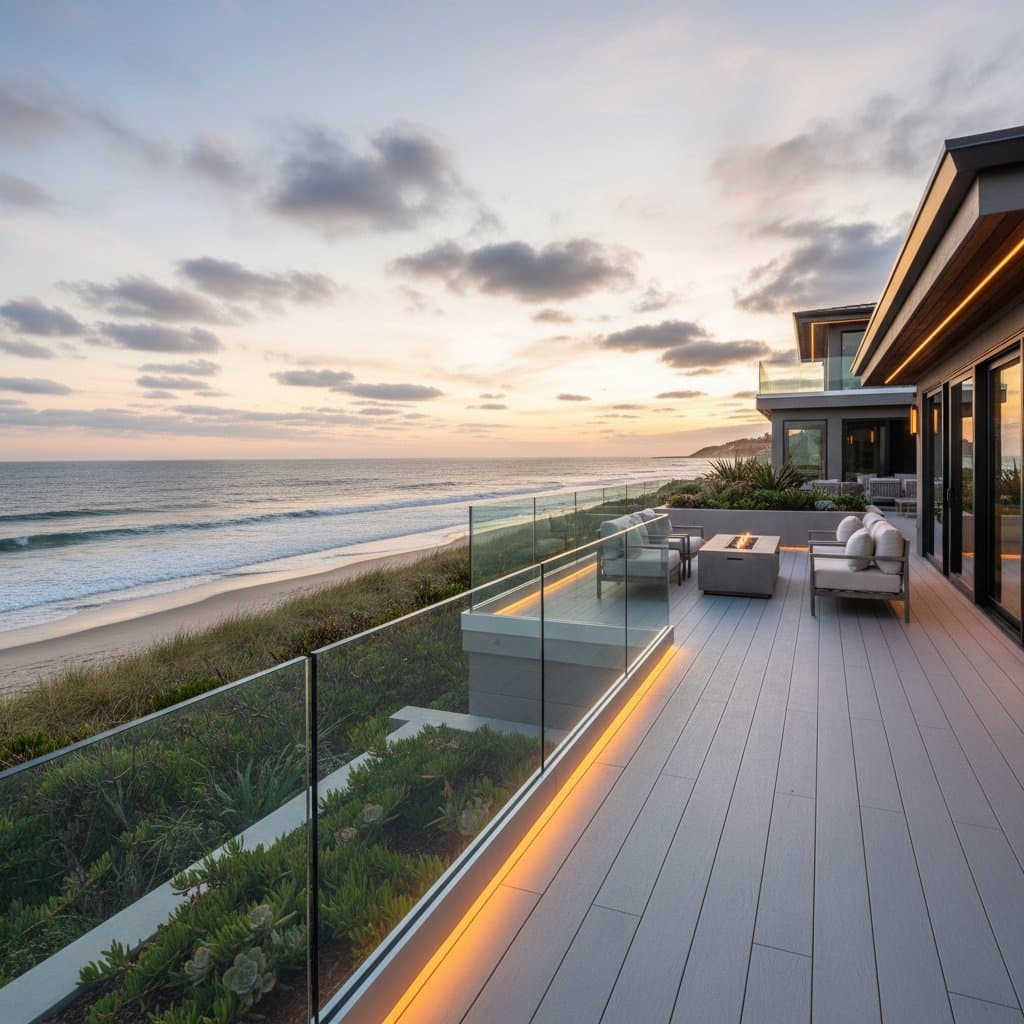
Glass deck railings provide transparency and longevity that wood cannot match. Panels made from tempered safety glass resist moisture absorption and corrosion. These panels stay clear over time, allowing full appreciation of scenic sunsets. When paired with stainless steel or powder-coated aluminum supports, glass systems endure for decades with little required maintenance.
A modern coastal deck with frameless glass railings offers an ideal example, providing seamless integration with the Pacific Ocean backdrop.
Cost Comparison: Glass Versus Wood Deck Railings
Wood railings generally involve lower initial expenses compared to glass. However, glass options deliver greater long-term value through reduced maintenance demands and extended service life.
| Material | Average Upfront Cost (per linear foot) | Maintenance Needs | Lifespan | Visual Appeal |
|---|---|---|---|---|
| Pressure-treated wood | $50 - $90 | High | 10-15 years | Traditional |
| Cedar or redwood | $80 - $120 | Moderate | 15-20 years | Warm, rustic |
| Glass (with aluminum frame) | $150 - $250 | Low | 25+ years | Modern, open |
| Frameless glass | $200 - $300 | Very low | 25+ years | Luxury, unobstructed |
Homeowners should allocate an additional 15 percent in their budget to cover potential hardware needs or design modifications. Planning ahead prevents project interruptions.
Guidance on Installation and Upkeep
The installation of glass railings demands accuracy and expertise. Professional contractors with experience in coastal construction handle most projects. Consider these key points during the process:
- Select marine-grade hardware to resist rust and corrosion.
- Incorporate effective drainage systems under railing posts to prevent moisture accumulation.
- Clean glass panels periodically using a soft cloth and mild detergent solution.
- Inspect all fasteners once a year, particularly following severe weather events.
- Steer clear of abrasive chemicals that could damage the glass surface.
In salty coastal areas, opt for a frameless base channel constructed from anodized aluminum. This material outperforms painted steel in enduring salt exposure.
For optimal results, evaluate site-specific factors such as wind patterns and UV intensity before finalizing the design. Professional assessments ensure compliance with local building codes, which often mandate specific safety features for elevated decks.
Addressing Misconceptions Surrounding Glass Deck Railings
Several misunderstandings deter potential adopters of glass railings. The following clarifications address common concerns.
Misconception 1: Glass railings require excessive cleaning due to rapid soiling.
Salt spray may deposit residues, yet removal proves straightforward. A monthly rinse with fresh water suffices to maintain clarity and prevent buildup.
Misconception 2: Glass poses safety risks for children and pets.
Tempered glass features shatter-resistant properties. In the event of breakage, it fragments into small, non-sharp granules rather than jagged pieces.
Misconception 3: Glass railings clash with traditional home designs.
Contemporary designers provide framed glass systems incorporating wood or composite elements. These options harmonize with established architectural styles while introducing modern transparency.
Additional concerns involve weight and thermal performance. Glass systems distribute loads evenly when properly installed, and many include UV-protective coatings to mitigate heat gain during sunny afternoons.
Steps to Upgrade Your Coastal Deck
Transitioning to glass railings represents a strategic enhancement for coastal properties. This change reduces ongoing maintenance efforts, freeing time for leisure activities amid stunning views.
To proceed, obtain estimates from fabricators specializing in marine environments. Evaluate both framed and frameless configurations based on your desired sightlines. Visualize the transformation: mornings greeted by an expansive, uninterrupted horizon elevate daily living.
Consult with design professionals to integrate glass railings seamlessly into your existing deck layout. This approach maximizes aesthetic and functional benefits, ensuring the upgrade aligns with long-term property goals.