
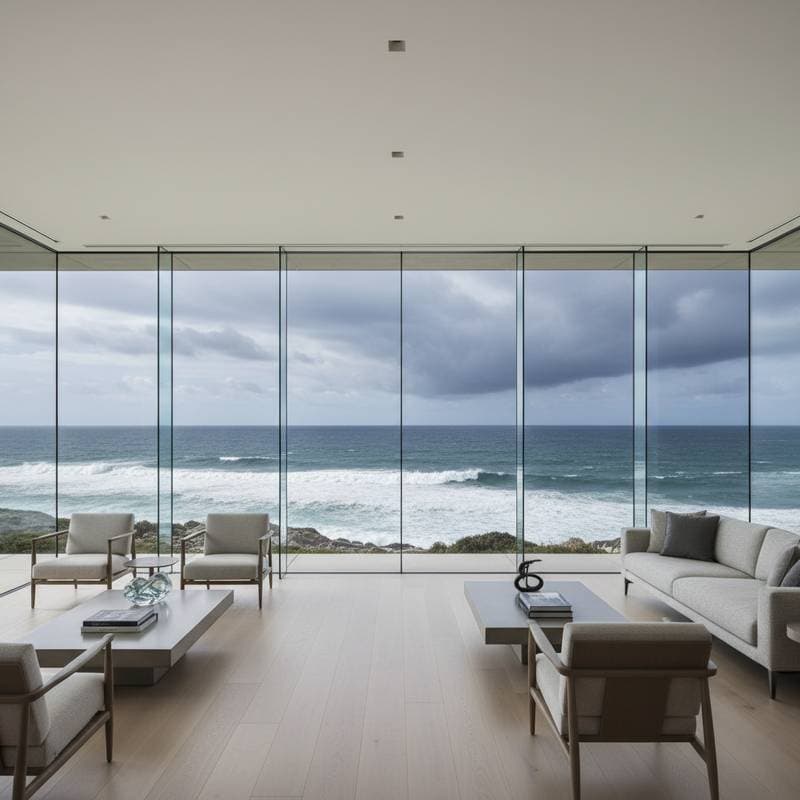
Storm-Resistant Glass Walls: The Future of Coastal Home Design
Coastal homeowners face unique challenges from severe weather, yet they desire unobstructed views and seamless indoor-outdoor living. Traditional sliding doors often fail under high winds and debris impacts, leading to costly repairs and compromised safety. Storm-resistant glass walls emerge as a robust alternative, engineered to withstand hurricanes and storms while preserving aesthetic appeal.
These innovative systems use impact-rated glass and reinforced frames to create expansive, operable walls. By 2026, building codes in hurricane-prone areas will likely mandate such upgrades, pushing sliding doors toward obsolescence. Homeowners who adopt this technology early gain enhanced protection and property value.
Understanding Storm-Resistant Glass Walls
Storm-resistant glass walls consist of laminated glass panels that resist shattering upon impact. The glass features multiple layers bonded with interlayer materials, such as polyvinyl butyral, which holds fragments in place even after a breach. Frames typically employ aluminum or steel alloys treated for corrosion resistance, essential in salty coastal environments.
Unlike standard sliding doors, these walls operate on multi-panel folding or stacking mechanisms. This design allows full opening for ventilation on calm days and secure closure during storms. Manufacturers test these systems to meet standards like those from the Miami-Dade County protocol, ensuring they endure winds up to 150 miles per hour and flying debris.
Installation requires professional assessment of structural integrity. Contractors evaluate load-bearing walls and foundation stability to support the weight, which can exceed 500 pounds per panel. Proper sealing prevents water intrusion, a common issue with older door systems.
Key Benefits for Coastal Living
Enhanced Safety and Durability
The primary advantage lies in superior storm protection. Impact-rated glass reduces the risk of injury from broken shards during hurricanes. These walls also deter forced entry, as the reinforced construction resists prying tools better than standard doors.
In regions like Southern California or Florida, where storms intensify, this durability translates to fewer insurance claims. Homeowners report peace of mind knowing their families remain secure without sacrificing natural light.
Unparalleled Views and Design Flexibility
Storm-resistant glass walls maximize sightlines, creating the illusion of extended living space. Panels can span up to 40 feet wide, folding away to blend interiors with patios or beaches. Custom tints and low-emissivity coatings maintain privacy while allowing ocean vistas.
Design options include frosted sections for bathrooms or clear panels for living areas. Integration with smart home systems enables remote locking and shading adjustments, enhancing usability.
Energy Efficiency and Comfort
Advanced glazing minimizes heat transfer, keeping interiors cooler in summer and warmer in winter. This efficiency lowers utility bills by up to 30 percent compared to single-pane sliding doors. Some models incorporate argon gas fills between panes for additional insulation.
Ventilation improves air quality without relying on energy-intensive air conditioning. During mild weather, partial openings facilitate cross-breezes, promoting a healthier home environment.
Costs and Financial Considerations
Initial investment for storm-resistant glass walls ranges from $25,000 to $60,000, depending on size, materials, and customization. A standard 10-foot by 8-foot installation might cost $30,000, including labor. Factors influencing price include glass thickness, frame material, and automation features.
Break down expenses as follows:
- Materials: 60 percent of total, covering glass and hardware.
- Labor: 30 percent, involving site preparation and fitting.
- Permits and testing: 10 percent, required for compliance in coastal zones.
Financing options abound, such as home equity loans or manufacturer rebates for energy-efficient upgrades. Insurance premiums often decrease by 15 to 25 percent post-installation, offsetting costs over time. Resale value increases by an average of 5 to 7 percent, according to real estate analyses in storm-vulnerable markets.
Installation Process and Maintenance
Begin with a consultation from certified installers familiar with local codes. They conduct a site survey to measure openings and assess wind load requirements. Custom fabrication follows, with lead times of 8 to 12 weeks.
During installation, teams remove existing doors and reinforce openings if needed. Alignment ensures smooth operation, followed by testing for seals and locks. Post-installation, apply protective coatings to frames annually to combat salt corrosion.
Maintenance involves cleaning glass with non-abrasive solutions and lubricating tracks quarterly. Professional inspections every two years verify integrity, especially after major storms. These steps extend the lifespan to 20 years or more.
The Shift Toward 2026 Standards
By 2026, updated International Building Code provisions will emphasize impact-resistant fenestration in high-velocity hurricane zones. Coastal communities in San Diego and beyond prepare for these changes, with incentives for early adoption. Architects predict a 40 percent rise in glass wall installations as awareness grows.
This transition addresses climate change impacts, where storm frequency rises. Homeowners who upgrade now avoid rushed retrofits and capitalize on current tax credits for resilient building materials.
Elevate Your Home's Resilience
Storm-resistant glass walls offer more than protection; they redefine coastal living with style and efficiency. Consider scheduling a professional evaluation to explore options tailored to your property. This investment secures your home against tomorrow's challenges while enhancing daily enjoyment of scenic surroundings.